

Traveling to Europe? 5 Simple Ways to Lower Your Carbon Footprint
Emese Maczko - June 2, 2026
Home > Travel Guide > Travel Tips & Checklists > Traveling to Europe? 5 Simple Ways to Lower Your Carbon Footprint
Share this post
Eco travel in Europe no longer means giving up comfort or spontaneity. From high-speed trains and walkable cities to smarter travel choices, there are now practical ways to lower your carbon footprint without making your trip feel restrictive.
We've all heard the same old advice: bring your reusable bottle and skip the daily cleaning. By 2026, this is not enough. Many people want to protect the planet while also having a vacation that feels like one.
If you are planning a trip in Europe and want to travel more sustainably, these five strategies can help you reduce your footprint in simple, realistic ways.
Taking a high-speed train instead of a budget flight
For travelers who want to make their European trip more eco-friendly, transportation is one of the most important choices they can make. According to WTTC, it accounts for 40% of tourism's global greenhouse gas emissions.
Flying around Europe has never been easier. With over 4,600 budget flight routes and more than 900,000 low-cost, round-trip flights scheduled in the first half of 2026 alone, cheap air travel is everywhere.
But while those flights may look convenient, their carbon cost is high, so choosing trains as an alternative can make a real difference.
This is where Europe's high-speed trains come in, connecting major cities quickly, conveniently and with fewer emissions.
The planes vs trains debate is not new, but its outcome changes when you factor in your carbon footprint. On the same route, taking a high-speed train can emit up to 90% less CO₂ than a short-haul flight.
The European Union also wants rail to play a bigger role. Its 2030-2040 plans aim to expand the high-speed rail network to make train travel a more competitive choice across the continent.

When you are on the ground, walk or choose public transport
Local transport adds up quickly, so how you move around matters just as much as how you got there.
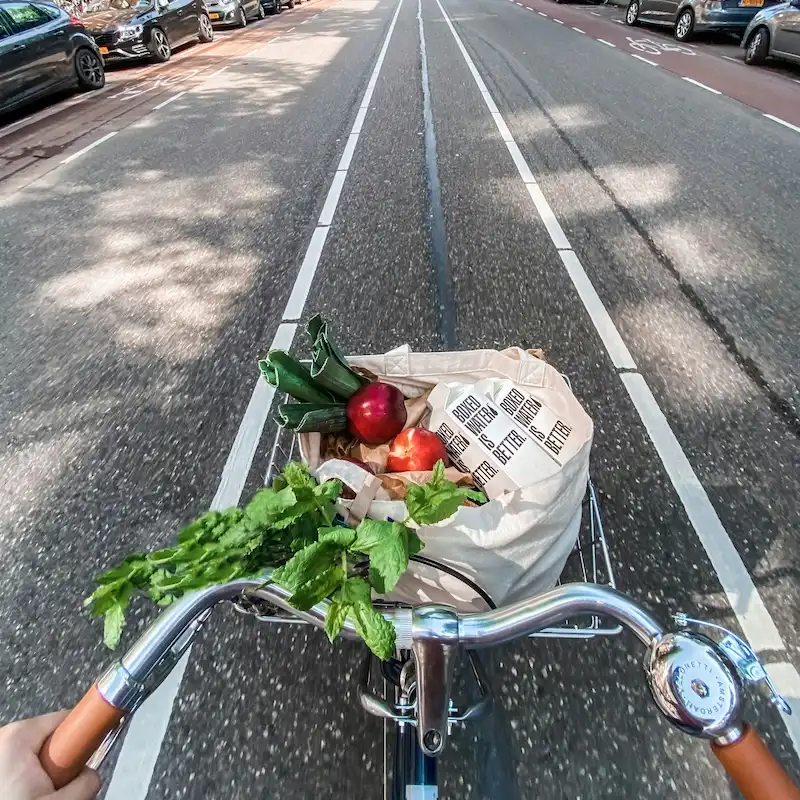
Whether you are navigating the car-free streets of Ljubljana or the bike lanes of Copenhagen, choosing sustainable transport is another simple way to lower your impact.
Europe is the cradle of walkable cities, where locals rely on walking, cycling, and public transport rather than taxis or rental cars.
Why? They have compact centers, where major sights, restaurants and shops sit close together and well-connected metro, tram and bus networks that are often faster and more predictable than road traffic.
Heading overseas?
Protect your trip with travel insurance, 100% online.
Paris champions the "15-minute city" concept, an idea that strongly supports eco-travel in Europe. It means you can reach cafes, attractions, parks and everyday essentials within a short walk or bike ride, while cutting transport-related emissions to zero.
Luxembourg City went a step further and made a historic announcement on March 1, 2020. The city made public transport free, thus becoming the first in the world to do so. The network is free for everyone, including tourists, with no ticket, app, registration, or ID requirements.

Which hotel you stay in matters more than you think
Accommodation accounts for 21% of tourism's global greenhouse gas emissions. Choosing a hotel is your next most important sustainability decision.
If you want to lower your impact, start with the basics. Choose stays that use less energy and water, and offer fewer waste-heavy services.
Avoid hotels in dry regions that use excessive water to keep massive gardens green, or hotels that generate a high volume of waste from all-inclusive food and drink.
GSTC also stresses that measuring impact is the first step, so look for hotels that actually publish their numbers.
I have interviewed hundreds of hotels, resorts and lodges over the years. The first red flag I look for is a lack of public data. If a hotel is not measuring its footprint, it is not managing it.
When a hotel publishes those numbers, it is usually a good sign that sustainability is more than a marketing claim and that the property is actively trying to improve.
However, the ultimate eco-hack for 2026 is staying in a capsule hotel. They are no longer a Japanese novelty. You can find them everywhere in Europe: Zedwell Hotels in London, easyHotel and CityHub in multiple locations or Zero Box Lodges in Portugal and Futurotel in Spain.
You usually get a central location for 20-50 Euros per night, but you use 80% less energy when staying in a "pod" than in a traditional hotel.
Skip the hotel extras that do not really matter
But it is not just about where you stay, it is also what you choose to use once you are there.
62% of tourists treat vacations as a "special time" where they don't want to worry about the environment. They are using excuses to give themselves permission to behave less responsibly.
Think of cooling an empty room for 8 hours, taking long showers, asking for daily room cleaning, or using 10 beach towels a day, just because someone else is paying the bill.
This 2026 study cited that cleaning a room in a four-star hotel uses about 1.5 kWh of electricity, 35 L of water, and 100 mL of chemicals.
If you opt out of the daily room cleaning service even once, you can save 0.4 kg to 0.6 kg of CO2 , which is roughly the same amount of CO2 produced by driving an average gasoline car for 2 to 3 kilometers.
Hand on heart, do you really need your room cleaned if you are out sightseeing all day and only come back to sleep? Do you need the plastic water bottle as a complimentary gift, when you can drink the tap water?
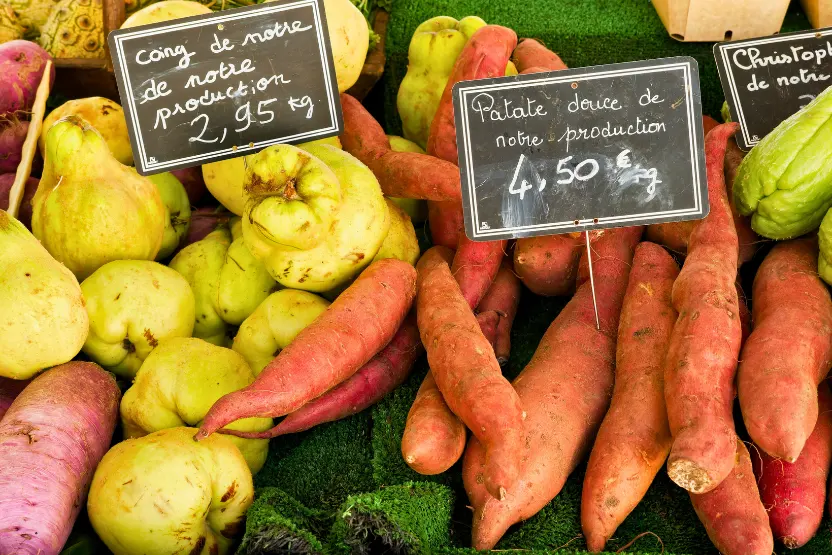
Buy local, eat local
Food has a bigger footprint than many travelers realize.
Food production accounts for about 26% of global greenhouse gas emissions, and some foods are far more carbon-intensive than others. For example, beef averages about 60 kg of CO₂e per kilogram of food, while many plant-based foods sit far lower on the scale.
That is why one of the easiest travel swaps is to choose local, seasonal and less meat-heavy meals.
In practice, that could mean ordering a vegetable-based lunch at a neighborhood bistro in Paris instead of an imported beef burger from a chain restaurant.
Another easy choice could be trying a simple regional dish made with ingredients grown by local farmers rather than an all-you-can-eat hotel buffet.
The same goes for shopping. Many souvenirs sold in tourist hotspots are mass-produced and moved through long supply chains before they ever reach a gift shop.
Buying from local artisans usually means a lower footprint, helps the local economy, and gives you a more meaningful connection to the destination.
And, beyond its carbon footprint, you should not forget that tourism can also be a source of good. The latest WTTC study highlights the progress and the ongoing efforts.
Between 2019 and 2024, travel and tourism GDP grew by about 6% above pre-pandemic levels, while the sector's greenhouse gas emissions fell by 9.3%. In other words, tourism generates more economic value while producing fewer emissions.
Like this article? You might also be interested in...
Europe's Most Accessible Cities
 Sources & references
- Internal Expertise & Review
- Emese is a Global Sustainability Tourism Council certified travel writer, as well as the Founder of Eco-Lodges Anywhere. As a contributor to Forbes, National Geographic, Euronews, and more, Emese's work reaches millions worldwide. Her expertise in sustainability standards and tourism's impact to the climate enables her to write relevant, helpful guides and resources for travelers looking to decrease their carbon footprints.
- Hotel Sustainability Statistics:
- GSTC : The Global Sustainable Tourism Council
- Announcement: Free Public Transportation in Luxembourg City:
- Free Public Transport : European Union article on Luxembourg's decision to provide free public transportation for all
- Study, the Carbon Footprint of Global Tourism
- Carbon Footprint Study : A 2018 study looking at global tourism and sustainability.
- Written by:
- Emese Maczko - Contributing Travel Writer
- Fact-check and reviewed by:
- Sarah Pardi - Staff Travel Advisor
- Last updated:
- June 2, 2026
Learn more about our editorial standards and review process in our Editorial Policy.
Related posts

Upcoming travels ? Get Insured !
Find the right insurance for your trip by using our powerful comparison tool!
Emese Maczko - October 20, 2026
Emese Maczko - October 9, 2026
Emese Maczko - September 2, 2026