

Planes or Trains In Europe: For Sustainable Travelers in 2026
Emese Maczko - May 27, 2026
Home > Travel Guide > Travel Planning > Planes or Trains In Europe: For Sustainable Travelers in 2026
Share this post
For decades, the choice between train vs plane in Europe was a simple calculation of time versus money. But in recent years, the debate has become even more layered as sustainability entered the equation. It is no longer just a tug-of-war between two aspects, but a three-way calculation involving your carbon footprint.
Why Planes Seem Like An "Obvious" Choice At First Glance
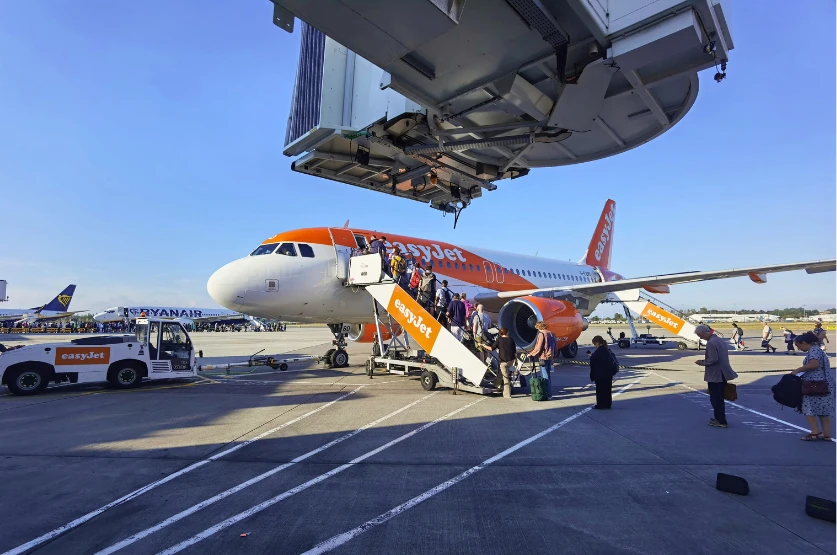
At first glance, flying in Europe looks like the obvious winner if you are short on time and money. After all, do you book the $25 budget flight that promises to get you there in 90 minutes, or the $75 high-speed train that takes four hours?
However, the '1-hour flight' in Europe can easily turn into a six-hour ordeal by the time you navigate your way to London Heathrow at least 2 hours before your departure time, endure security queues and biometric checks for EU's New Entry/Exit System (EES) at Paris Charles de Gaulle, or wait for your luggage at Berlin Brandenburg.
| From London to Paris | High-Speed Train (Eurostar) | Budget Flight (easyJet) |
| Travel to station / airport | 10-15 minutes | 60-90 minutes |
| Arrival before departure | 60-90 minutes | 120-180 minutes |
| Actual travel time | 2h 16m | 1h 15m |
| Arrival process | 5 minutes | 45-60 minutes |
| Travel to final destination | 10-15 minutes | 45-60 minutes |
| Session default channel group | ~4 hours | ~6.5 hours |
Also, the final cost of a budget flight is far from its deceptive baseline, as fees for seat selection, baggage, and fast track can quickly add up. Those extras also make up a sizable share of airline revenue, with low-cost airlines generating about 40% of their revenue from add-ons.
| From London to Paris | High-Speed Train (Eurostar) | Budget Flight (easyJet) |
| Base ticket fare | $71-$179 | $25-$126 |
| Cabin bag (10kg) | Included (free) | $31-$53 |
| Seat selection | Included (free) | $14-$24 |
| Airport transfers (London) | $12 (subway ticket) | $25 (Heathrow Express) |
| Airport transfers (Paris) | $3 (metro ticket) | $17 (RER) |
| TOTAL TRIP COST | $86-$194 | $122-$255 |
However, planes often win when the question is about geography. If you are crossing the entire continent, say, from Lisbon to Warsaw, or heading to the Greek Islands, the train cannot compete on speed.
According to the European Commission's latest fact sheet, a Madrid-Paris rail route currently takes about 10 hours, while the train ride between Sofia, Bulgaria, and Athens, Greece, takes almost 14 hours, despite being roughly half the distance.
By contrast, a nonstop flight from Berlin to Rome takes a little over two hours, and the Sofia-to-Athens flight time is about 1 hour 15 minutes.
With the EU's expanding high-speed rail network, plans for 2030–2040 aim to make train travel a competitive choice. The report cites the Sofia-Athens route as a standout example where planned high-speed upgrades would cut the trip from 14 to 6 hours. The Madrid-Paris route also promises a drop of almost 4 hours.
When To Switch From Planes To Trains
Travelers who look past the initial ticket price and the flight time shown on the boarding pass will find the train wins the door-to-door race for almost any short-distance journey. And Eurostar is a shining example.
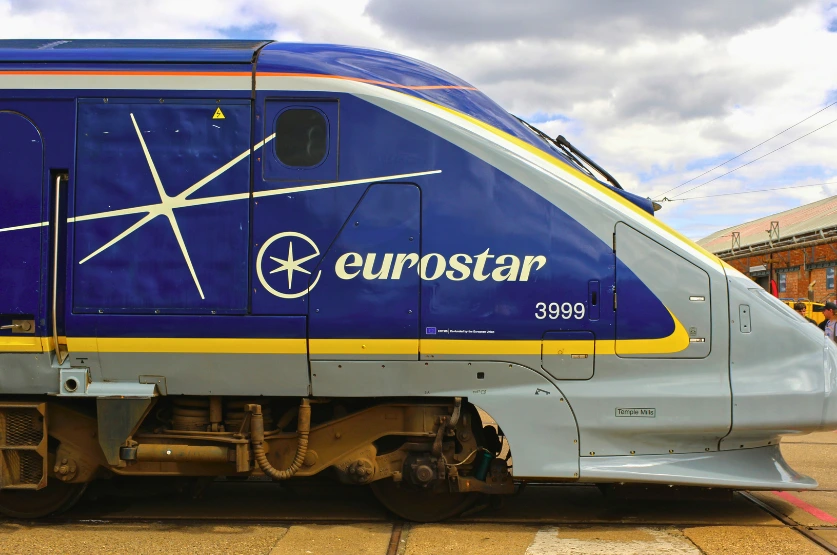
Eurostar service between London and Paris departs from London St Pancras International, in central London, and arrives at Paris Gare du Nord, in the heart of Paris, running on average 15 times per day on most weekdays from early morning until late evening. The journey takes about 2 hours and 16 minutes.
Heading overseas soon?
Get the travel insurance you need, 100% online.
Eurostar already holds 80% of the market share (including flights) on its London–Paris route, meaning 80% of travelers choose the train over planes between these two European capitals.
So, why do travelers choose trains in Europe? There are many reasons. Train stations typically sit in city centers, so you can skip long airport transfers and arrive closer to departure time. You can also avoid most airport-style procedures that often involve long queues.
Unlike airlines, trains generally have more relaxed luggage policies. You can bring large bags without add-on fees, and leave without waiting at baggage claim.
Many routes offer Wi-Fi, restrooms, and café or bar service, plus more space than a typical economy seat on an airplane.
Trains or Planes If Sustainability Is A Deciding Factor
Short-haul flights are among the most carbon-intensive ways to travel per passenger-mile.
Why? Planes use a lot of fuel during takeoff, climb, and landing, when they burn the most energy. On short-haul flights, these high-fuel phases account for a larger share of the total flight time.
Long-haul flights spend much more time in cruise at high altitude, where they use fuel more efficiently. Even though a long flight creates more total CO₂ because it goes farther, flying short distances is actually more polluting.
This matters in Europe, where over 90% of direct flights are short-haul, under 1,864 miles (1,620 NM), yet they account for almost half of total aviation carbon emissions.
If you are choosing between a flight and a train on a route like London–Paris, the difference is stark.
Short-haul flights average about 275 grams of emissions per passenger-mile, compared to the Eurostar's London-Paris route, which emits about 6 grams. In practical terms, it means choosing the train instead of flying saves about 57 kg of CO₂e per one-way London-Paris trip.
Now, scale that up. In 2025, 20 million customers traveled with Eurostar on all routes, including 12.2 million on the London-Paris route. Since London–Paris riders chose rail instead of flying, they avoided about 695,000 metric tons of CO₂e. To put it into perspective, this roughly equals taking about 151,000 passenger cars off the road for one year.
Europe is betting on new aircraft for shorter ranges, including electric, hybrid-electric, and hydrogen concepts, to compete with ground traffic, and on improving air traffic management so planes burn less fuel through better routing, smoother climbs and descents, and reduced taxi time.
European regulators have also been pushing Sustainable Aviation Fuel (SAF) as it can reduce lifecycle CO2 emissions by up to 80% compared to conventional jet fuel, and airlines can use it in today's aircraft without waiting for new fleets.
Even if flying remains essential for island hopping and cross-continent trips, Europe is also encouraging train travel on its shortest corridors.
If sustainability is high on your list, start with a simple rule: for short trips, take the train when it is available and practical.
Related posts




Upcoming travels ? Get Insured !
Find the right insurance for your trip by using our powerful comparison tool!