
The best cities to go to in France and which one fits your trip
Sarah Pardi - August 13, 2026
Home > Travel Guide > Travel Ideas & Inspiration > The best cities to go to in France and which one fits your trip
Share this post
Most people have the same list when it comes to visiting France. Paris, then maybe Nice or Bordeaux. Then there is usually some vague sense that Provence and Champagne exist (somewhere).
France is a Schengen country full of incredible towns and cities, and several of them really warrant a dedicated trip if you have the time and funds. Which ones to prioritize depend on the kind of traveling you like to do (and the kind of traveler you are). A foodie and a person who wants to spend all day at the beach might not have the same opinions about the same places.
This guide sorts cities by who they will actually work for, with real train options, budgets, and which “hidden gems” stopped being hidden in recent years.
(Remember, Schengen travel insurance is mandatory for many travelers heading to France).
The best cities to visit in France at a glance
The best cities to visit in France are Paris for culture, Lyon for food, Bordeaux for architecture and wine, Strasbourg for Alsatian old town vibes, Annecy for mountains and water, Nice for the Mediterranean… all except Nice are accessible in just a couple of hours from Paris by high-speed train.
| City | Who it suits | Budget per day | Best time to visit | Days needed |
|---|---|---|---|---|
| Paris | First-timers, culture, museums | 120 - 220 euros | April to June, September | 4 to 5 or more |
| Lyon | Food, history, exploring on foot | 80 to 140 euros | May to October | 2 or 3 |
| Bordeaux | Architecture, wine, slow travel | 90 to 150 euros | May to October | 2 or 3 |
| Strasbourg | Old town, Christmas markets, cycling | 85 to 140 euros | December, then May through September | 2 |
| Annecy | Lake, mountains, couples | 100 to 160 euros | June or September | 2 |
| Nice | Sea, sun, coastal day trips | 110 to 180 euros | May or September | 3 or more |
| Marseille | Food, islands, city | 80 to 140 euros | April to June, September | 3 or more |
Budgets assume an affordable hotel, two restaurant meals a day and local transport for one person.
One thing to know before we get into the specific details – the time of year you visit can matter just as much as the city you choose. In August, Annecy can be quite crowded with no snow. If you’re hoping for an Alpine postcard experience, that might not be the best time of year to experience that, just as an example.
Paris, why the capital still earns its place
Paris is worth the hype. When people tell you to skip it, it’s often from those who haven’t been, or those who happened to have something go awry. The city has three of the ten most visited museums on the entire planet, a concentration of restaurants at every single price point, plus 20 arrondissements that essentially behave like their own distinct towns. The mistake that many people make when they visit is that they treat their trip like a checklist. Two days of back to back to back monuments will exhaust pretty much anybody.
What to do in Paris in five days
Longer trips are great too, but five days in Paris can give you a good sense of the city. It gives you time to see the really famous things, without turning the trip into a forced march.
On the first day, one major museum and strolling one neighbourhood on foot is doable – ideally the Marais or the Latin Quarter. On the second day, do the Louvre, but make sure you book in advance for an early slot. After that, you can explore the Tuileries and the Palais-Royal. Day three, it’s worth venturing out of the city center to Montmartre. Day four can then be reserved for whatever you discovered that you really liked, like small parks and gardens, shopping, or cafe-hopping. On the last day, you can head to Versailles, Fontainebleau, or Giverny, or the Catacombs if they’re more your speed – but make sure you get tickets far in advance.
What the guides do not tell you about Paris
There are three things you should know about Paris before hitting the book button, especially if you’re trying to decide if you’d rather go somewhere else.
July and August are the peak of tourist season. This means that hotel prices tend to climb, some of the best local eateries close for the summer, and a lot of the locals (particularly in August) leave. It can also be quite hot – the heat in a city built mostly of stone with little air conditioning can be unpleasant at best. September and October can give you cooler weather, shorter lines, and a city filled with people who actually live there.
Another thing to know is that the prices near monuments (for restaurants, cafes, bars, and souvenirs) are often higher than the prices even just a few streets away. A menu at 25 euros near Notre-Dame could become 14 euros in the 11th or 20th.
Also, many of the main sights need to be booked ahead of time – and sell out, especially in the peak months. Tickets to the Catacombs, for example, can book out weeks in advance. Some places allow tickets to be booked onsite, in which case the lines are usually incredibly long. If you’ve booked ahead (which is recommended), make sure you’re in the right line.
Nice, Lyon and Strasbourg, the big three beyond Paris
Nice
Who it’s for. Anyone who wants sea, light, and a base for exploring the coast.
What not to miss. Vieux Nice (the old town) at 8 am before the market fills, the Cours Saleya flower market, and the walk up Colline du Château for the view.
Skip Nice if. You dislike pebble beaches. Nice has no sand, which surprises a remarkable number of visitors.
Despite what some travel guides say, Nice isn’t just a quick train ride from Paris (though it is accessible from Paris). The fastest direct trains run about 5 hours and 41 minutes. Others can be 6-7 hours. If Nice is your destination, you can always fly there from Paris. The airport is on the edge of town, and there’s a tram to the city center.
Nice is a great base for exploring smaller coastal towns. Villefranche, Antibes, Menton, and Monaco are all short train rides away.
Lyon
Who it’s for. People who plan trips around meals.
What not to miss. A bouchon dinner, the Renaissance traboules of Vieux Lyon, plus the view from Fourvière.
Skip Lyon if. You need sea or mountains within reach of the hotel.
If you’re a foodie, Lyon is a great place to explore. The city has dozens of traditional bouchons that are also affordable (under 30 euros a head). The city center is UNESCO-listed, but also compact enough to cross (on foot) in twenty minutes or so.
The train from Paris to Lyon is under 2 hours and runs several times a day, which makes Lyon a super viable option for a long weekend away from Paris, the first stop on your way south, or even as your whole trip.
Strasbourg
Who it's for. Old-town lovers, cyclists, anyone drawn to the German-French border culture… Christmas lovers.
What not to miss. The cathedral and its astronomical clock, Petite France, plus a winstub for choucroute and Riesling. The markets if you visit at Christmas time.
Skip Strasbourg if. You want warm weather in winter.
By train, Strasbourg is just shy of 2 hours from Paris, which is closer than a lot of Americans expect such a German feeling city to be. The old town sits on an island encircled by water. It’s almost entirely walkable with excellent infrastructure for cyclists too.
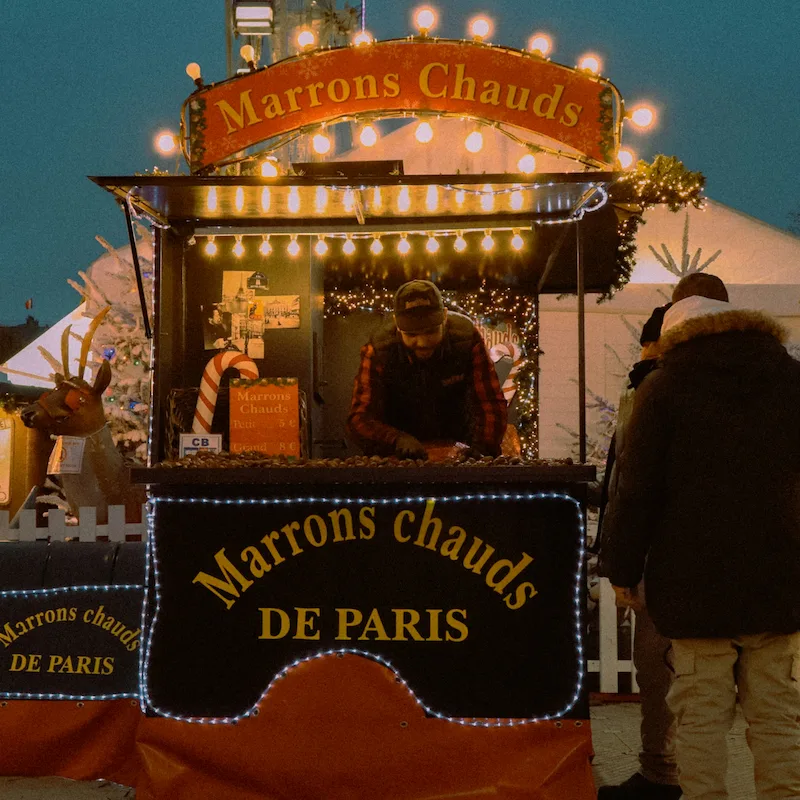
December in Strasbourg is something people put on their bucket lists. The Christkindelsmärik (their Christmas market, and one of the largest in the world) has run since 1570, which also makes it the oldest in France. It usually runs from the end of November until the New Year.
Lesser-known French cities worth the detour
Most articles that promise you hidden French gems mention towns like Colmar, Eze, and Beaune. Realistically, these towns receive millions of visitors between them each year, so they haven’t really been “hidden” for the last couple of decades. They’re incredible places, just not undiscovered, if you will.
Here are places that still are.
Sète, on the Languedoc coast (which you might recognize for its wine) is a working fishing port that is full of winding canals. It’s sometimes even referred to as the Venice of Occitania (the region). Paul Valéry, the French poet, is buried in the local cemetery with oyster beds and a lagoon behind it.
Metz is sometimes seen as the most underrated city in France. A golden-stone, Gothic cathedral with the most stained glass in the country can be found here – including windows by Chagall. There’s a Centre Pompidou, too, with incredible exhibitions and way fewer crowds than its Paris parent.
Nancy is about 40 minutes from Metz and is home to Place Stanislas, an 18th-century square that many architects consider the finest in Europe. It is UNESCO-listed, and most visitors haven’t even ever heard of it.
Uzès is in the Gard, a small region of France near Montpellier (in the south). It’s a small arcaded town about a half hour from Pont du Gard. It has a famous Saturday market that is genuinely local, versus some others you’ll find in larger cities.
Honfleur is a small beach town in Normandy, and it has a famous harbor that many of the Impressionists painted. Cruises do come through here, so going off-season is usually the call.
Besançon is a small city in Eastern France, not far from Switzerland. It’s beneath a Vauban Citadel, and has a student population that keeps the prices pretty reasonable. Plus, it isn’t too tricky to get to – only a two and a half hour train ride from Paris.
Annecy, Colmar and Bordeaux, the traveler favorites
Annecy
Annecy’s lake is famous. The water is genuinely that gorgeous purple-blue. Plus, the old town canals and the pastel façades make pretty much every view picture perfect.
When you go is everything. July and August can be crowded and warm (don't forget your sunscreen). The lake beaches start to fill up by mid-morning. June and September are usually less busy. You can walk the old town first thing in the morning and have the streets largely to yourself. Winter is a whole other experience.
Colmar
Colmar is an incredible town, but can also be pretty busy. The half-timbered houses of Petite Venise are one of the most photographed things in Alsace (the region). Still, even when it is busy, it’s worth the trip.
Weekdays can be a little bit less crazy, but if you’re heading during the Holiday season, you’ll want to be around on a weekend to explore one of its (many) Christmas markets. You can really do Colmar in a day, so if you do a weekend trip, you could also explore the Alsace wine route villages like Riquewihr and Eguisheim, which are both filled with colorful half-timbered buildings, but are far less crowded than Colmar.
Bordeaux
Bordeaux is marketed as a wine destination, but it really is so much more than that. The wine is one reason to go, but the city itself has so much more to offer than just that.
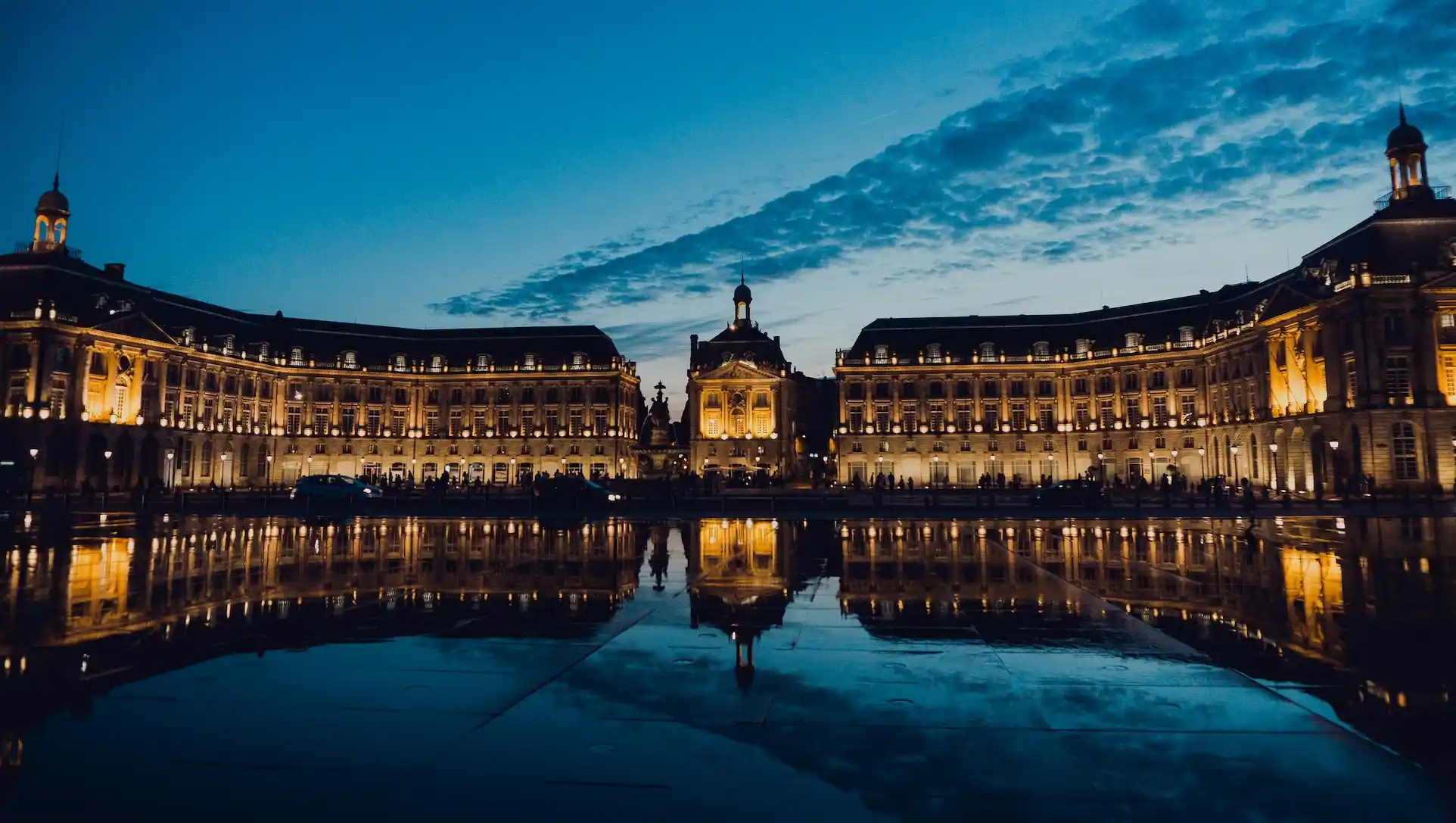
The city is UNESCO-listed, and the inscription covers nearly 7 square miles with around 350 monuments and around 4 miles of pedestrianized riverbanks along the Garonne. It’s full of uniformly honey-colored 18th-century stone, a tram network that makes it easy to get around town, and a market at Les Capucins that opens before dawn (not common in France). From Paris, Bordeaux only takes a couple of hours by high-speed train.
Whether you like wine or not, it’s an incredible city, and you really can visit without ever even having a glass.
How much does a trip to a French city cost?
It’s possible to do France for around 60 to 90 euros a day, depending on where you travel to. Mid-range is usually around 120 to 180, and more luxury trips probably aren’t lower than 250. Paris is the most expensive city in France, more than Lyon, Bordeaux, and Strasbourg for the same “level” of comfort.
Accommodation, hotel or apartment
Whether you want to stay in a hotel or an apartment depends on your preferences more than anything. Hotels are usually the gold standard for convenience and location. However, for families or budget travelers, apartments can sometimes be a better option. More space, a kitchen, and choices beyond city centers.
Three-star hotels usually run around 130 to 190 per night in central Paris, 75 to 120 in Lyon, Bordeaux, or Strasbourg. Annecy and Nice’s prices are closer to the ones you’ll see in Paris.
Food
Food in France isn’t terribly expensive – again, depends where you go and what you want to eat.
All over France, you’ll see signs that say “formule”. Formules are courses for specific prices, and they’re usually a deal over ordering à la carte. For instance, you can find two, sometimes even three courses for 16 to 22 euros in many cities, and the food is genuinely good. This is at lunchtime. For dinner, the prices increase. A bakery breakfast costs a few euros, and coffee varies, but is less expensive if you get it at a cafe or boulangerie than an actual coffee shop.
Many people budget 45 to 70 euros a day for food outside Paris, 60 to 90 inside it, and you will eat well. To save, you can also opt for takeaway sandwiches or even quick meals at grocery stores, like pre-packaged, ready-to-eat salads.
Getting between cities
The train is the answer almost everywhere on this list, and it’s the most common way to get around the country.
| Route | Fastest Option | What to Expect for Pricing |
|---|---|---|
| Paris to Lyon | Around 1 hour and 55 minutes | Around 75 euros or more in summer |
| Paris to Bordeaux | About 2 hours | Around 85 euros or more in summer |
| Paris to Strasbourg | About an hour and 45 minutes | In summer, commonly 100 or more |
| Paris to Nice | 5 and a half to 6 hours or more | Flying is often cheaper and faster, 100 euros or more |
When is the best time to visit French cities?
It depends on what you want to do, of course. May, June, and September are the best months for most French cities if you’re looking for warm, sunny weather without way too many crowds. But if you love skiing or want to see Christmas markets, obviously wintertime is better. July and August can be crowded and very hot. Some French hotels have AC, but not all of them, especially outside of major cities like Paris.
| City | Spring | Summer | Fall | Winter |
|---|---|---|---|---|
| Paris | Excellent, some rain | Can be crowded and hot | Excellent | Quieter, mild winters |
| Lyon | Good | Good | Excellent | Colder, quieter |
| Bordeaux | Excellent | Warm, busy | Excellent, harvest | Mild and quiet |
| Strasbourg | Good | Good | Good | Peak, Christmas markets |
| Annecy | Excellent | Can be crowded | Excellent | Quiet, mountain access |
| Nice | Excellent | Quite crowded | Good into October | Mild, some closures |
It all depends on what you’re looking for. And it’s also important to remember it’s all relative. What is crowded to one person may not seem that crowded to another.
The contrarian position is worth stating plainly. Several French cities are at their best in the months guides tell you to avoid. Strasbourg in December is not a compromise, it is the reason to go. Paris in November has cool light, short queues and a population that is actually home. Lyon in January is cold and the bouchons are full of locals rather than tourists.
Other French destinations worth exploring
Coastal cities. Nice, Marseille, Biarritz, La Rochelle (Île de Ré), Saint-Malo.
Near the mountains. Annecy, Chambéry, Grenoble, Pau.
For food and wine. Lyon, Bordeaux, Dijon, Reims, Toulouse.
Weekends under two hours from Paris. Reims, Tours, Rouen, Lille, Strasbourg
Genuinely underrated. Metz, Nancy, Sète, Besançon, Nîmes, Amboise
Frequently asked questions
Additional resources
Heading to Paris? Learn about Paris's tourist tax
Planning a trip to France? You may need ETIAS. Learn more in our France ETIAS guide.
Don't forget your travel adapter: What plug is used in France
Related posts
Upcoming travels ? Get Insured !
Find the right insurance for your trip by using our powerful comparison tool!