
Europe Travel Liquid Size: Carry-On Rules by Airport in 2026
Sarah Pardi - August 11, 2026
Home > Travel Guide > Travel Requirements, Policy & Authorization > Europe Travel Liquid Size: Carry-On Rules by Airport in 2026
Share this post
For the past few decades, the answer to “how much liquid can I bring to Europe” was pretty simple. Travelers could fly with one hundred milliliters per container, all inside a one-liter, transparent, resealable bag.
Nowadays, the answer depends. It’s still the case for many airports on the continent. But for others, the rules are expanding and changing. Dublin, Edinburgh, Rome Fiumicino, and London Heathrow all allow you to bring a two-liter bottle through security, in your carry-on. Paris, Madrid, or Lisbon, on the other hand? It’s still 100 ml, max.
This guide covers what liquid rules apply where, the exceptions, plus common things travelers usually miss. We’ve been in the travel and insurance industry for more than 15 years – and this page is sourced to the regulation or airport that issued any rules or guidelines.
Heading to Europe? ✈️
Get comprehensive travel insurance 100% online and travel with confidence.
What is the liquid limit for carry-on luggage in Europe?
It depends on the airport you’re flying out of. In most cases, the maximum quantity per container is 100 ml, which is the equivalent of 3.38 fluid ounces. Every container has to fit inside a single transparent bag that is resealable (max one liter size). Each passenger can have one bag. 100 ml is essentially the default, and it’s what you should pack for unless you’ve looked at the specific airport and see that their rules differ... sometimes they do.
When traveling through the EU and the Schengen Area, the liquid carry-on restrictions are the same in the vast majority of cases. Regulation (EC) No 300/2008 states that there is a 100 ml max for X-ray screening. Regulation (EU) 2015/1998 states that liquids have to be screened. These policies apply to all 27 members of the European Union, as well as Iceland, Liechtenstein, Norway, and Switzerland.
That said, specific airports can have their own allowances, depending on the kind of screening equipment they have. For instance, if you’re flying out of Terminal 2 at the Václav Havel Prague Airport, passengers can have up to two liters each in their carry-ons. This includes everything from cosmetics and skin care products to bottled water and even alcoholic beverages.
The United Kingdom left the European Union, but it still kept the same 100 ml rule as a standard. However, Heathrow, Gatwick, Birmingham, and Edinburgh now all allow passengers up to two liters of liquids.
Which European airports now allow liquids over 100 ml?
Airports with C3 scanners (also called EDSCB, Explosive Detection Systems for Cabin Baggage) can allow containers of up to two liters, no need to be bagged. These machines are high tech and use computed tomography to build a 3D image of your cabin bag. This lets airport security identify liquids much more easily.
More and more airports are investing in C3 Scanners (versus older X-ray machines), but opening up liquid allowance has been touch-and-go. In July 2024, the European Commission temporarily reimposed the 100 ml liquid limit at airports with C3 scanners. This was done with Regulation (EU) 2024/2018, and was a precautionary measure. For some airports, the pause is still in effect.
Airports where two liters is allowed
As of August 2026, the following airports have a higher allowance, but note that in some cases, it only applies in specific terminals or even specific scanning lines.
| Country | Airports Allowing up to 2 Liters | Notes |
|---|---|---|
| Ireland | Dublin (DUB) | Entire airport |
| Italy | Rome Fiumicino (FCO), Milan Linate (LIN), Milan Malpensa (MXP), Bologna BLQ) | Milan Malpensa is Terminal 1 only. |
| United Kingdom | Heathrow (LHO), Gatwick (LGW), Edinburgh (EDI), Birmingham (BHX) | Entire airports |
| Czech Republic | Prague Václav Havel (PRG) | Terminal 2 only |
| Poland | Kraków (KRK), Poznań-Lawica (POZ) | Entire airports |
| Finland | Helsinki-Vantaa (HEL) | Entire airport |
| Germany | Frankfurt (FRA), Munich (MUC) | Frankfurt: Some security lanes in Terminal 1, all lanes in Terminal 3. Munich: Only select security lanes |
| Switzerland | Zurich (ZRH) | Entire airport |
| Austria | Vienna (VIE) | Entire airport |
| Romania | Henri Coanda Bucharest (OTP), Aurel Vlaicu Bucharest Baneasa (BBU), Avram Iancu Cluj-Napoca (CLJ), Sibiu International Airport (SBZ) | At Avram Iancu Cluj-Napoca, 100 ml max for connections/transfers |
| Lithuania | Vilnius (VNO), Kaunas (KUN) | Entire airports |
| Denmark | Billund (BLN) | Entire airport |
| Malta | Malta (MLA) | Entire airport |
Airports still enforcing 100 ml
Most European airports still have a 100 ml liquid maximum. In France, Paris Charles de Gaulle, ORLY, Marseille, and other large airports have a 100 ml max. The same is true for airports in Spain, including Madrid Barajas and Barcelona El Prat. Lisbon and Athens, too.
Some countries, it depends. Frankfurt, in Germany, has next-generation scanners in some of its security lanes, but not all of them. So, like laptop rules, it depends on which line you end up getting in.
The best thing that you can do is follow the guidelines of the official airport. If you cannot find a clear rule from them, it’s best to assume 100 ml, just in case. Still, most airlines usually have this information on their websites.
What is considered a liquid for carry-on luggage?
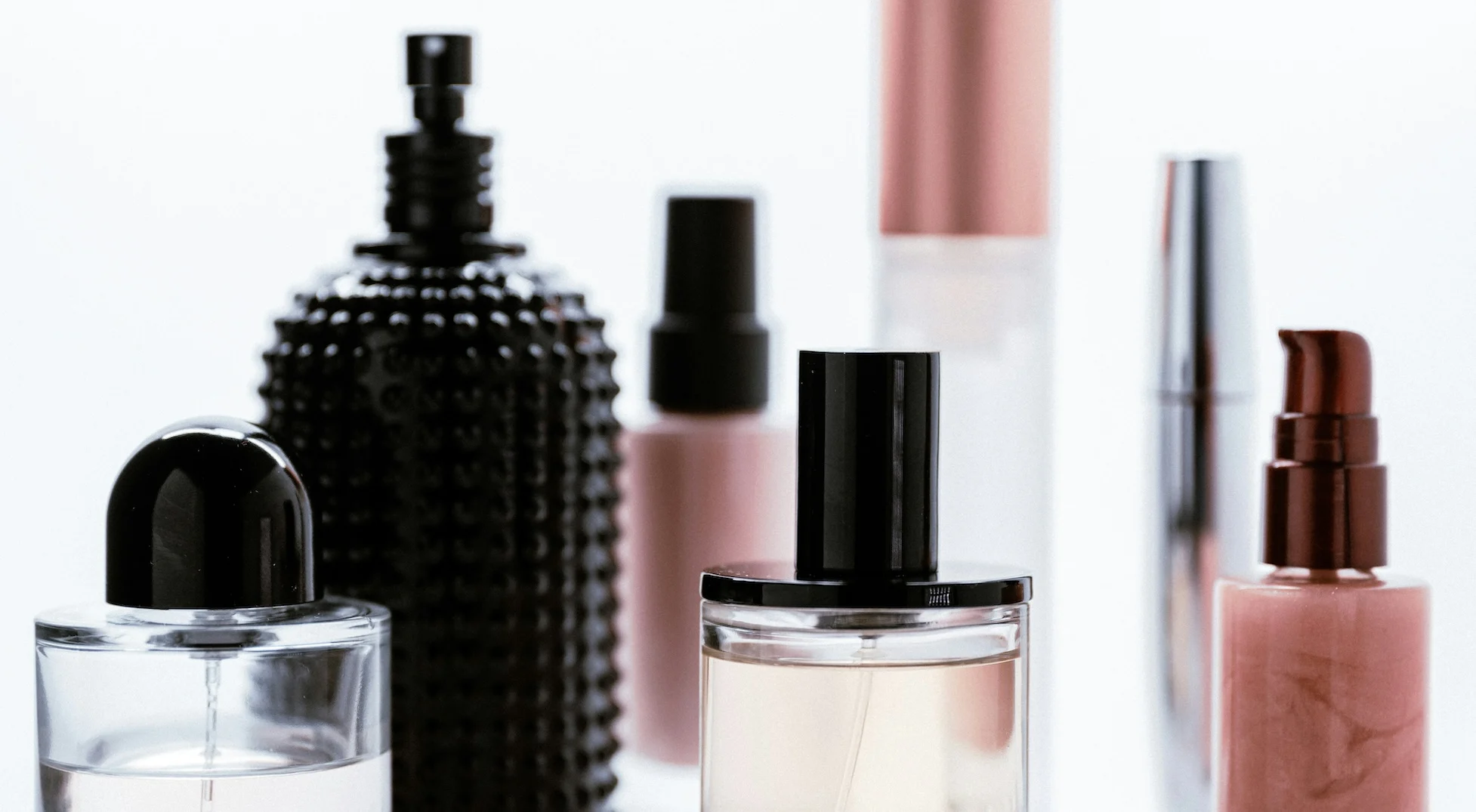
When it comes to what is a liquid and what isn’t, it’s a pretty broad category. The term “liquids” covers beverages, aerosols, gels, some foods, and more. In practice, essentially anything that pours, sprays, spreads, or squeezes can be considered a liquid.
| Considered Liquid | Not Considered a Liquid |
|---|---|
| Beverages (water, soft drinks, wine, beer, spirits, etc.) | Powdered electrolytes |
| Liquid medications, cough syrups, ointments | Pills, tablets, and capsules |
| Toothpaste and mouthwash | Breath mints and chewing gum |
| Shampoo, conditioner, and shower gel | Bar soap, shampoo bars |
| Spray deodorant, all aerosols | Solid deodorant sticks |
| Sunscreen, lotion, hand cream, bug repellent | Bandages, gauze |
| Liquid makeup (foundation, concealers, glosses, mascara) | Powder foundation, pressed eyeshadow, lipstick |
| Contact lens solution, eye drops | Glasses wipes |
| Honey, jam, hot sauce, syrups | Chocolate bars, dry snacks |
| Olive oil, peanut butter | Sealed baby powder formula |
Travelers are often surprised to learn that several types of food are considered liquids, including hot sauce, jam, honey, peanut butter, and more. If you’ve purchased souvenirs, it’s usually best to put those liquids in your checked luggage (especially if the airport has a 100 ml limit).
Olive oil is a common souvenir in places like Spain and Italy, and it’s also commonly confiscated because it’s considered a liquid. If you bought a half-liter tin at a market, for example, it can’t go through security in your carry-on if the airport doesn’t have a 2-liter max, and most don’t.
Exceptions to the 100 ml rule in hand luggage
There are three categories that have some exemptions to the volume cap, even when it’s on the low end (100 ml). In every case, you still have to separate the items before they go through the scanner, and inform a security agent in line.
Medication and medical liquids
Prescription and over-the-counter liquid medications can be exempt in the quantity needed for the journey. This includes things like insulin, liquid nutrition, saline, and gel packs. Make sure you have the pharmacy label and a copy of your prescription. These items may need to be screened separately, with swab tests, for example. Keep in mind that this exemption only applies when it’s necessary. It doesn’t mean you can bring any liquid medication you want, just because it’s medication. Precautionary or preventative first aid items like bug repellent are not exempt.
Baby food, formula and breast milk
Baby food, formula, breast milk, and sterile water are all exempt when they’re intended for consumption during the trip.
If your liquid is over the limit and not exempt
If you have liquids that are over the airport’s limits (whether that’s 100 ml or 2 liters), you can pack them in your checked luggage. Checked luggage doesn’t have the same liquid restrictions that carry-on liquids do, so larger bottles and containers are fine. If you aren’t planning to check a bag, you can prepare ahead of time and separate larger liquids into smaller portions with reusable travel-sized containers. One thing that travelers don’t always realize is that security looks at the capacity of the container, not how much liquid is actually left in it. So, if you have a 16 oz water bottle, for example, it will get confiscated even if there’s “only one drink left”. The same is true for lotions, sunscreen, and all other liquids. A 200 ml bottle with just a finger of shampoo left at the bottom still isn’t allowed when the max is 100 ml.
How do I pack liquids in carry-on luggage?
When traveling throughout Europe, you have to pack your carry-on liquids in a specific way. All liquids need to be placed into a sealable, transparent bag no larger than 1 liter (this is when there is a 100 ml max).
Choosing a compliant liquids bag
According to 4.1.2.2 of Regulation (EU) 2015/1998, for 100 ml max liquids, “the contents of the plastic bag [must] fit comfortably, and the bag is completely closed”. This means that the bag needs to be resealable, so something like a folded-over sandwich bag really isn’t permitted. The bag needs to be 1 liter, max, or smaller. Many people use grocery-store Ziploc sandwich bags.
Now, this is for the EU. The UK government’s official website, when traveling from the UK, allows you one bag that is maximum 20 x 20 cm, which is about 7.8 x 7.8 inches.
Getting the most out of one liter
A liter sounds like a lot of space, but it can get filled fast. Decanting into 60 ml or 75 ml bottles rather than 100 ml ones can nearly double what fits into the bag. You can also consider getting solid alternatives, like shampoo bars or stick deodorants. This allows for more room for things that don’t have solid equivalents, such as contact lens solution.
It’s also wise to label every single bottle. It always feels like you’ll remember which one was shampoo, conditioner, and body wash. But then, they all suddenly start to look very similar through the cloudy plastic bottle.
Common mistakes at European checkpoints
While it isn’t a rule, it is helpful to have your liquids where you can easily access them when you’re in the airport security line since you usually have to take them out and put them in their own separate bin. It’ll save you time if they’re in your bag’s front pocket or at the top of your suitcase versus buried way down. Regardless, make sure that you follow the instructions given to you by airport staff and security.
Some common items that result in confiscations are water bottles that you forgot you refilled, metal or vacuum flasks, duty-free liquids removed from their sealed bags, or liquids left in the bag that you forgot needed to come out (like jam).
Do duty-free liquids have to be under 100 ml?
Duty-free liquids don’t have the same restrictions that other liquids do, so long as you purchased them at the airport or by the airline and they remainssealed inside of the provided security bag (the bag has a red border). When you purchase liquids at duty-free, whether that’s perfume, alcohol, or something else, airport staff packs your item(s) in the security bag at check-out. These bags are called Security Tamper-Evident Bags (STEB). The receipt is visible on the outside, and you should leave it there.
Duty-free bags with liquids need to remain sealed until you get to your final destination. If you have layovers and have to go through security again, it isn’t unheard of for airport security agents to break the seal to look in. If you have another layover, make sure you let them know so they can reseal it for you.
Liquids and customs: what happens when you land?
Security regulations determine what you do when traveling by plane, but what happens when you actually return home (or to your destination)? When you return to the US, for example, there are some things you have to declare, citizen or not.
Up to one liter of alcohol does not need to be declared at customs, but any more than that does. All foods must be declared, and some types of food aren’t allowed.
Tips for traveling with liquids in your carry-on
Before you head to the airport, and better yet – before you pack, always check the rules for the airport(s) and destination(s) you’re going to. It isn’t uncommon for them to differ. When you’re packing, check that your liquids are tightly sealed; that way you don’t open your suitcase to toothpaste all over your clothes.
It’s helpful to have your liquids in an outside pocket rather than buried under a bunch of clothes or books. This makes it easier to grab them at security, but also helps protect your personal belongings if something breaks open or leaks.
After flying, always be cautious when opening your liquids. Variations in pressure can make liquids squirt out of the tube when you first open them. It’s helpful to open them very slowly, releasing a little bit of air at a time to help release any built-up pressure.
If you have large liquids, make sure to pack them in your checked luggage – full-sized skincare products, shampoo, etc.
 Sources & references
- Internal Expertise & Review
- Our team of insurance professionals and European travel experts is dedicated to informing travelers about need-to-know policies and requirements. We're dedicated to producing accurate, up-to-date resources that are easy to understand.
- Flying with Liquids:
- EU Liquid Rules : Rules on liquids, aerosols and gels from the European Union
- Prague Airport FAQs : FAQs about what you can bring on your carry-on at the Prague Airport
- UK Liquid Rules : Liquid rules in hand luggage; the UK Government
- US Customs Information : What must be declared when entering the US
- REGULATION (EU) 2015/1998 : Regulation stating max liquid sizes, how they must be stored, etc.
- Written by:
- Sarah Pardi - Staff Travel Advisor
- Fact-check and reviewed by:
- Clément Goubon
- Last updated:
- August 11, 2026
Learn more about our editorial standards and review process in our Editorial Policy.
Related posts
Upcoming travels ? Get Insured !
Find the right insurance for your trip by using our powerful comparison tool!