
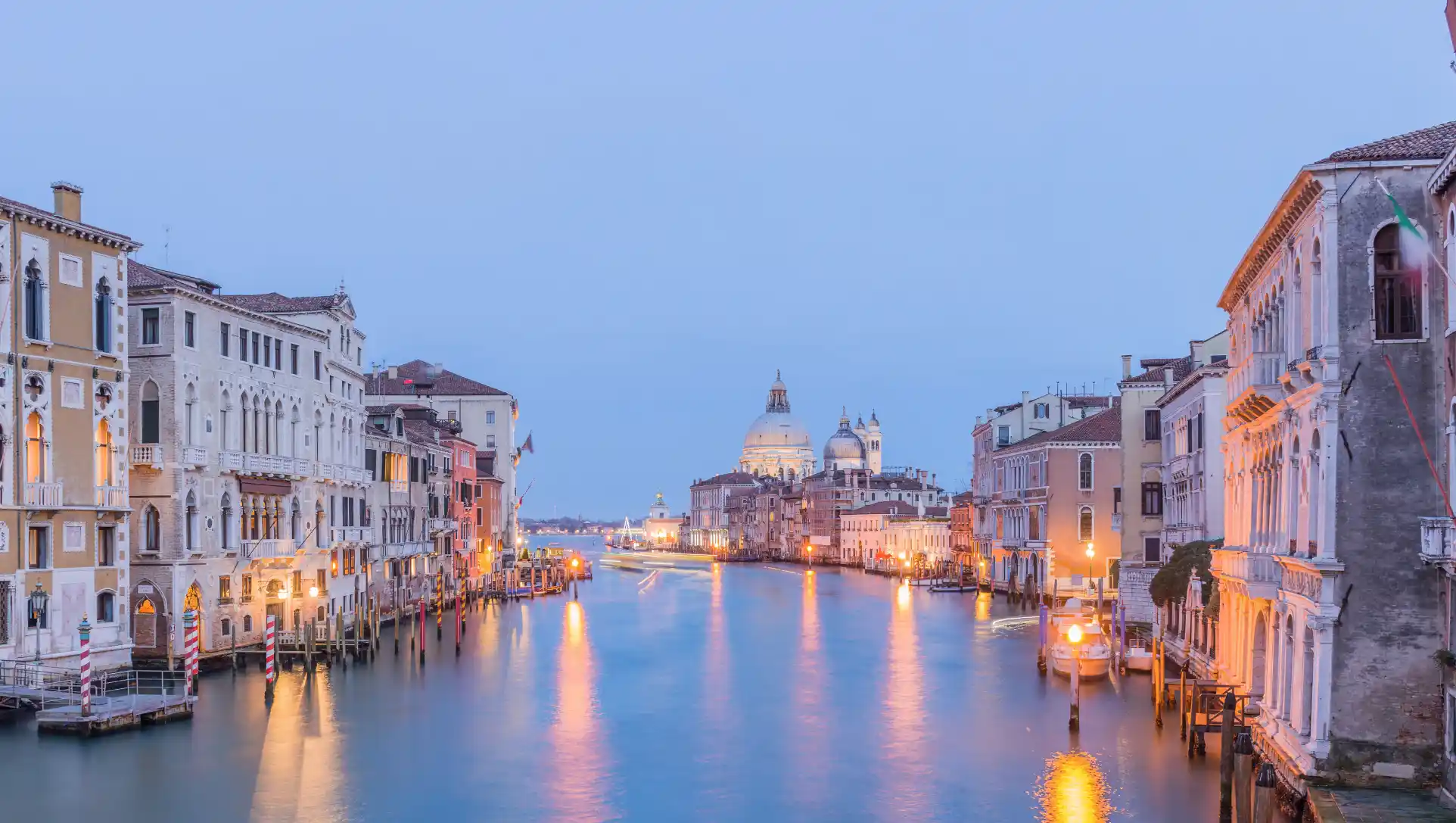
Italy Travel Requirements in 2026: What Has Changed?
Sarah Pardi - August 21, 2026
Home > Travel Guide > Travel Requirements, Policy & Authorization > Italy Travel Requirements in 2026: What Has Changed?
Share this post
Two big changes happened for travelers heading to Italy this year. There’s also a third update that hasn’t quite come into effect.
Passport stamps have gone away (as of April). ETIAS authorization that every travel site told you to expect later this year has lost its expected launch date. And, on July 31, the strongest earthquake in forty years hit the volcanic zone just west of Naples.
This guide has what you actually need to know, what has genuinely changed, what will soon, and what is often reported incorrectly across the internet.
Travel Insurance for Italy
World class coverage at travel-friendly prices 😎
What documents do you need to enter Italy in 2026?
US, Canadian, British, and Australian citizens need a valid passport to visit Italy, and they can stay for up to 90 days. So long as the trip is for tourism, to visit friends/family, or for business, an Italian visa isn’t required. ETIAS isn’t required yet, despite what some sites might say. Any site claiming ETIAS is live is incorrect.
One thing that catches travelers by surprise is that Italian border officials can ask to see more than just your passport. They can ask to verify your proof of onward travel, accommodation bookings, and even ask for proof that you have sufficient funds to pay for your stay in Italy.
| Your Nationality | Currently Required | Will be Required (in the future) | May be Asked to Present |
|---|---|---|---|
| United States | Passport | ETIAS | Return ticket, accommodation bookings, proof of funds |
| Canada | Passport | ETIAS | Same |
| United Kingdom | Passport | ETIAS | Same |
| Australia, New Zealand | Passport | ETIAS | Same |
| EU, EEA, Swiss | Passport or National ID card | N/A | Nothing further |
| Visa-required nationalities (China, India, South Africa, more) | Schengen visa | Through EU VAP | Full supporting file |
Passport requirements for Italy
Your passport needs to meet two conditions, three if you’re flying,
First, it needs to be valid at least three months beyond your intended departure from the Schengen Area – not six months, which you may see some sites report.
Second, your name and birthdate when booking your flight have to be identical to your passport, not a national or local ID that you have. If you’re American and your driver’s license has one last name and your passport has another, you need to book your flight under the name on your passport.
The third, lesser-known, is that your passport needs to have been issued in the past ten years. This isn’t an issue in the States, since standard passports expire after ten years anyway, but if you’re from a country with longer validity periods, it’s important to know.
Always check with your airline as well. While the Schengen Border Code states your passport only needs 3 months of validity beyond your travels, airports may apply stricter internal rules.
Visa requirements by nationality
Just shy of 60 nationalities can enter Italy without a visa for short stays. This includes North America, the UK, Australia, New Zealand, Japan, South Korea, Brazil, and dozens of others. Everyone else has to apply for a Schengen visa, in person, at an Italian consulate or visa application center. They also have to meet several requirements, like securing compliant Schengen travel insurance coverage.
Emergency and temporary travel documents
If you lose your passport, or it’s stolen, your embassy can typically issue you an emergency travel document. Not all countries accept emergency passports, and it can depend on your nationality, too. Italy generally does accept emergency passports so long as they meet the Schengen rules (it doesn’t expire within 3 months of your departure from the Zone). Always check to see whether or not Italy will accept emergency passports from your issuing country.
Also, it’s never a bad idea to take a picture of your passport before you leave, and store the image somewhere you can access through any device, such as Google Drive.
The declaration of presence, why 2026 broke it
There is one requirement that most travelers actually aren’t aware of. Since 2007, Italian law requires every non-EU visitor staying fewer than 90 days to declare their presence to the authorities. How this is done depends on how you entered the country.
If you fly into Italy from outside the Schengen Area (such as from the US to Italy), your passport stamp counted as declaration. The EU recently launched the Entry-Exit System, which has replaced passport stamps with digital records of border crossings.
If you’re staying in a hotel, hostel, campsite, or other registered rental, you’re declared. This is because your accommodation has to register you with the police, so it declares you.
If you arrive from another Schengen country, such as France, and you stay in a private home (with a friend, for example), rather than pay for accommodation, you do need to declare your presence to Italian authorities by filing a dichiarazione di presenza at the local questura. Travelers have to do this within 8 days.
Pre-travel authorization to Italy
Pretty much every travel website and guide has mentioned ETIAS by now. For months, the European Union had Q4 2026 listed as the launch period for the new requirement. However, that’s no longer the case.
What it is
It’s a pre-travel authorization for non-EU/EEA travelers visiting Italy without a visa. It isn’t just for Italy; it’s for the entire Schengen Area. It also isn’t a visa, despite what some guides are saying. It’s a pre-screening that takes place online and is electronically linked to your passport.
Who will need it
Americans, Britons, Canadians, and passport holders from 59 different countries who are traveling to Italy without a visa.
When travelers will need it
There is no confirmed launch date. In fact, there have been past expected launch periods, but it has been pushed back. Currently, the European Union is not collecting ETIAS applications, and they will set a launch date several months before it goes live. After that, there will be a transitional period. This guide will be updated once more information has been released by the EU. Until then, you can learn more in our Italy ETIAS Guide.
Health requirements for Italy
Some countries require vaccinations to enter. Italy does not require any. Additionally, travel insurance isn’t a legal requirement for visa-exempt travelers. That said, the Italian Government, EU, US, and UK governments all highly recommend it. Italy’s national health system is for residents, not travelers.
Recommended vaccinations
Italy recommends that routine immunizations are current and up to date. This includes measles, mumps, rubella, diphtheria, tetanus, pertussis, and polio. Additionally, health authorities recommend hepatitis A and hepatitis B vaccinations for some travelers heading to Italy. Rabies vaccinations are recommended for people who are expected to have specific animal exposure, or who plan to spend ample time in the wild. These are all in line with the EU's general vaccine recommendations.
For Italy, none of this is a border requirement. You should always check with your government, the Italian embassy, and your doctor.
Is travel insurance mandatory?
For visa-exempt travelers, no. Schengen visa applicants, on the other hand, are required to hold Schengen visa insurance coverage, with a minimum of 30,000 euros in medical emergency costs. Because Italy’s healthcare system is for its residents, it’s a good idea to get coverage. You'll be glad you have it, especially during a medical emergency.
Why Medicare and Medicaid don’t help
American public health programs provide essentially no coverage outside of the US. Medicare doesn’t cover emergencies abroad, except in a few very specific (and uncommon) situations. Medicaid is the same.
When it comes to private US insurance companies, it varies. Some plans may cover foreign emergencies at out-of-network rates, but some won’t at all. Make sure you contact your insurer to see if they offer any kind of international coverage – and what exactly that is. Sometimes, credit cards offer some coverage as part of their perks packages, so that's worth checking too.
Safety and security in Italy
Italy is a statistically safe country for tourists. In the 2026 Global Peace Index, Italy ranked 35. For context, the US is ranked at 134. Still, risks exist everywhere. In Italy, there are high rates of pickpocketing and petty theft.
There are also some “classic” routines in order to distract tourists. Someone spills something on you and then helps you clean it while another person pickpockets you. Someone might hand you something, like a bracelet or flower, and then demand payment because you “took” the item. Sometimes people offer to help you, especially at metro or train ticket machines. There are several scenarios like this designed to either steal from you or demand payment.
Pickpocketing isn’t something to be overly afraid of; instead, you should just be aware that it exists and remain cautious, especially in crowded areas like train stations, busy places like the metro, and tourist areas.
Laws and local rules visitors need to know
Italy is a part of the European Union and the Schengen Area, which means it follows their rules. That said, Italy also has its own rules, policies, and laws too. There are even some hyper-local ones that surprise people (such as regulations that vary city by city).
Several Italian cities can get after you for loitering on the steps of churches or monuments. In Venice, sitting on some bridge steps isn’t allowed. Swimming in the canals is also off limits. In Rome, you cannot enter the fountains, including Trevi. Some towns, such as Sorrento, don’t allow you to walk through the city center in swimwear (this is a lesser-known rule in Barcelona as well, actually).
There are some photography restrictions inside of museums, churches, or around military installations, but they’re usually to do with the use of flash. There are rules around commercial filming in some places, particularly heritage sites.
When you’re visiting archeological sites, such as Pompeii, you cannot take anything, even a single pebble. On many beaches, you cannot scoop up sand and take it.
As you can see, rules vary, so it’s a good idea to look up local regulations and rules for the destination you’re heading to – before you travel.
Driving in Italy, can you use your foreign licence?
If you’re planning to rent a car in Italy, you can drive with a foreign license. However, most travelers need to get something called an International Driving Permit.
| License Issued In | Valid in Italy? | IDP Needed? |
|---|---|---|
| United States | Yes | Required |
| Canada | Yes | Required |
| United Kingdom | Yes | No |
| EU/EEA Country | Yes | No |
| Australia, New Zealand | Yes | Required |
IDPs are more of a translation than they are a certificate assessing your driving prowess. It doesn’t exist to replace your actual driving license (you’ll need that too). Instead, it supports it by translating your license for Italian authorities to easily read and understand.
Car rental companies may ask to see your IDP before renting to you. They’re easy to get. In the States, you can usually go to an AAA office to get one (for a fee). There are also online options. In Canada, the process is similar.
Also, note that there are different license requirements for those planning to establish residence in Italy.
Natural disasters and climate risks in Italy
Most people know about Pompeii. That was centuries ago, but the volcano that caused it still exists. Italy is in a beautiful, unique geographical location. Because of that, there can be seismic and volcanic activity, earthquakes, and other natural disasters. It’s also important to remember that all places come with natural risks.
The Campi Flegrei, what happened on 31 July
On July 31, 2026, a magnitude 4.7 earthquake struck the Campi Flegrei caldera just west of Naples. Its epicenter was near the Solfatara Crater at Pozzuoli at a depth of around 3 km. Italy’s National Institute of Geophysics and Volcanology (INGV) recorded ten aftershocks. Several injuries were reported, and some families had to be evacuated from buildings damaged in the quake.
In 2025, there were two magnitude 4.6 events. The INGV keeps track of activity, monitoring it closely and reporting relevant findings publicly. If you’re planning a trip to Italy, especially a zone that has more seismic activity than others, it’s a good idea to check the Italian Civil Protection site before traveling in order to understand if there are any precautionary measures you should consider, and so you simply are informed.
Everything else
Italy has many volcanoes. Etna and Stromboli erupt fairly regularly, but they’re also monitored closely. These kinds of eruptions can result in airport delays or closures.
As Europe becomes hotter, wildfires continue to be a serious problem. Wildfires affect Southern Italy and the islands, and they can cause road closures or even evacuations. Flooding can happen depending on where you’re visiting. Venice, in the north, floods from time to time. Snowy areas, such as the alps, are at risk of avalanches. Other than Venice perhaps, most of these risks happen in countries all over the world. They’re good to be aware of, though.
Italy’s national emergency number is 112.
Frequently asked questions
 Sources & references
- Internal Expertise & Review
- We're committed to producing and sharing high quality content that is accurate, up-to-date, and easy to understand. Our team of experts is dedicated to helping travelers around the world stay informed.
- Italy Travel Information:
- Italy Travel Information : Travel information and advisories for Italy, including passports, vaccinations, and visas
- Civil Protection Department : Official alerts and advisories for Italy, including weather or natural disaster related
- Declaration Regulations : Declaration policy per the Italian Government
- ETIAS:
- Official ETIAS Website : Information on the European Travel Information and Authorisation System.
- Italian Visas:
- Visa Discovery Tool : A tool from the Italian Government to assess whether or not you need to apply for a visa for your trip to Italy
- Written by:
- Sarah Pardi - Staff Travel Advisor
- Fact-check and reviewed by:
- Clément Goubon
- Last updated:
- August 21, 2026
Learn more about our editorial standards and review process in our Editorial Policy.
Related posts


Upcoming travels ? Get Insured !
Find the right insurance for your trip by using our powerful comparison tool!
Sarah Pardi - October 27, 2026