
Why You Should Travel by Train Through Europe in 2026
Sarah Pardi - January 26, 2026
Home > Travel Guide > Travel Planning > Why You Should Travel by Train Through Europe in 2026
Share this post
European countries are known worldwide for one specific thing. Well, several, but for all intents and purposes, it's their efficient train systems.
Popular countries like France, Italy, Germany, Spain, etc. prioritize and invest in making travel easier, more convenient, and accessible. Another major focus is sustainability.
If you're planning a trip to Europe, traveling by train is a really simple, and oftentimes affordable option that can save you the stress (and time) of traveling by air.
Whether you're planning to hop from one capital city to another (like Paris to London, for instance) or you're planning to explore one area of one country, there will be different train options you can use.
Tip: If you're heading on a multicountry excursion, consider getting travel insurance, specifically. It covers you across the entire zone (29 countries in Europe), so you'll know you're protected if a last-minute train trip sweeps you away to another country.
What is the Schengen area? It's a collection of European countries that have abolished border checks between one another.
European train stations are usually in city centers
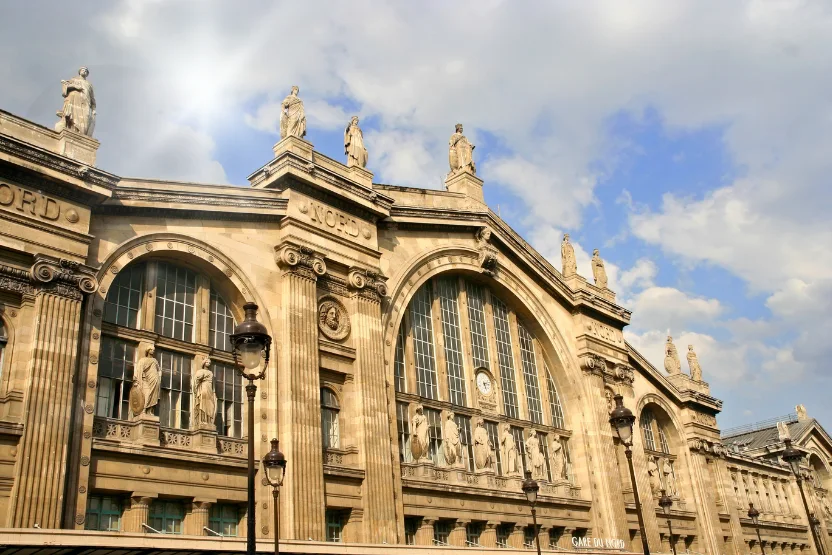
Unlike most airports around the world, train stations in Europe are usually located in the heart of the city, close to historic downtowns. This makes it easier, faster, and oftentimes cheaper to travel, as you don't have to navigate the airport arrivals and pay for a taxi or rideshare into town.
Some cities, like Paris, have multiple train stations; others (particularly smaller towns) might only have one or two.
Regardless, they're more often than not in a more central location.
No need for airport check-ins and gates
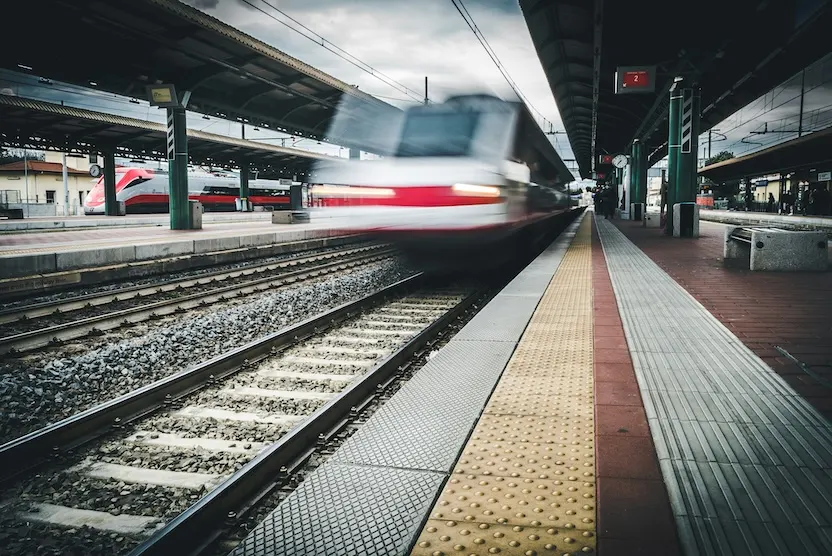
If you travel by train, you can often avoid those lengthy boarding procedures you're used to at the airport. Instead of a gate with long lines and boarding zones, train travel is usually as easy as just scanning your ticket and walking to your train car (1, 2, 3, etc.).
Sometimes seats are assigned, other times they're not. It depends on the company, location, and type of train. If it is assigned, it'll show on your boarding ticket or app (if you've downloaded one).
If seats aren't assigned, it's first-come, first-served.
All of that to say, there is one caveat. Boarding processes may be lengthier when moving in and out of the Schengen area. So, there will be more border necessities if you're traveling from Brussels to London, for instance, since the UK isn't in the Schengen area/EU.
Keep in mind that boarding processes may be lengthier when moving from one country to another unless you're traveling through the Schengen zone.
There are 29 countries in the Schengen area today, including France, Spain, Germany, Italy, Switzerland, the Netherlands, and more. Many travelers need a visa to head to the zone, and thus must adhere to Schengen visa requirements.
Is the train life calling?" description=
Restrooms, coffee, and wi-fi
While it isn't true 100% of the time, many trains in Europe offer similar services to airplanes.
Many trains will have free Wi-Fi, so you can work on your computer, play games, or watch a show. The seats also typically have tray tables for you to put all of your things.
Depending on the length of the trip and the train you're on, there may also be a bar cart that has snacks, sometimes even hot meals, and drinks.
Most trains have a bathroom on board.
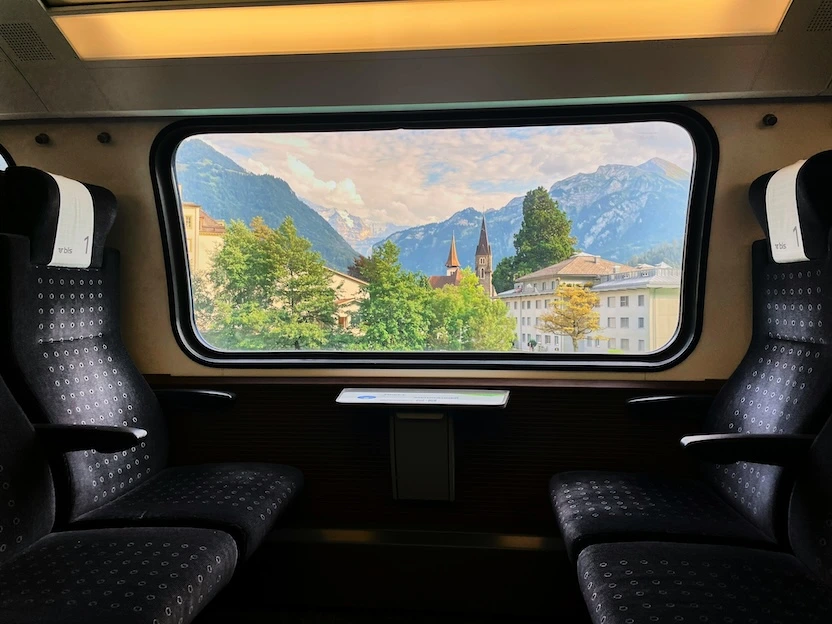
You can see more of the countryside
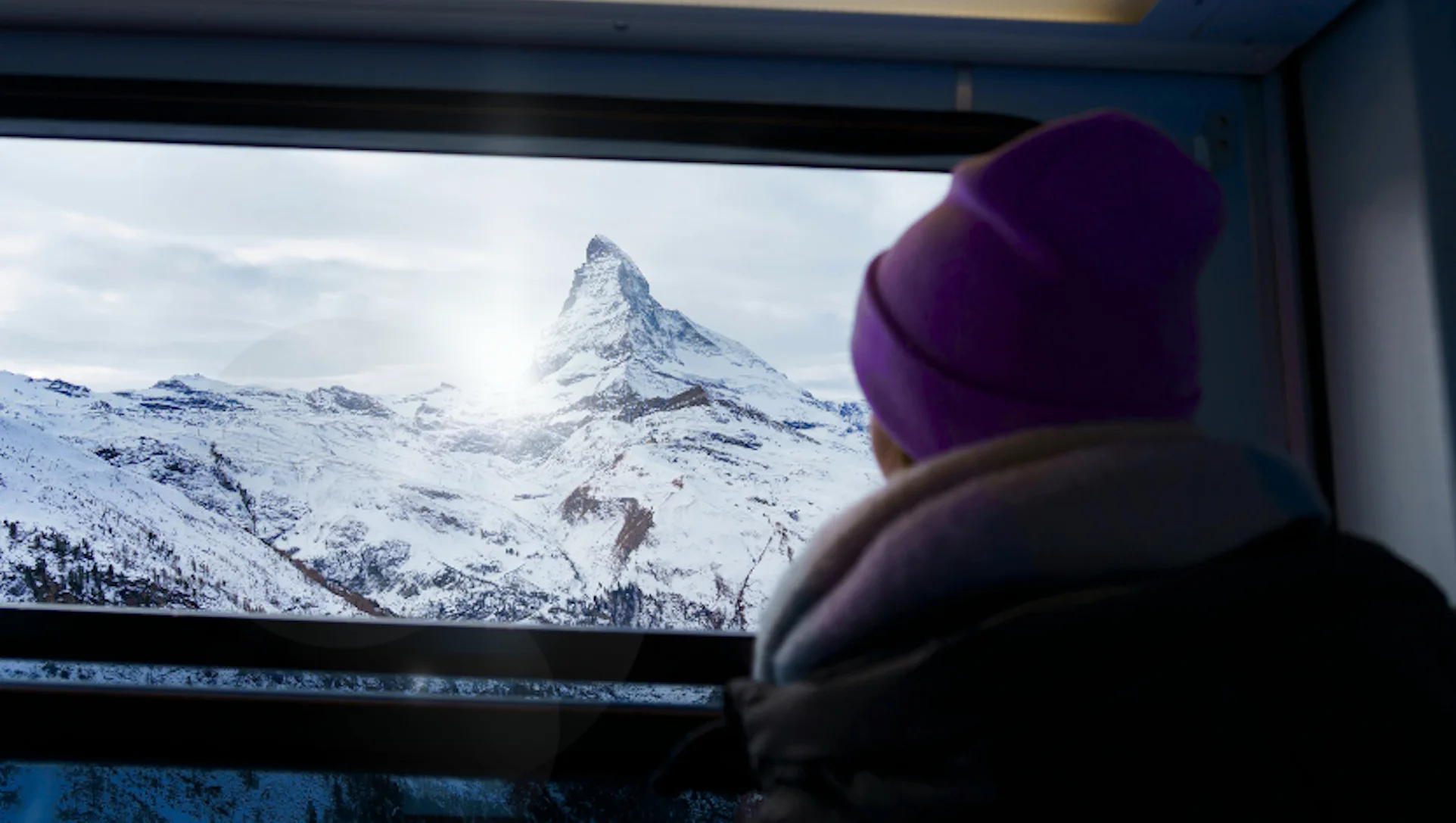
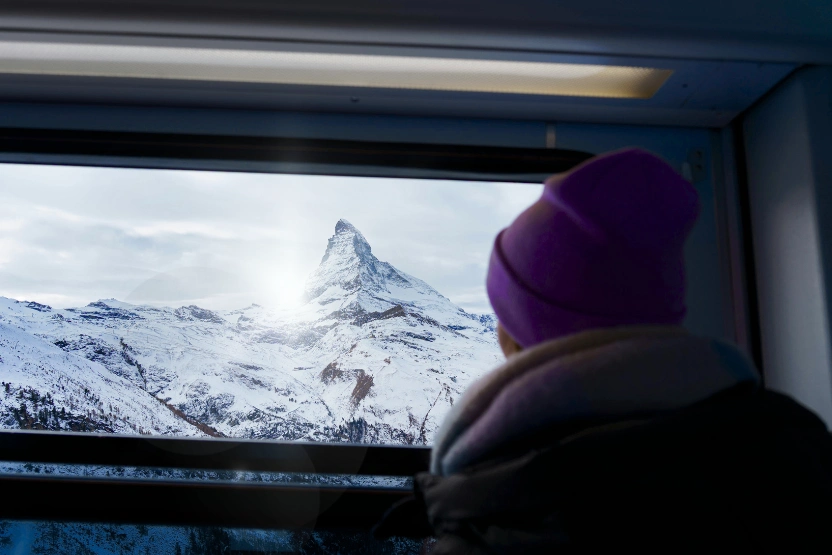
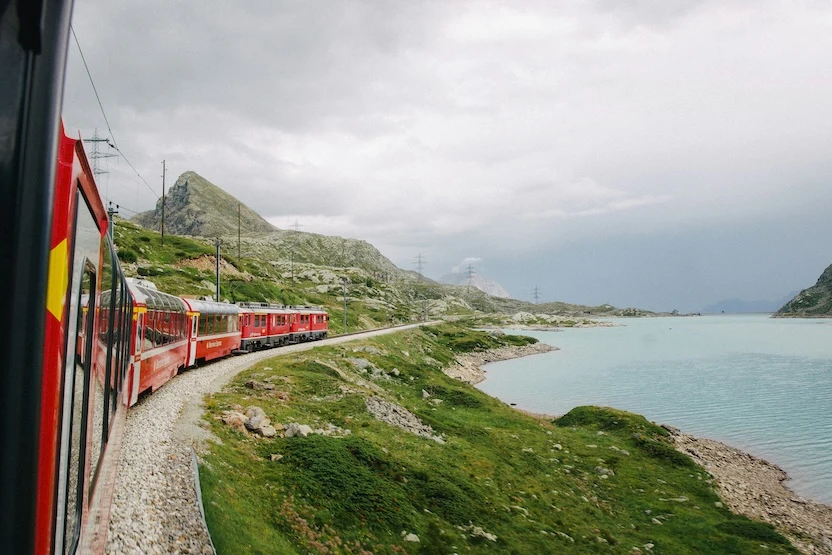
One really nice thing about choosing to travel by train is you can see more of the country you're visiting. Whether you’re passing through the vineyards of France, the snowy Alps in Switzerland, or anywhere else, there will be views the entire way.
A lot of trains even have double-decker seating, which can give you a better view. Regardless, there are plenty of windows, including shades or curtains in most cases if the sun is too bright.
Onboard cafes and bars
As mentioned above, many trains in Europe have bar carts or onboard cafes/bars. These eateries make it easy for you to buy a drink, a snack, lunch, etc.
Whether you need a coffee or want something fancier like a glass of champagne, bar carts have a menu with several different options.
On top of that, they also typically have tables and seating areas, too, so you can enjoy your food there if you want.
Do keep in mind, however, that onboard cafes are less common on local trains and are typically offered on longer-distance transits.
IMAGE
High-speed trains are faster than you think
Europe’s high-speed trains, like France’s TGV or Spain’s AVE, travel at speeds up to 200 mph (320 km/h), making them faster than car travel and sometimes even quicker than flights on short routes.
For example, the journey from Paris to London on the Eurostar takes just over two hours. While a flight is faster, if you factor in time to get to the airport, go through security, taxi, deboard, find a rideshare, and get back into the next city, you might find the trip takes far less time by train.
In fact, the European Union has a plan to make trains even faster through the High-Speed Rail Action Plan.

Buying and presenting tickets is easy
Like flying, train tickets have mostly gone digital. This means that booking and managing train tickets is easier than it used to be. Oftentimes, you can do everything on your phone or within an app.
There are even options for travelers wanting to explore a lot, like the Eurail Pass, which is designed for non-European residents.
Additionally, national rail apps like DB Navigator (Germany) or SNCF (in France) list schedules and delays in real time, as well as which gate your train will arrive at. In these cases, you can do the entire process from your phone.
You can also opt to turn on notifications, so you'll be alerted to any schedule changes, delays, or anything else. It's all very modern.
Train travel is environmentally friendly
One of the best parts about opting to travel by train is it's one of the more eco-friendly ways to travel.
In fact, according to the European Environment Agency, trains emit significantly less CO₂ per passenger mile than airplanes or even cars.
Train travel reduces your overall carbon footprint and supports Europe’s sustainability efforts.
If you’re looking to make more environmentally friendly choices, train travel is a win-win option.
Luggage rules are more relaxed
Unlike airlines, European trains have much more relaxed luggage policies, meaning you can bring more than a single carry-on without incurring extra fees.
Most trains have luggage racks and designated areas for suitcases, so you don’t have to worry about weighing your bag or paying for additional baggage. Plus, with no lengthy baggage claim to deal with at the end of your journey, you can grab your belongings and go.
You also don't have to worry about things like liquid limits.
Keep in mind that some trains may have bag limits, so always check with the transportation company you're traveling with.

Trains are more spacious than airplanes
Train seats are usually larger than airplane seats. The same is true with the aisles. On airplanes, most travelers feel scrunched and restricted, but trains usually offer a little more wiggle room (pun intended!).
In addition to that, there is also reserved, spacious seating for travelers who utilize devices and tools for mobility support.
Related posts

Upcoming travels ? Get Insured !
Find the right insurance for your trip by using our powerful comparison tool!