
Home > Travel Guide > Travel Planning > What Does $1500 a Month Get You in Europe in 2026?
Share this post
Most people overestimate what long-term travel costs — because they've only ever done it the expensive way.
The mental math usually goes like this: a hotel costs $150 a night, eating out three times a day adds another $60, tourist activities run $30–50, and suddenly you've spent $300. Multiply that over a month and you get a number that feels impossible to sustain. So people conclude that nomadic life is either a luxury or a lie — something reserved for tech executives and trust fund travelers.
It isn't.
The math works differently when you're living somewhere instead of visiting it. When you book an apartment for the month instead of a hotel, the economics shift completely. The same city that charges $150/night for a hotel room might have a furnished studio apartment for $500–700/month. When you're staying for four weeks, you stop doing tourist activities every day, you find the $4 lunch spot the locals use, and you buy groceries instead of eating every meal at a restaurant. Daily costs normalize in a way they never do on a one-week trip.
$1,500/month isn't a ceiling for what nomadic life in Europe can cost, but it's proof that the continent is far more accessible than most people assume — if you know where to look.
What $1500 actually covers
Before talking about destinations, it helps to see what the budget looks like on paper. Here's a realistic monthly breakdown for a solo traveler in a low- or mid-range nomad destination:
| Category | Monthly Estimate |
| Accommodation (private studio / apt) | $500-700 |
| Groceries | $100-150 |
| Eating out (1-2x daily) | $200-$300 |
| Local transportation | $15-30 |
| Activities & social life | $75-150 |
| Miscellaneous | $50-100 |
| TOTAL: | ~$1000-$1500 |
This is a private apartment, not a hostel dorm. It includes eating out regularly and a social life with activities built in. Not a survival budget — a genuinely comfortable way to live, if you choose your destination wisely.
Coworking space isn't included since many nomads work from cafés or apartments, but add $80–200/month if needed. Couples or friends splitting accommodation can bring the per-person cost down further without giving anything up.
How Destination Changes Everything
$1,500/month in Western Europe is tight to the point of uncomfortable — Paris, Amsterdam, and Zurich operate in an entirely different price bracket. But Europe is not a monolith. Move east, or south toward the Balkans, and the same budget buys a genuinely good life. Here's how the major nomad-friendly European destinations stack up.
Bulgaria
Bulgaria is one of the strongest value propositions on the continent, full stop. It's an EU country with solid infrastructure, reliable internet, and prices that bear almost no resemblance to what you'd pay in Germany or France.
Bansko has become one of Europe's most established nomad hubs — a small mountain town with a disproportionately large remote-work community, regular meetups, and a social scene that makes it easy to meet people. A furnished apartment runs under €500/month. Meals out cost a few euros. The local wine is both excellent and inexpensive. In summer, you have hiking; in winter, ski access. At $1,500/month, you're well covered with room to spare.
Sofia, the capital, is more urban and year-round friendly. You’ll pay slightly more than in Bansko, but it’s still dramatically affordable by European standards, with better transport connections if you're moving around the region.
Georgia
Technically outside the European Union, but Georgia — and Tbilisi in particular — has become a go-to for European-based nomads for good reason. A visa-free policy for most Western passport holders allows stays of up to a year. Accommodation in Tbilisi is inexpensive, food is exceptional and cheap, and the city has developed a genuine digital nomad infrastructure over the last several years.
At $1,500/month, Tbilisi is one of the most comfortable nomad budgets in the region. The tradeoff is that it sits outside the Schengen zone, which is actually an advantage for those managing 90-day limits elsewhere in Europe.
Albania
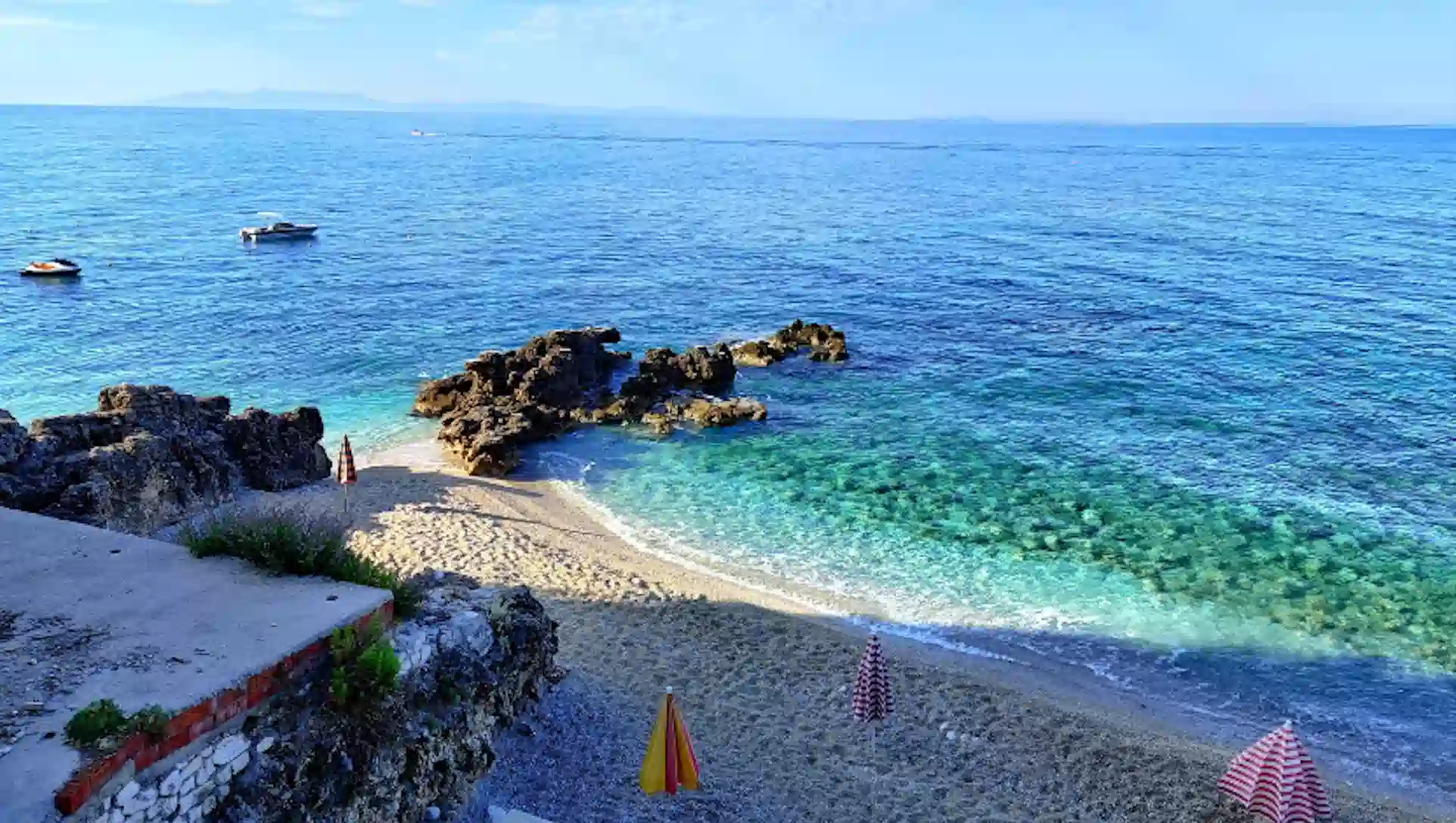
Albania remains underrated and undervisited, which for nomads translates directly into value. Tirana, the capital, has a growing café and coworking scene, low accommodation costs, and a young, English-speaking population. Coastal towns like Sarandë and Vlorë offer a different pace entirely — affordable, scenic, and increasingly connected.
$1,500/month in Albania goes a long way, and the country's EU candidate status means infrastructure investment is ongoing.
North Macedonia
Skopje is one of the most affordable capitals in Europe and doesn't get nearly the attention it deserves from the nomad community. Accommodation is cheap, food is good, and the country is small enough that you can see a lot of it without burning through a transport budget. $1,500/month here is a very comfortable existence.
Before your next trip...
If you're heading abroad, make sure you have the coverage you need.
Romania
Romania offers a wider range of experiences depending on where you base yourself. Cluj-Napoca has developed a reputation as a tech and startup hub, with a young, international population and a strong café culture — costs are low and the quality of life is high. Bucharest is larger and more urban, with more variable costs but still well within the $1,500 range for a comfortable setup. Brașov is worth mentioning for those who want a smaller, more scenic base in Transylvania.
Romania is part of the EU, affordable, and increasingly well-connected — a strong option that often gets overlooked in favor of its neighbors.
Serbia
Serbia isn't in the EU, which means it sits outside the Schengen zone — useful for nomads who need to manage their 90-day allowance across the rest of Europe. Belgrade has a well-established expat and nomad scene, a strong restaurant and nightlife culture, and accommodation costs that are firmly within budget. $1,500/month in Belgrade is genuinely comfortable, with enough left over for weekend trips around the Balkans.

Hungary and Poland
Both countries land in the mid-tier for European nomad value — more expensive than the Balkans, but still more affordable than Western Europe.
Budapest remains one of the most livable cities in Central Europe: excellent public transport, a strong café culture, beautiful architecture, and a nomad community that's been growing for years. $1,500/month is achievable, though accommodation in central neighborhoods has risen. You may need to budget more carefully or look slightly outside the tourist center.
Kraków in Poland is a similar proposition — a walkable, culturally rich city with lower costs than Warsaw and a strong quality of life. Warsaw works too, particularly for those who want a more cosmopolitan base, though costs are higher.
"After more than a decade of living this way and visiting over 125 countries, the pattern that shows up consistently isn't that people can't afford the nomadic life — it's that they're pricing it wrong."
Portugal
Portugal is the outlier on this list — a Western European country that, until recently, was genuinely affordable for nomads. Lisbon and Porto have both risen significantly in cost over the last several years as remote work demand has driven up accommodation prices.
$1,500/month in Lisbon is now tight, particularly for accommodation. It's doable with careful budgeting, but you'd feel the constraints in a way you wouldn't in the Balkans or Central Europe. The Algarve and smaller cities like Braga or Setúbal offer better value for those committed to Portugal. The country's Non-Habitual Resident tax regime and D8 digital nomad visa make it attractive for longer-term stays — just go in with updated expectations on cost.

What This Budget Doesn't Cover
The $1,500 is a living budget. It covers the month you're there.
Flights are a separate exercise, best approached through points, budget airlines, or strategic trip planning. Travel insurance — typically $50–150/month — is worth adding as its own line item. Visa fees (relevant for some non-EU passport holders in some destinations), months with significant regional travel, and unexpected costs like a medical visit or broken laptop aren't in the base number.
None of that breaks the math. It just means $1,500 is a monthly cost-of-living figure, not a complete budget.
The Real Barrier Isn't Money
After more than a decade of living this way and visiting over 125 countries, the pattern that shows up consistently isn't that people can't afford the nomadic life — it's that they're pricing it wrong. Vacation pricing and resident pricing are completely different markets, and many people who have traveled extensively have only ever experienced one of them.
The destinations exist. The infrastructure — fast WiFi, monthly rentals, established nomad communities — is in more cities than most people realize. $1,500/month isn't the floor of what's possible. It's proof that the lifestyle is far more financially accessible than most people assume when they first start doing the math.
Related posts



Upcoming travels ? Get Insured !
Find the right insurance for your trip by using our powerful comparison tool!