

Home > Travel Guide > Travel Tips & Checklists > How the Metro Works in Paris in 2026
Share this post
Ask almost anyone who has traveled to Paris, and they'll tell you that getting around involves a lot of walking.
While Paris isn't particularly large geographically (at least compared to American cities), famous sites, areas, and neighborhoods aren't confined to a single downtown area.
About 7 miles across and 6 miles north to south, you can get your fair share of walking in, depending on what you're hoping to see and do.
That's where the Paris metro comes in.
While public transport can feel intimidating for first-time travelers or those who aren't adapted to big-city life, Paris has an excellent, well-connected metro system.
The dozens of metro stops, staircases, and winding halls can seem staggering, and that large map of criss-crossed colorful lines is a mind-puzzle on steroids, the system is surprisingly easy to use.
Do keep in mind: This guide is for the metro, and doesn't describe or explain the Paris buses, trams, or other trains (like the RER).
How to use the Paris metro
The Paris metro can take you pretty much anywhere within Paris's 20 arrondissements (boroughs). With 14 different lines (and four more specific ones), getting to where you go is as simple as knowing which line you need to take and which direction you need to head towards.
You need to:
- Buy a metro ticket pass(the cards are called Navigo).
- Go to the metro station you need.
- Hold your Navigo pass over the ticket entrance kiosk (they're self-service kiosks).
- Follow the signs in the metro station to get to your line.
- Choose which direction you want to go (there are, for the most part, two choices for each line).
- Get on your metro!

How each line works
There are 14 main lines connecting all of the arrondissements. Each line has been assigned a specific color to make it easier to navigate. These colors don't change.
1 is yellow, 4 is red-violet, 12 is green, etc.
If you want to go from the Marais to the Louvre, just as an example, you can take the Line 1 (yellow). Every day, metros run back and forth every few minutes.
Every line has two end stations, i.e., the last stop on the line.
If you look at Line 1, the last stop on one end is La Défense. On the other, it's Château de Vincennes.
So, if you want to go from the Marais to the Louvre, you would go to the nearest metro stop that serves Line 1, walk down the stairs, tap your Navigo pass, and follow the signs for the 1 (yellow).
You'll need to know which stop you need and whether you need to travel towards La Défense or Château de la Vincennes.
Before you board...
Make sure you are covered by your travel insurance
In the metro, past the ticket kiosks and towards the metro platforms, there will be signs that help you know which direction you need to go. The signs will show you which metro stations they stop at when heading towards La Défense and which metro stations they stop at when heading towards Château de la Vincennes.
You can look at both (large) signs. The one that shows your necessary stop is the one you need to get on.
For this specific example, it would be La Défense. In order to return to the Louvre after becoming acquainted with the Mona Lisa? Château de Vincennes.
Every line in Paris works like this - there are only two directions to choose from, and there are clearly marked signs along the way.
There are a couple of lines that branch out as they approach the peripheral of Paris. If you're taking one of them to the end of the line, you need to make sure you get on the one that branches in the right direction. Don't worry - there will be signs in the metro, and it isn't common, especially for the tourist areas.
Knowing which metro stop you need
If you prefer printed materials, you can always go into any metro station and look at the map to see where you need to go.
While that's an option, the easiest way to know is to go to Google Maps and Directions. In Directions, put your current location and your destination (say, Montmartre).
Then, tap on the little "bus" icon on the screen.
You'll see a detailed description of the potential journey - which metro you need, where you can enter, where to transfer (if applicable), and which stop to get off at. It even shows ticketing options (which is the next section in this guide).
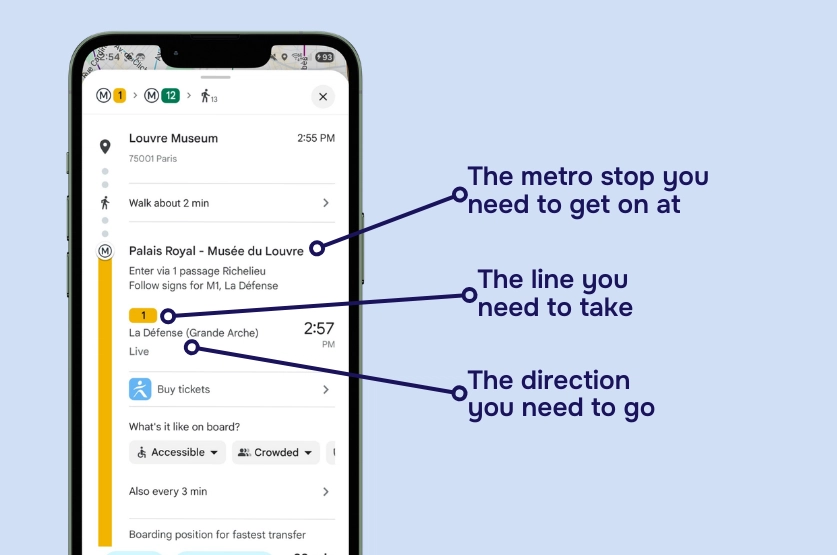
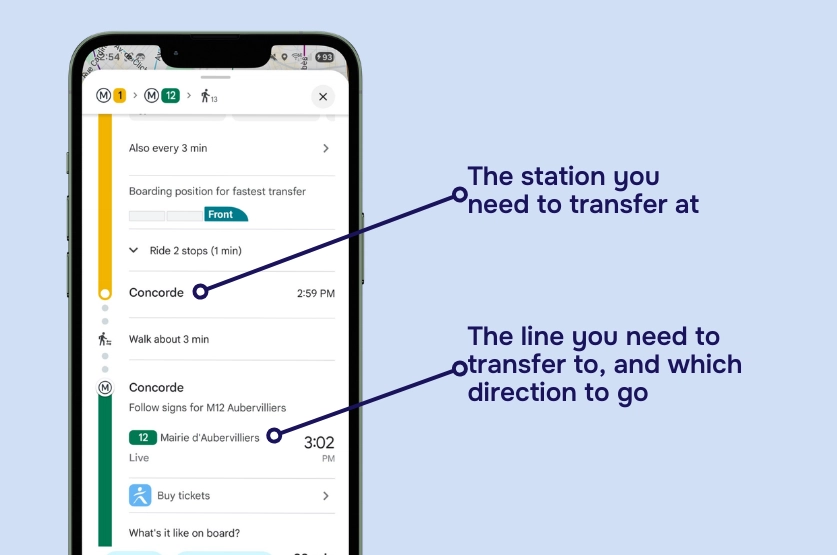
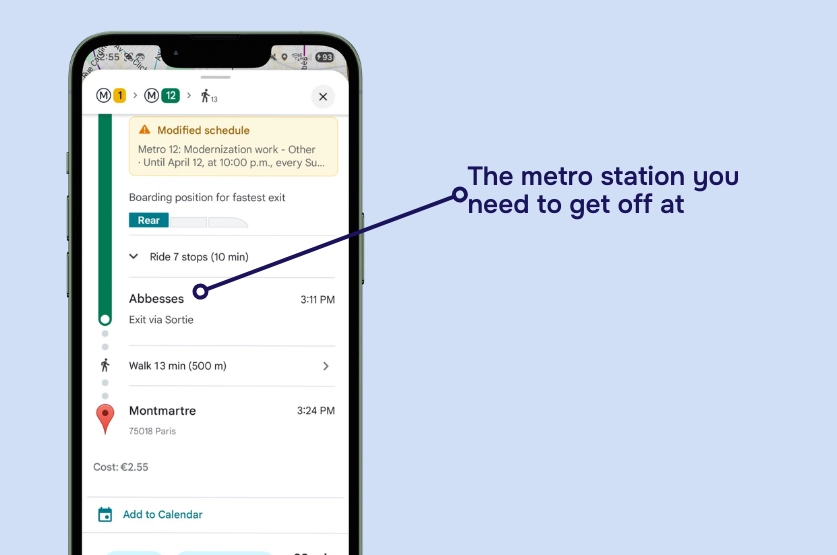
If you're heading from the Louvre to Montmartre, Google Maps will tell you to:
- Take the 1 (yellow) towards La Défense.
- Get off at the stop La Concorde.
- Get on the 12 (green) going towards Mairie d'Aubervilliers.
- Get off at Abbesses.
There are 4 other metro lines, too.
One is the funicular that takes you up to Montmartre. Another is a metro that runs for ORLY Airport. Then, there are two shorter "shuttle" lines: the 3bis and the 7bis.
How to get Paris metro tickets
You can get your metro tickets at virtually any metro station or ahead of time in-app. One option isn't better than another per se, other than there could be a line at the metro station you'd need to wait in. It just depends on how busy it is.
How to buy tickets at the metro station
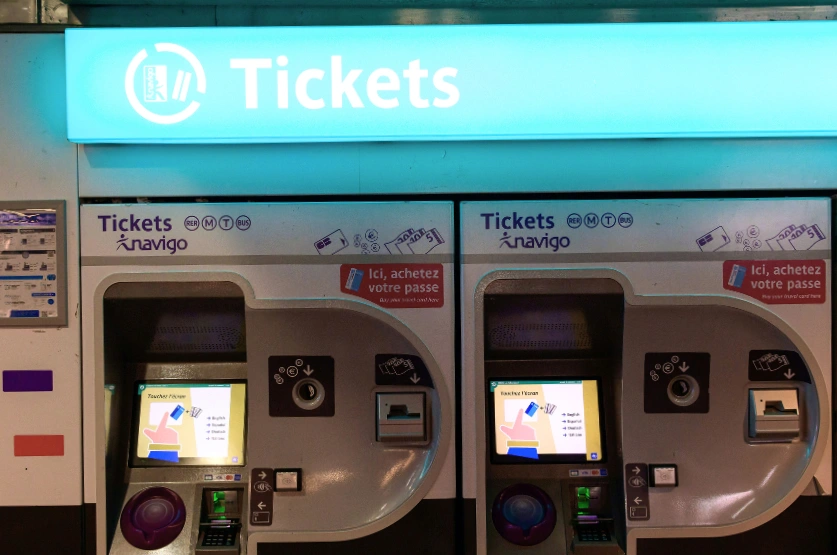
Metro stations are equipped with self-serve kiosks. They're against the wall and look similar to an ATM.
Once you go up to one, you can choose which language you'd like the session to be in, and then follow the prompts on the screen.
There are several ticket options to choose from, and they'll all (whether you get 1 or multiple) be loaded onto a reloadable card.
Kiosks accept card (including contactless) and euros.
How to buy tickets ahead of time
Official apps like Bonjour RATP, SNCF, and others sell metro tickets. In order to get
After downloading an app, you can follow the prompts and pay via credit or debit.
Which metro tickets to buy
Which metro tickets to buy depends on how often you plan to ride the metro and how long you're staying in Paris.
There are day, week, and month passes available that allow you to ride the metro an unlimited number of times during the validity of the pass.
You can also opt for "tickets". In 2025, physical tickets were discontinued, so now each ticket is digital on your Navigo card. Still, you can purchase trips "by the ticket".
If you only want to ride the metro twice (to Château de Vincennes, for example), you could buy just two tickets - one for the way there, and one to get back.
Paris metro tickets cost €2.55 each.
While a day or week pass is convenient and allows you to be flexible, if you're only going to be riding the metro two or three times, they're usually less cost-effective.
There is a reloadable day pass that allows you unlimited metro rides for €12.30. Unless you plan to ride the metro at least 5 times in one day, buying single tickets is still a better deal.
When looking at day, week, and month passes, it's worth the couple of minutes of math to check which one is actually the better deal.
You can find the current options and rates here.
Paris metro tips
If you're a first-time rider, the first ride can feel overwhelming. Parisians use the metro day-in and day out, so it's muscle memory to them. The fast-moving crowds can make even the most confident person feel like a fish out of water.
We have a few tips to help you get the hang of the ropes a bit faster.
Some doors open automatically, some don't
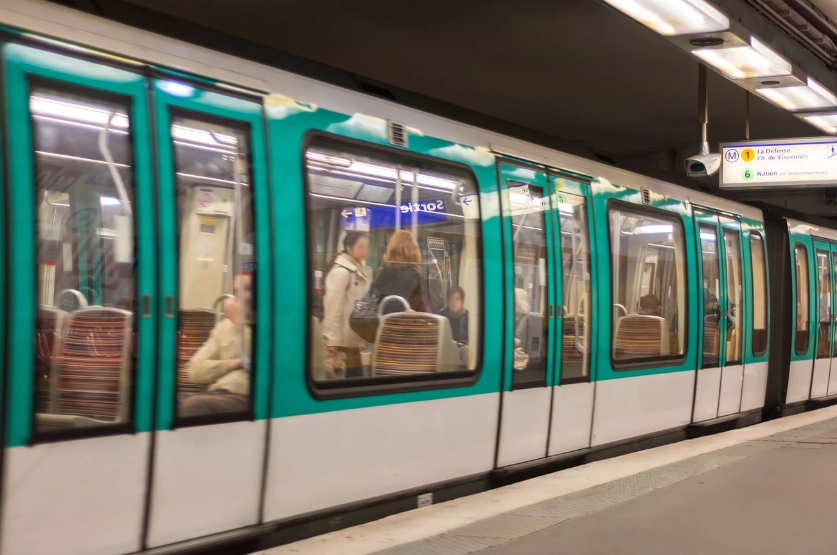
On some metro lines, the doors will open automatically - such as the 1 (yellow) or the 4 (red-violet).
Some lines, you have to open the door yourself. This is the case on lines with older train cars. While the City of Paris is working on updating all of them, they still exist.
If the door doesn't immediately open once the metro stops, you will need to either:
- Push a button at the "center" of the doors (where they open)
OR
- push a small lever up to "unlock" the door and open it.
Metros have a lot of stairs
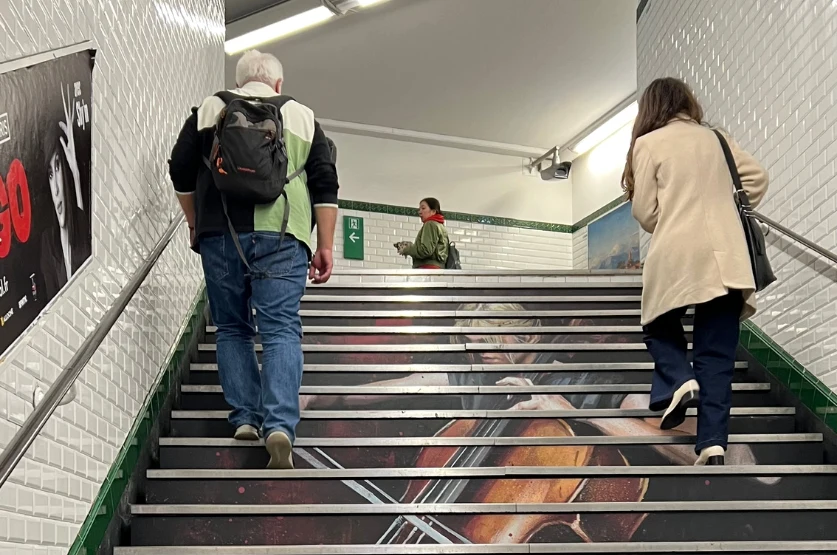
While many metro stations have an elevator or escalator available, it doesn't mean you can avoid stairs completely. Most metro stations will require you to go up and down a few stairs.
Some stops are infamous for how many stairs they have. Want to exit at Abbesses? You'll have 176 stairs awaiting you. Luckily, there is an elevator available, but you may have to wait for your turn for it.
Even with all of the stairs, Paris is still considered one of Europe's most walkable cities.
Watch out for pickpockets
Unfortunately, metro stations are common spots for pickpockets to work. We recommend that you read our pickpocket guide so you know all of the best practices and what to look out for to avoid getting your phone, wallet, or bag swiped.
Double-check the seats before you sit in them
While the metro cars are regularly sanitized, accidents happen. Double-check the seat before you sit in it to avoid plopping down on spilled water - or worse.
If the metro car is crowded, stand up
If you happen to be sitting in one of the seats near the door, it's common courtesy to stand up once the train car starts filling up. You'll notice others beginning to stand when it gets full.
Unless you're unable to stand, you should follow suit. In fact, most train cars even have a small sign in the train that encourages this.
Transferring metros is free
If you need to connect to another metro in order to get to your destination (for example, from the Louvre to Montmartre), changing metros is free - so long as you stay in the ticketed area of the metro station.
Once you leave the "ticket only" area, you'll need to pay again.
In order to leave the ticketed area, you'll need to go through metal "doors" on a narrow kiosk. It'll be pretty clear that that is the ticket-area exit.
Keep your Navigo pass accessible to avoid fines
Occasionally, RATP officials check tickets in the metro station, either after you've entered the ticket area or when you get off at a specific stop. It isn't common, but it happens from time to time.
If you see someone in an official uniform (usually with a light teal vest), and a card reader/scanner gun, you'll need to show them your Navigo pass. They will scan it to check whether or not you went through the kiosk and tapped your Navigo pass to pay.
If you didn't, you will be fined on the spot and have to pay then and there.
The Paris metro isn't 24/7
The Paris metro runs from early morning (around 5:30-6:00 am) until 12:30 to 2:00 am. It depends on the line.
You can check the official RATP website to find specific times for each line.
Do keep in mind, however, that the Paris metro regularly undergoes renovation and work, so there may be modified schedules on some days and during some weeks or months.
Only buy metro tickets from official sellers
In some metro stations, you may see individuals trying to sell metro tickets. This is a scam.
Make sure you purchase your tickets from either the self-serve kiosks at the metro station or through the official app(s).
Additional resources
- Make sure you get the right travel adapter. Read our France Plug Type Guide
- Have tickets to Versailles? Read How to Travel from Paris to Versailles
- Haven't booked your hotel yet? Learn about where to stay in Paris
Related posts



Upcoming travels ? Get Insured !
Find the right insurance for your trip by using our powerful comparison tool!