
Home > Travel Guide > Travel Planning > Tips for Traveling to Plovdiv, Bulgaria
Share this post
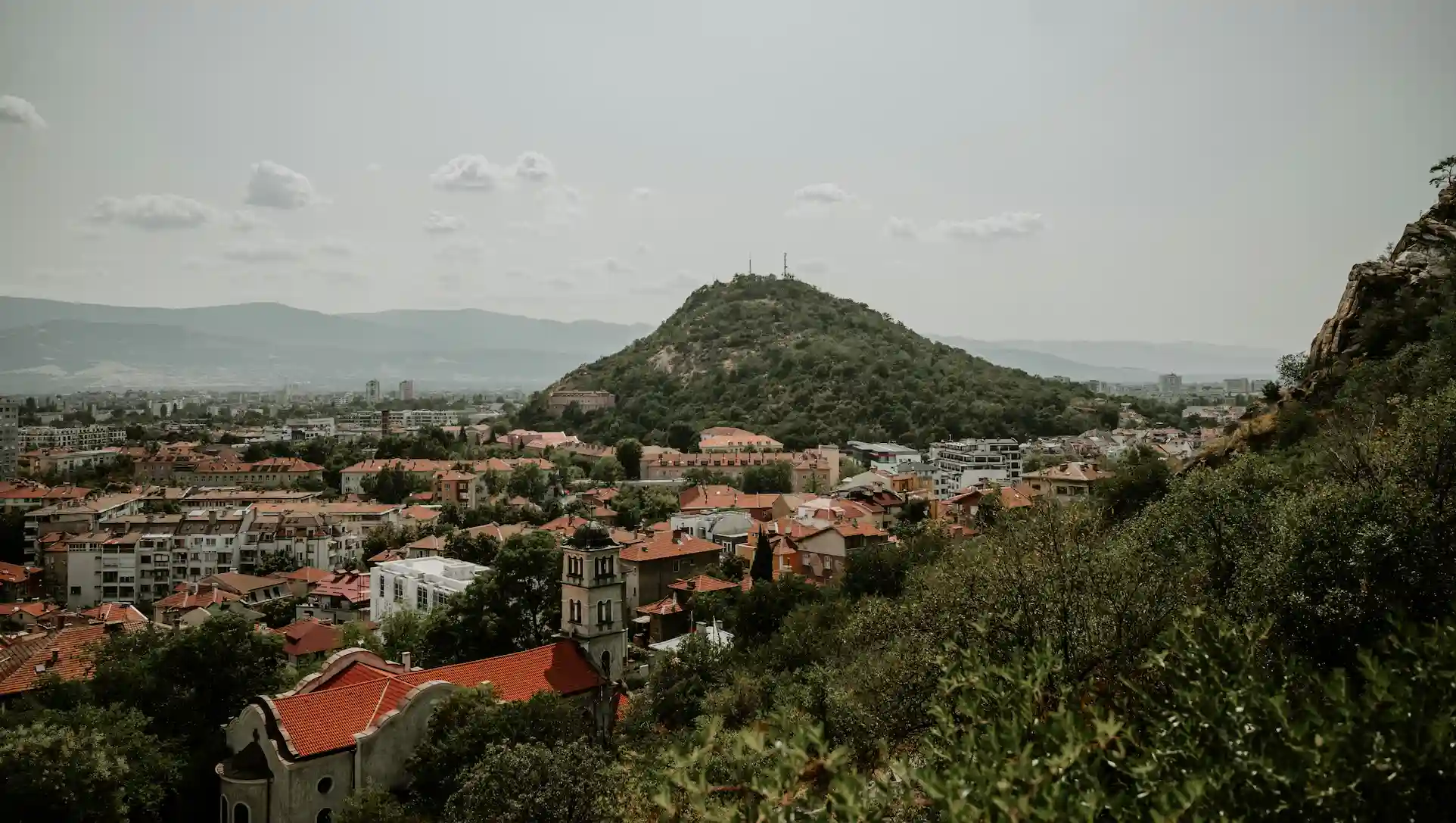
Plovdiv is one of those cities that does not try too hard to impress you. And somehow that is exactly why people end up liking it.
It is often described as one of the oldest continuously inhabited cities in Europe, but when you arrive, it does not feel heavy or overly historical. Instead, it feels lived in. Creative. A little slower than you might expect.
You will find Roman ruins in the middle of the city, colorful houses sitting on hills, and a café culture that encourages you to stay longer than planned.
If you are thinking about visiting, it helps to have a few things prepared in advance, from practical details to making sure your travel insurance is in place before your trip to Plovdiv.
Give yourself time to wander
Plovdiv is not a city that needs a strict itinerary.
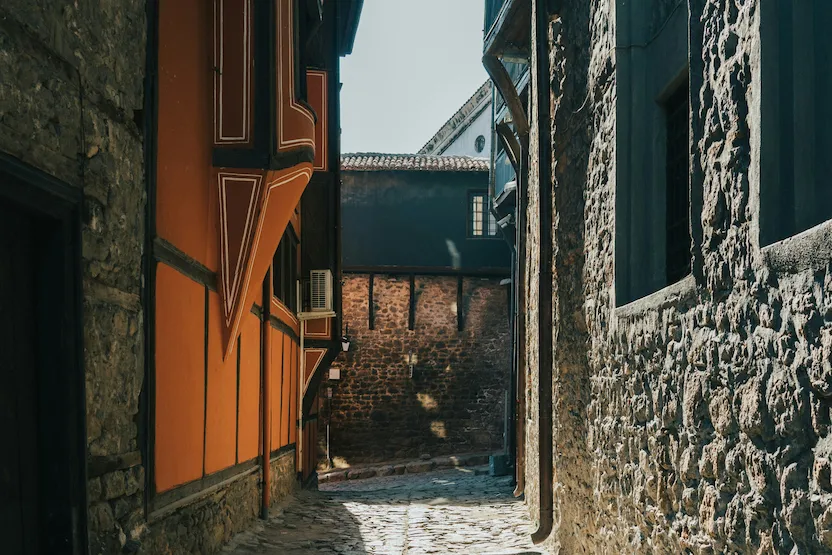
In fact, trying to plan every hour will probably take away from the experience. The Old Town is small enough to explore on foot, and part of the charm comes from getting slightly lost along the way.
The streets curve unexpectedly. Small galleries appear between houses. You might walk past a quiet courtyard and decide to stop for a coffee without really planning to.
If you only have one day, you can still see quite a lot. But if you have the option, staying a little longer makes a difference. The pace of the city is slow, and it is best experienced that way.
The Old Town is not flat
This is something many people do not realize before arriving.
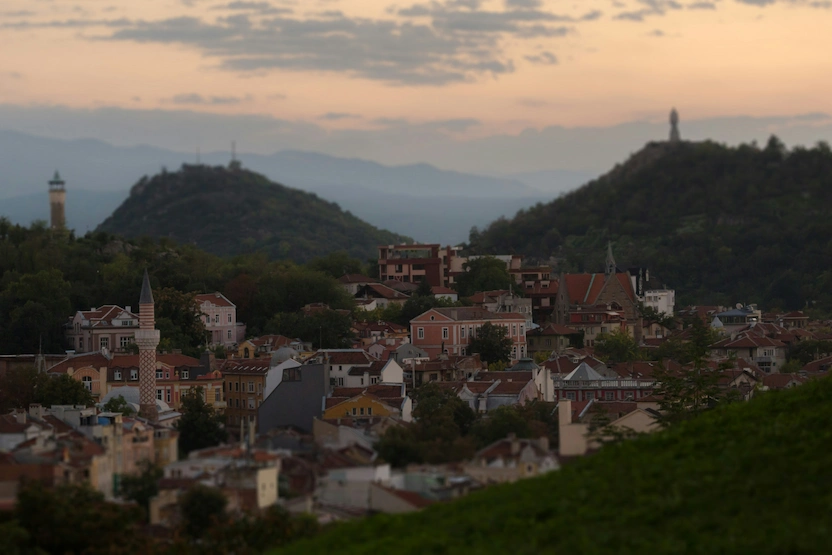
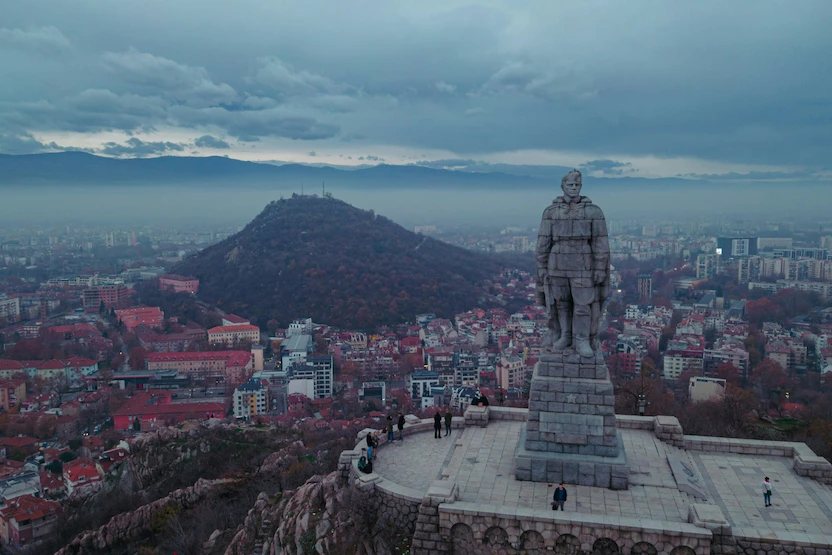
Plovdiv is built on several hills, and the Old Town sits on top of them. The streets are cobbled, uneven, and often steep. It is beautiful, but it can be tiring if you are not prepared.
Comfortable shoes make a big difference here.
At the same time, those hills are part of what gives the city its character. From the top, you get views over the rooftops and across the surrounding area.
So yes, there is a bit of effort involved. But it is usually worth it.
Do not skip the Roman ruins
One of the most surprising things about Plovdiv is how casually history is woven into everyday life.
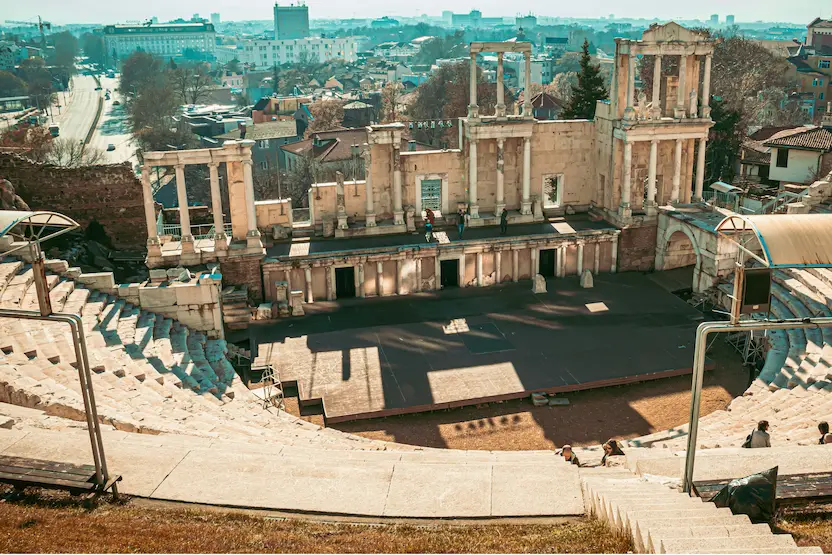
You might be walking through the city center and suddenly come across a Roman amphitheater. Or notice ancient ruins built into modern buildings.
Planning a trip Plovdiv?
Get the travel insurance you need, 100% online.
The Ancient Theatre of Plovdiv is one of the highlights. It is well preserved and still used for performances today. Sitting there for a few minutes, even without a show, gives you a sense of just how old the city really is.
There is also a Roman stadium hidden beneath the main pedestrian street. Parts of it are visible, while others are integrated into the modern city above.
You do not need to visit every historical site. But seeing at least one or two helps you understand what makes Plovdiv different.
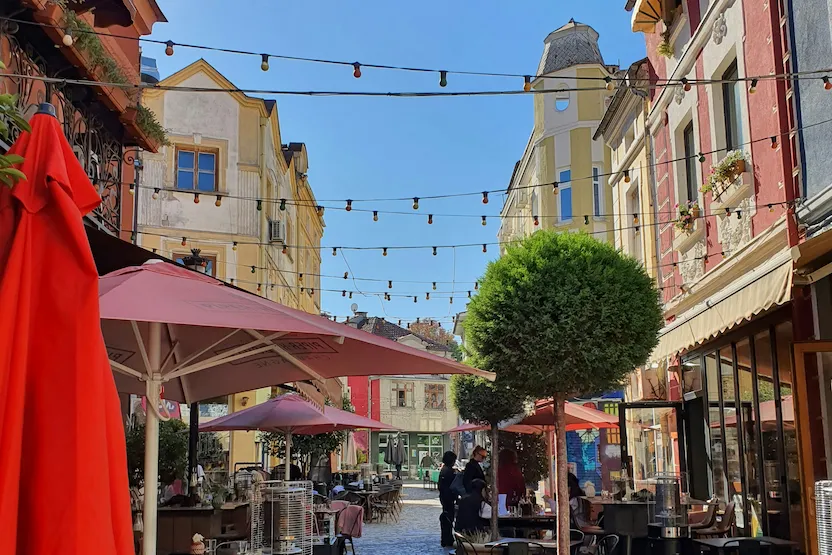
Kapana, the creative side of the city
You will probably end up in Kapana without planning to.
It sits just below the Old Town, and at first, it does not look like much. Then you turn into one of the smaller streets and realize the whole area is a bit of a maze.
The name actually means “the trap,” which makes sense once you are inside it. Streets cross over each other, directions stop making sense, and you just follow whatever looks interesting.
This is where Plovdiv feels more modern. Small shops, independent brands, cafés that spill out onto the street. In the evening, it gets livelier, but not in an overwhelming way.
It is a good place to slow down for a bit. Sit somewhere, order something simple, and stay longer than you planned.
About money and paying for things
One small detail that is easy to overlook before arriving.
Bulgaria is part of the European Union, and since January 2026, they have adopted the euro as its official currency.
Cards are accepted in many places, especially in restaurants and hotels. But not everywhere. Smaller spots still prefer cash, and sometimes it is just easier to have some on you.
You do not need a lot. Just enough so you are not caught off guard if a place does not take cards.
ATMs are easy to find, so this is not something you need to stress about.
It is more affordable than you expect
This is something you notice pretty quickly.
Compared to Western Europe, prices feel lower across the board. Food, drinks, even accommodation. It changes the way you move through the city.
You are less likely to rush through a meal. More likely to sit down for an extra coffee. Or order something you would normally skip.
It makes the experience feel more relaxed without really trying.
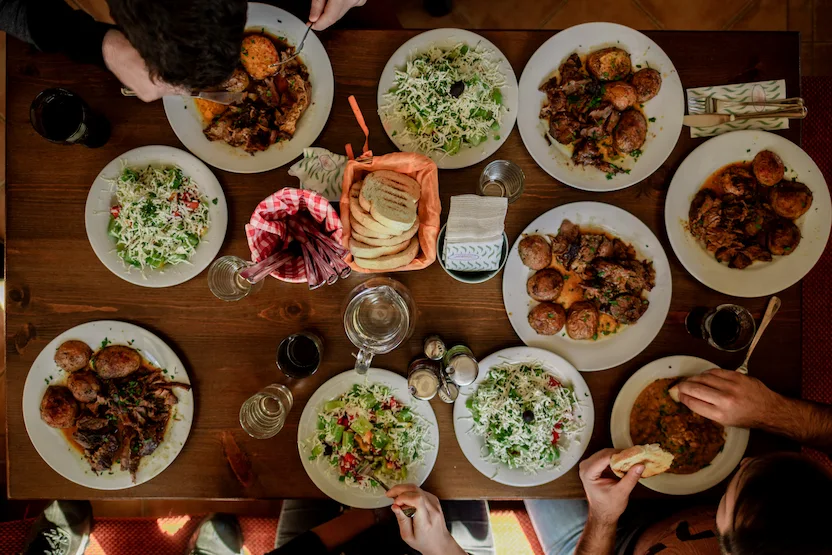
The Food Is Simple but Good
Food in Plovdiv is not complicated, but that is part of the appeal.
You will see a lot of grilled meat, fresh vegetables, bread, and yogurt-based sauces. It is the kind of food that feels familiar even if you have not had it before.
Shopska salad shows up almost everywhere. Tomatoes, cucumbers, peppers, and cheese on top. It sounds basic, but it works.
Some of the better meals are not in the obvious places. Small restaurants, slightly tucked away, often end up being the ones you remember.
Getting to Plovdiv
Most people arrive from Sofia.
The journey takes around two hours, either by train or bus. Both are straightforward, and you do not need to overthink it.
Once you are there, you will notice how walkable the city is. The main areas are close enough that you can move around without planning too much.
Taxis exist, but you will probably not rely on them much.
The pace feels different
Plovdiv does not feel rushed, and it does not try to be.
There is no pressure to see everything quickly. You walk, you stop, you sit somewhere, then continue. The city seems to work better that way.
What stays with most people is not one specific landmark. It is the overall feeling of the place.
A mix of history, everyday life, and something slightly creative that is hard to define at first.
And it usually takes a little time before you notice it.
Additional resources...
Some travelers need a visa before traveling to Europe: Schengen visa guide
 Sources & references
- Internal Expertise & Review
- Our team comprises European travel experts from all around the globe. With more than 15 years of experience in helping, inspiring, and motivating travelers, we're dedicated to creating resources and guides that are accurate, relevant, and easy to understand.
- Plovdiv Tourism:
- Plovdiv Tourism Site : The official Tourism Site for Plovdiv, Bulgaria
- Plovdiv Tourist Center : Contact information for the Municipal tourist information center in Plovdiv
- Things to See & Do:
- Old Plovdiv : Details on Roman ruins and ancient spots in Plovdiv
- Written by:
- Savannah Sitterlé - Staff Contributor
- Fact-check and reviewed by:
- Sarah Pardi - Staff Travel Advisor
- Last updated:
- March 20, 2026
Learn more about our editorial standards and review process in our Editorial Policy.
Related posts


Upcoming travels ? Get Insured !
Find the right insurance for your trip by using our powerful comparison tool!