

Traveling to Spain from the US: What to Know Before You Go
Savannah Sitterlé - July 30, 2026
Home > Travel Guide > Travel Planning > Traveling to Spain from the US: What to Know Before You Go
Share this post
Spain is one of those countries that feels familiar before you even arrive.
People picture long dinners, late evenings, beaches, historic cities, and crowded plazas. Some of that is accurate. But once you are actually there, the rhythm of daily life feels different than many first time visitors expect.
Things happen later. Meals stretch longer. Cities stay active well into the evening.
If you are traveling from the US to Spain for the first time, it helps to understand a few practical details before leaving. Not because the trip is difficult, but because small things tend to shape how smoothly everything goes once you arrive.
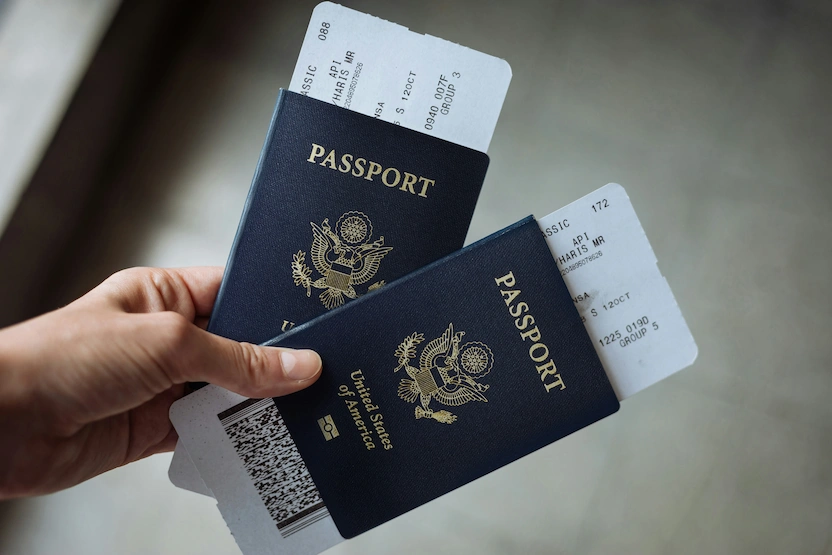
Entry requirements and travel documents
For most US travelers, entering Spain for short stays is relatively straightforward.
At the moment, US passport holders can usually travel to Spain for tourism without a visa for stays under 90 days within the Schengen Area. Your passport should also remain valid for several months beyond your trip.
Spain is also part of the new EES for Europe border system, which is now being rolled out across the Schengen Area. Travelers entering or leaving may have biometric information such as fingerprints and facial images digitally recorded at certain border points.
The ETIAS travel authorization system is also expected to begin soon (likely in 2027) for visa-exempt travelers visiting countries within the Schengen Area, including Spain. US travelers do not currently need to apply yet.
Requirements can shift over time, so checking official information before departure is always worth doing.

Flights and arriving in Spain
Most flights from the US arrive in Madrid or Barcelona.
If you are flying overnight, the first day can feel slightly strange after landing. Jet lag tends to hit harder when you try to immediately fit in too much after arrival.
Keeping the first day lighter usually helps.
Arrival procedures themselves are generally straightforward, although passport control lines depend a lot on timing and the airport. Some move quickly, others take longer than expected.
Once you leave the airport, getting into the city is usually easy enough. Trains, airport buses, taxis, and rideshares are all common depending on where you land.

Spain moves on a different schedule
This is one of the things people notice fastest.
Lunch is later. Dinner is later. In many cities, restaurants do not really fill up until well into the evening.
Some smaller businesses may also close for part of the afternoon, especially outside major tourist areas.
Planning to travel to Spain?
Get the travel insurance you need, 100% online.
At first, the timing can feel a bit unusual. After a few days, most visitors naturally settle into it.
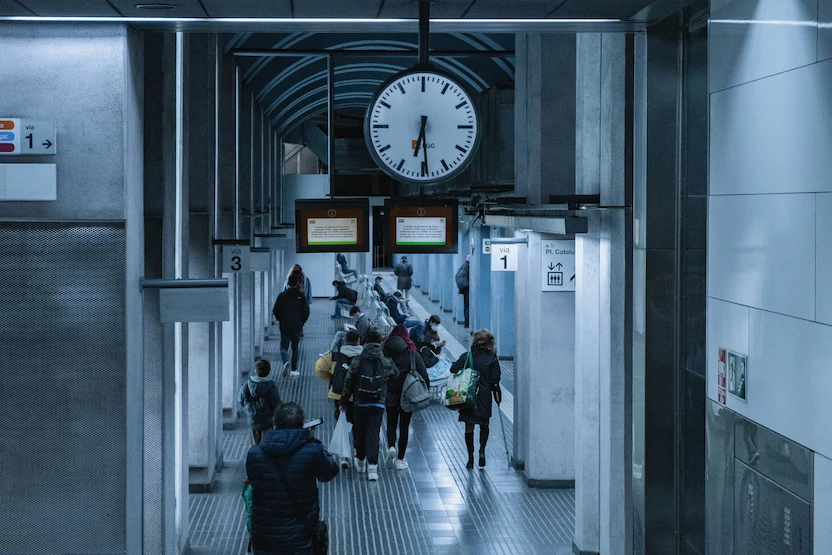
Traveling between cities
Getting around Spain is easier than many first-time visitors expect.
High-speed trains connect major cities like Madrid, Barcelona, Seville, and Valencia, and journeys between them are often faster than people assume.
For smaller towns or coastal areas, regional trains and buses usually fill the gaps.
If your trip includes several destinations, it helps not to over-plan every day too tightly. Spain tends to feel better when there is room to slow down a little between places.
Cash, cards, and everyday costs
Cards are widely accepted throughout Spain.
Still, having a small amount of cash with you is useful, especially in older cafés, local markets, or smaller businesses.
Tipping also works a little differently than in the US. Large tips are not generally expected in the same way, although rounding up or leaving something small after a meal is common.

Crowds and tourist areas
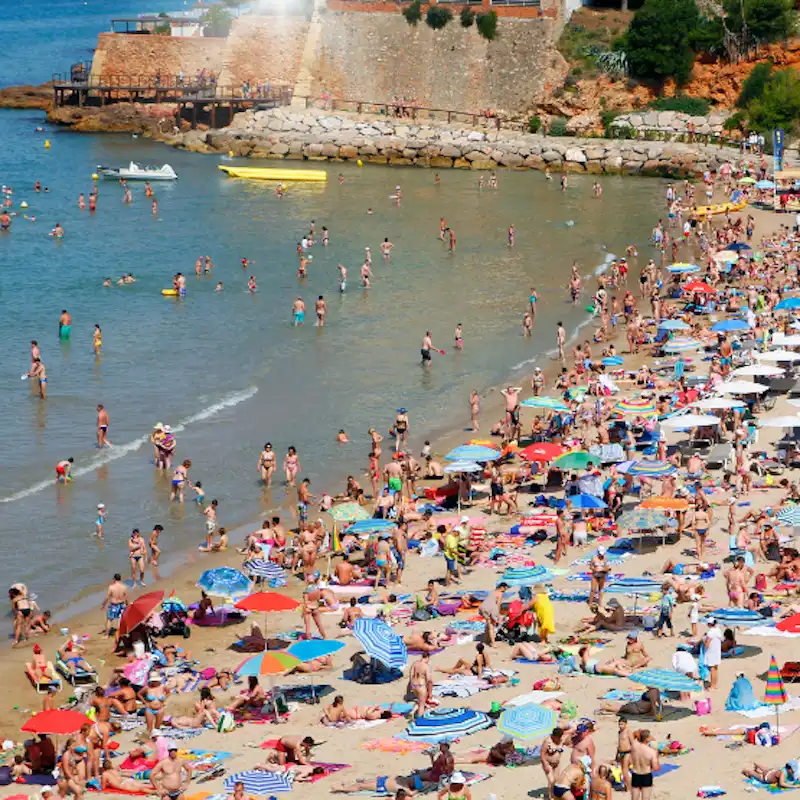
Spain receives millions of visitors every year, especially during spring and summer.
Places like Barcelona, Madrid, and parts of southern Spain can become extremely busy around major landmarks, train stations, and central streets.
Nothing unusual, but once places start getting packed shoulder to shoulder, you naturally pay a bit more attention to your phone, wallet, or bag than you normally would.
It is also worth knowing basic emergency numbers in Europe. Most people never need them, but it is the kind of information that is better to already have somewhere in the back of your mind.

Summer heat feels different in some parts of Spain
A lot of visitors underestimate the heat, especially in southern cities during summer.
You think you are prepared, then suddenly it is mid-afternoon, there is barely any shade, and walking across the city starts feeling much harder than expected.
People living there tend to work around it without really thinking about it. Things slow down during the hottest part of the day, then pick back up again later in the evening once temperatures drop a little.
After a day or two, most travelers naturally start doing the same thing.

A different pace once you arrive
What surprises many visitors about Spain is not just the architecture or landmarks.
It is how daily life feels once you settle into it.
Longer meals, slower evenings, people outside late into the night, and less pressure to move quickly between activities.
The trip usually becomes easier once you stop trying to fit everything into a rigid schedule.
Before traveling, it is worth sorting a few practical things ahead of time, even if you do not expect to need them. Flights get delayed, luggage goes missing, plans change unexpectedly. Most of the time it is manageable, but having travel insurance already in place removes a bit of stress if something does not go exactly the way you planned.
 Sources & references
- Internal Expertise & Review
- We're a team of travel experts and Schengen visa professionals with more than 15 years of experience. We are committed to creating and sharing relevant guides that are accurate and up-to-date about Spain travel.
- Spain Travel
- European Union EES guidelines : Learn more about Europe's entry/exit system
- European Union ETIAS information : Learn more about the upcoming ETIAS requirements
- Written by:
- Savannah Sitterlé - Staff Contributor
- Fact-check and reviewed by:
- Sarah Pardi - Staff Travel Advisor
- Last updated:
- July 30, 2026
Learn more about our editorial standards and review process in our Editorial Policy.
Related posts



Upcoming travels ? Get Insured !
Find the right insurance for your trip by using our powerful comparison tool!