
Avoiding Crowds In 2026? The Best Summer Holiday Destinations in Europe
Emese Maczko - June 23, 2026
Home > Travel Guide > Travel Planning > Avoiding Crowds In 2026? The Best Summer Holiday Destinations in Europe
Share this post
When searching for the best summer holiday destinations in Europe, many travelers assume that if they avoid the capital cities, they can escape the crowds. However, recent data proves this strategy is flawed.
The capital regions in Europe are indeed the primary bottlenecks; heading South changes the equation entirely. In Mediterranean countries, capitals are often significantly less crowded than coastal hotspots.
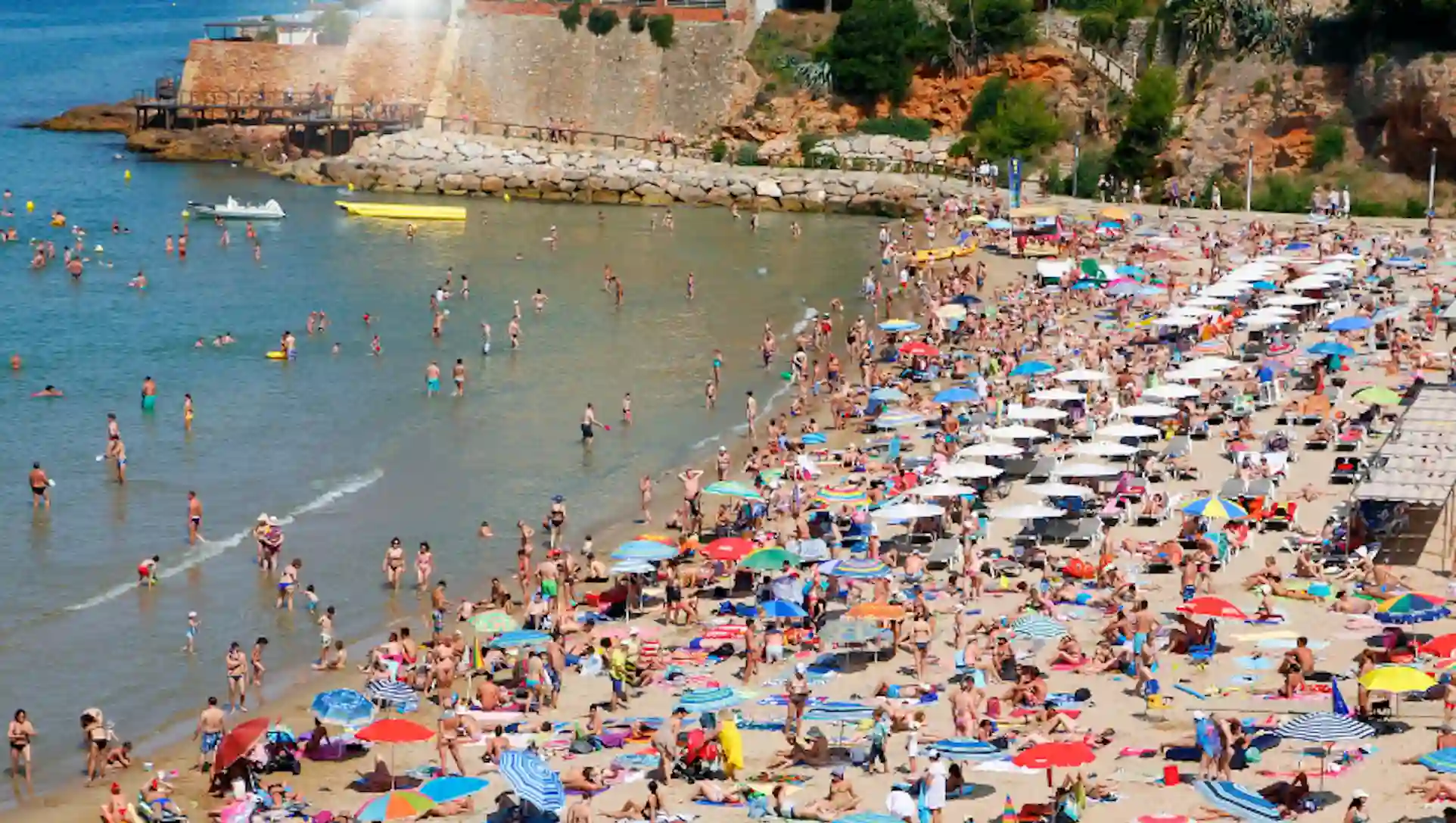
Mallorca and Barcelona are more popular than Madrid during the summer. The same goes for Venice over Rome, Santorini over Athens, or the Algarve over Lisbon. To find truly uncrowded European destinations, travelers must look beyond generic travel advice.
The 10 Best Under-Touristed European Countries for Summer
Travelers looking to avoid crowds in Europe should look beyond the most visited hotspots and consider less-touristed destinations. But which European countries still fly under the radar?
Data from Eurostat shows a massive geographic imbalance in European travel. Just three countries—Spain, Italy and France—account for almost 50% of all European tourism nights. Meanwhile, nations like Latvia, Slovenia and Finland sit at the end of the list.
But total visitor nights only tell part of the story. A large country can absorb high numbers of visitors more easily than a small island or coastal destination.
Eurostat measures 'tourism intensity' as the number of tourist nights recorded per resident. It is a crucial metric to understand how crowded a destination actually feels during summer.
Spain ranked highest for tourism intensity, followed by Italy and then France, but they are still around the EU average of 6.7 tourist nights per inhabitant.
However, Iceland, Croatia and Malta recorded some of the highest levels, with more than 20 tourist nights per resident, while places such as Romania, Latvia and Poland remained far lower on the scale with around 1-3 tourist nights per resident.
If the goal is to avoid Europe's highest-volume and highest-pressure tourism areas, these 10 countries are the strongest candidates:
| Rank | Destination | Total tourist nights, 2024 | Tourism density, 2024 | Crowd avoidance fit |
|---|---|---|---|---|
| 1 | Kosovo | 1.5 million | 0.86 | Lowest pressure on both measures |
| 2 | North Macedonia | 2.2 million | 1.19 | Very low total volume and intensity |
| 3 | Latvia | 4.7 million | 2.51 | Strong low-crowd EU candidate |
| 4 | Albania | 7.4 million | 2.70 | Low intensity, though rising in popularity |
| 5 | Lithuania | 8.6 million | 2.99 | Low overall volume and low pressure |
| 6 | Serbia | 12.7 million | 1.87 | Very low intensity despite more total nights |
| 7 | Slovakia | 14.7 million | 2.70 | Still webt below EU average |
| 8 | Estonia | 6.2 million | 4.83 | Low volume, moderate but still below-average intensity |
| 9 | Finland | 22.7 million | 4.05 | Larger than the Baltics, but still low pressure |
| 10 | Romania | 29.2 million | 1.59 | Higher total nights, but very low per-resident pressure |
Destination Dupes: Quiet Regions in Europe's Most Popular Countries
Avoiding crowds in Europe does not always mean skipping the continent's most popular countries altogether. It means travelers need to shift to less-visited regions if they want to escape long lines, packed attractions, busy streets and a rushed pace.
Travelers choosing a secondary city instead of the capital, an inland region instead of the coast, or a less famous beach destination can avoid the worst of the crowds without abandoning high-volume destinations entirely.
Regional data from Eurostat show that Europe's heaviest tourism pressure was concentrated in just nine regions, each with more than 30 million tourist nights.
Planning a trip abroad?
Get the travel insurance you need, 100% online.
These nine highest-pressure tourism regions include famous capitals such as Paris, Rome and Madrid, island and coastal hotspots such as Mallorca, Tenerife, Barcelona, Alicante and Venice, and the mountain region of Bolzano-Bozen.
The data also says that 128 lowest-pressure regions (fewer than 1,000 tourist nights per 1,000 inhabitants) are clustered in Poland (29), Romania (24), Germany (20), Bulgaria (14) and Belgium (11).
Several of these regions are low-pressure for a reason: they are not places travelers would choose as summer holiday destinations. However, these 5 regions within Europe's most-visited countries do offer UNESCO sites, walkable historic towns, Roman mosaics, or a quieter coastline without the masses.
| Region to mention | Country | Total tourist nights, 2024 | Why it's interesting |
|---|---|---|---|
| Benevento | Italy | 106,197 | The Arch of Trajan & the Church of Santa Sofia are part of the Longobards in Italy, UNESCO World Heritage Site |
| Enna / Piazza Armerina area | Italy | 138,586 | Less obvious Sicily region, has UNESCO site Villa Romana del Casale, known for Roman mosaics |
| El Hierro | Spain | 164, 229 | The smallest Canary Island, volcanic landscapes, UNESCO Biosphere Reserve designation |
| Meuse / Verdun area | France | 306,211 | Verdun battlefield circuit, Fort Douaumont, Douaumont Ossuary, WWI sites |
| Cuenca | Spain | 943,766 | UNESCO-listed walled town, hanging houses & cliffside setting |
When to Visit: Shoulder Season vs. Summer Travel
Where visitors go in Europe matters, but when they go may matter just as much. According to Eurostat, July, August and September alone account for over 40% of all nights spent in EU tourist accommodation.
That summer concentration is even higher in some coastal destinations. Along both the Mediterranean coast in Croatia and the Black Sea coast in Bulgaria, almost 70% of all tourist nights were recorded in the third quarter.
The data shows that the highest summer visitor pressure is concentrated in major coastal and island regions. Cataluña, the Balearic Islands, Veneto, Nouvelle-Aquitaine, and Occitanie recorded the most visitor nights during the summer months, with each region accounting for about 32 million to 40 million nights.
These regions are still popular outside summer, but spring and fall are clearly lower-pressure alternatives. Cataluña remains the busiest of the group in both shoulder seasons, while Nouvelle-Aquitaine and Occitanie show the sharpest drop compared with summer.
| Region | Country | Spring total, 2024 | Summer total, 2024 | Fall total, 2024 |
|---|---|---|---|---|
| Cataluña | Spain | 19,799,582 | 36,690,520 | 19,668,289 |
| Illes Balears | Spain | 15,235,716 | 37,492,183 | 19,565,915 |
| Veneto | Italy | 14,969,426 | 36,014,387 | 15,013,394 |
| Nouvelle-Aquitane | France | 10,415,505 | 33,045,582 | 9,419,037 |
| Occitanie | France | 10,384,418 | 31,946,379 | 9,362,661 |
For travelers planning to visit one of Europe's busiest coastal or island regions, seasonality can make a major difference. Choosing spring or fall may not mean having the place to yourself, but it can help avoid the heaviest summer crowds and escape the heat.
But not every European summer hotspot follows the same pattern. The Canary Islands in Spain and Madeira in Portugal have balanced tourism calendars, with about a quarter of tourist nights falling in each quarter.
Rethinking Your European Summer Itinerary To Avoid The Crowds
Most international travelers enter Europe through major airports near capitals or large cities, but that does not mean the whole trip has to be there. Think of busy cities such as Paris, Rome, Madrid, Barcelona and Milan as arrival points rather than final destinations.
Instead of stopping in the airport city or heading straight to the most famous beach region, I recommend that travelers use trains, buses, ferries, or local public transport to reach smaller cities, rural areas, and lower-pressure regions nearby, not to mention to lower their footprint.
Day trips can be among the easiest ways to rethink a European summer itinerary without overcomplicating it. When I visited Madrid, I did not stay only in the city. I used it as a base to explore Segovia and Toledo, both about an hour from the capital by high-speed trains. The best places to go in Spain are not necessarily in Madrid or in Barcelona.
Road trips can open even more options, especially in places where public transport is limited. You can explore quaint villages, national parks, wine regions, coastlines and mountain areas that may not appear on a standard first-time Europe itinerary.
Related posts



Upcoming travels ? Get Insured !
Find the right insurance for your trip by using our powerful comparison tool!
Emese Maczko - October 20, 2026
Emese Maczko - October 9, 2026
Emese Maczko - September 2, 2026