

Spain travel requirements, what you actually need in 2026
Sarah Pardi - August 18, 2026
Home > Travel Guide > Travel Requirements, Policy & Authorization > Spain travel requirements, what you actually need in 2026
Share this post
Two big changes happened for travelers heading to Spain this year; while one was widely reported on (and still continues to be), the other is less known.
The first is that passport stamps have gone away. Since April 10th, 2026, most visitors are registered and tracked biometrically. This means that how many days you’re in Spain is now counted in a digital database rather than just via your passport stamps.
The second big change is that Spain updated its proof-of-funds thresholds in January, which affects all non-EU travelers in different ways.
This guide is what you actually need at the border (and before), what has changed, and what information you should have ready before you go.
Are you planning a trip to Spain?
Protect your Spanish holiday now ✈️
What are the current entry requirements for Spain?
They’re different for travelers with different passports. This means that US citizens and Chinese citizens, for example, have different entry requirements.
Today, US citizens only need to present a valid passport to travel to Spain, but you can be asked for more information at the border. Spanish border agents can ask to see proof of onward travel, proof of accommodation, and proof of sufficient funds. Currently, the Spanish government considers 122 euros per person, per day to be the adequate amount.
As long as your trip is under 90 days in length (in a 180-day period), you do not need a visa to visit Spain as a US citizen. Your days/limit are tracked through the EU Entry/Exit System (EES).
Your passport & what you need at the border
If you don’t need a visa, your passport has to meet two very specific conditions; one is more well known than the other.
First, it needs to be valid for at least three months beyond your intended departure from the Schengen Area. While sometimes 6 months is recommended, three months is the rule. Keep in mind that it is counting the entire Schengen Area, so it isn’t three months from when you leave Spain, it’s three months from when you leave a country that is a Schengen member. So it includes Italy, Portugal, France, etc.
The second is that it needs to have been issued in the past 10 years. In the US, the standard passport expires after 10 years anyway, so if yours is getting close to expiring, you may want to (or need to) renew it before heading to Spain.
The requirements are the same for children.
Then, there’s also another thing you need to think about. Damaged passports and ones that are all out of blank pages may cause issues when you travel. Additionally, the US Department of State says that you cannot travel with a passport that has been reported as lost or stolen.
Documents Spanish border officers can ask for
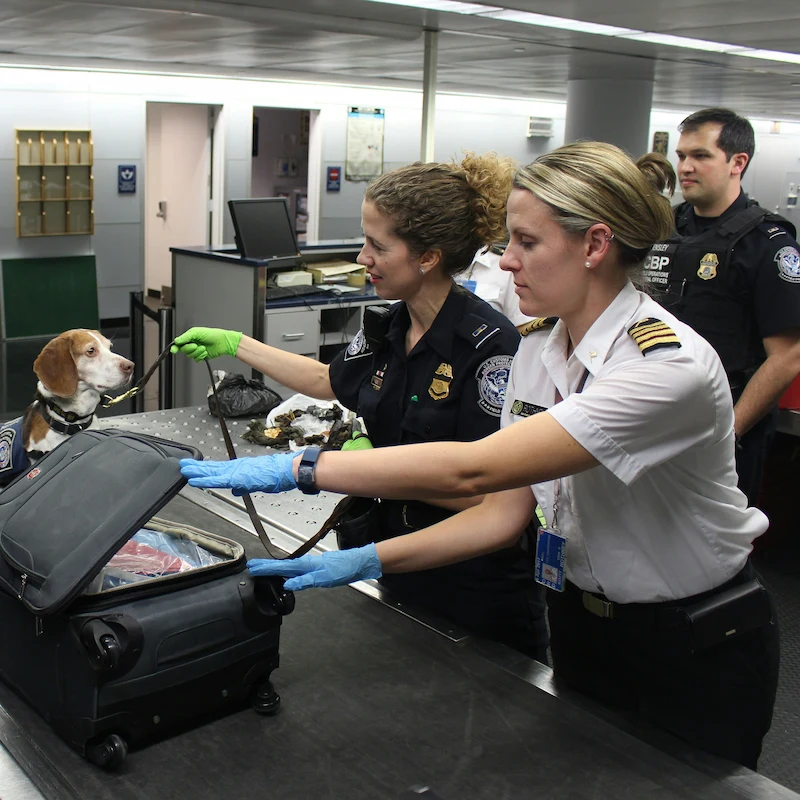
While travelers from just shy of 60 countries can visit Spain without a visa, having visa-exemption doesn’t guarantee your entry. It gives you permission to go to the border for entry. Once at the border, officers can ask you for supporting documents should they choose to. While it isn’t common, it can happen, and sometimes does.
| What they can ask for | The requirement |
|---|---|
| Proof of funds | €122 per person, per day. €1,099 minimum for stays 9+ days. Typically shown in bank statements. |
| Onward travel | Your departure ticket or booking confirmation |
| The purpose of your trip | Itinerary, conference registration, etc. If tourism, accommodation proof can suffice |
| Accommodation | Proof you have somewhere to stay. Hotel booking, rental confirmation, carta de invitación, etc. |
| Travel insurance | Not legally required for visa-free visitors, though advised |
The funds requirement was raised on January 1st, 2026, and was indexed to Spain’s minimum wage, which rose to 1,220 euros. The Spanish Government doesn’t say what form that proof of funds have to be presented in, but for visa applicants, it’s typically through bank statements.
For trips longer than nine days, there is a 1,099 euro minimum. For a 7-day trip to Spain, the requirement is seven times €122, which comes to €854. If you see that you need €1,099 regardless of the number of days you stay, that is incorrect.
On April 3rd, 2026, the Spanish National Police issued an advisory reminding officers that they have the power to ask for additional information.
How long can you stay, the 90/180 rule
When visa-exempt, you can stay up to ninety days in a rolling 180-day period, which is counted across the entire Schengen Area, not just Spain.
The rolling part of the equation is what can feel confusing. There isn’t an annual reset. On any given day, you look back at the previous 180 days and count how many of them you spent inside the Schengen Zone. The same is true looking forward.
In the past, the 90-day allowance was tracked manually with passport stamps. This means that in order to check if you’d overstayed, an officer would need to physically look at your passport stamps. Under EES, your stays are digitally counted. This means that if you overstay, even by one day, twenty-nine countries can look at that information.
Do US citizens need a visa for Spain?
For short trips (fewer than 90 days), US citizens do not need a visa for tourism, business, or to visit friends/family. Visas are necessary for stays beyond 90 days, as well as some specific kinds of travel, like for work or to establish residence.
You may have seen that you now need an e-visa, or ETIAS. Both are incorrect, but for different reasons. ETIAS will be required, but not yet. There isn’t a confirmed start date, but it’s likely to begin in 2027. Additionally, ETIAS is not an e-visa. It’s pre-authorization to visit Spain, and the entire process will take place online.
Spain's traveler registration law, what data you must share
There is a requirement for visitors that is already in force, but most travelers haven’t even heard about it.
Royal Decree 933/2021 came into effect on December 2nd, 2024. This relatively new policy requires every single accommodation provider (whether it’s a hotel, Airbnb, or otherwise) to collect personal data from guests. Then, they have to send the data they collect to the Ministry of the Interior through a platform called SES Hospedajes within 24 hours of check-in.
What surprises some people is which questions, and how many, are asked – and when they’re asked. Visitors have to provide this information whether they’re staying in hotels, hostels, campsites, guest houses, short-term rentals booked through online platforms, and more. Your hotel or short-term rental host is legally required to transmit the same set of information. In fact, if they do not collect the required information and pass it along, it is an administrative offense under the 2015 Public Security Law.
| Data | Collected from |
|---|---|
| Full name, first and last | Every guest |
| Passport/ID number and nationality | Every guest |
| Date of birth and sex | Every guest |
| Home address, phone, and email | The lead booker |
| Relationship to accompanying minors | When applicable (traveling with minors) |
| Payment method/card details | The booking party |
| Property address & dates of stay | Every booking |
Your passport may be looked at or scanned when you check in, and you will need to provide a valid email address and phone number. Oftentimes, the apartment host or hotel will send you a form to complete before you arrive in order to save time at check-in. If they don’t send anything, it doesn’t mean you won’t need to share the information. Instead, you’ll likely submit it upon arrival.
Travel safety in Spain
Spain is a statistically safe country, ranking 26th in the 2026 Global Peace Index. For context, the US ranks 134th. The common risk that travelers face is petty theft – pickpockets.
The US Department of State recommends increased caution when visiting Spain, citing the potential for terrorism and civil unrest. That said, terrorist incidents affecting tourists are extraordinarily rare. Pickpocketing tourists isn’t. Bag snatching in Barcelona, Madrid, Seville, and other Spanish cities happens, especially in busy areas like tourist areas, train stations, the metro, crowded pedestrian streets, and beaches.
On the metro and other forms of public transportation, carry your bag in front of you. In restaurants, keep your bag on your lap instead of the floor. Don’t keep your phone on the table, especially when you’re sitting outside. Instead, keep it in a closed bag on your lap. Also, keep an eye out for distraction routines like someone spilling something on you, someone asking you to sign a petition, or someone offering to help at ticket machines (like in the metro).
Protests happen in Spanish cities, but they’re also legal. Public transportation can get disrupted, and streets can close in order to facilitate protests and demonstrations.
Regardless, if you face an emergency in Spain, the emergency phone number is 112. If you’re American, there is a US Embassy in Madrid, as well as a consulate general in Barcelona, that is also there to help its citizens.
Transport, weather and practical tips
Spain has the second-largest high-speed rail network in the entire world (2,460 miles), second only to China. Using the train is a great way to get around the country, and faster than you might have thought.
| Route | Train | Bus | Flight |
|---|---|---|---|
| Madrid to Barcelona | 2h30, around €40 to €120 | 7h30, from around €20 | 1h15, from around €30 |
| Madrid to Seville | 2h30, around €35 to €90 | 6h30, from around €25 | 1h10, from around €50 |
| Barcelona to Valencia | 3h00, from around €30 to €50 or more | 4h30, from around €15 | As low as 1h05, from €130 (but fewer options) |
Before you book your tickets, there are three things that you should know about the Spanish railway system. The State operator is called Renfe, but there are also two other train providers – Ouigo and Iryo. This is also where you can look for the best price between the three. Booking ahead of time makes the prices less expensive. While it’s usually possible to book day before or even day of, prices are typically the best when booking 2 weeks, or even 4 weeks or more, in advance. Timewise, taking the train often beats flying because stations are typically in city centers, and you don’t have to show up hours ahead of time for security procedures.
If you’re thinking about buying a rail pass, you may see an option called “Interrail”. Interrail is for European residents. Eurail is for everybody else, including foreign visitors. They both cover the same network system, they just have different names and are for different travelers.
When it comes to when you should travel to Spain, it depends on what you’re hoping to do. May, June, September, and early October will have warm weather with less rain. August is typically very hot in Spain, especially in interior Spain. Places like Madrid, Seville, and Cordoba can be pretty unbearable. The northern coast (San Sebastian, Galicia) is milder in the summer, and can even get some rain.
Whenever you do decide to go, one thing that surprises Americans traveling to Spain is their cultural schedule around mealtime. Lunch usually runs from 2 to 4 pm in the summertime. Dinner rarely starts before 9 pm. This means that kitchens will often close between those windows, though it is possible to find restaurants with “uninterrupted service” in tourist areas.
Frequently asked questions about Spain travel requirements
 Sources & references
- Spain Travel:
- Conditions for Entry : Conditions for Entry from the Spanish Embassy in New York City
- Royal Decree 933/2021 : Legal text for the accommodation information requirement
- Spain Travel Advisories : Travel advisories for Spain from the US Department of State
- Driving in Spain : Rules, conditions, and requirements for driving in Spain, from Spain's official tourism board
- Written by:
- Sarah Pardi - Staff Travel Advisor
- Fact-check and reviewed by:
- Clément Goubon
- Last updated:
- August 18, 2026
Learn more about our editorial standards and review process in our Editorial Policy.
Related posts


Upcoming travels ? Get Insured !
Find the right insurance for your trip by using our powerful comparison tool!