
Car-Free Europe: Cities, Villages and Islands Built Without Cars
Emese Maczko - September 2, 2026
Home > Travel Guide > Travel Ideas & Inspiration > Car-Free Europe: Cities, Villages and Islands Built Without Cars
Share this post
Even before cars, many Europeans lived and worked within compact cities. While cars eventually transformed much of the continent, some cities and towns never made room for them.
Alpine villages remained cut off from road traffic, islands kept private without ferries and large European cities protected or reclaimed areas for pedestrians.
After traveling extensively around Europe, I have learned that "walkable cities" and "car-free cities" can mean very different things.
Planning Your Dream Vacation?
Protect your trip with bestselling insurance, 100% online.
Europe's Truly Car-Free Cities
If car-free in your book means no ordinary private cars at all, Switzerland is the obvious place to start. Several of its Alpine towns have kept conventional cars entirely out.
Zermatt, Switzerland
Zermatt is one of Europe's best-known car-free cities. Home to about 6,000 residents, it welcomes more than 1 million visitors in both summer and winter, bringing the annual total to over 2 million. It is a paradise for hikers and backpackers.
The town encourages visitors to travel by train. Those arriving by car must park in nearby Täsch, about 3 miles (5 km) away. Then they continue by shuttle train or an authorized taxi.
Once in Zermatt, walking is the easiest way to explore the village. Visitors who would rather not walk can get around by bicycle or horse-drawn carriage. A free local e-bus helps cover longer distances, while e-taxis and hotel shuttles help with luggage.
Wengen, Switzerland
Wengen sits above the Lauterbrunnen Valley and has no normal road access for visitors.
The town recommends taking a train from Interlaken to Lauterbrunnen, a small village known for its 72 waterfalls, including Staubbach Falls, one of Europe's highest free-falling waterfalls and one of the best places to visit in Switzerland. From there, everyone continues to Wengen on the Wengernalp Railway.
Wengen is a small town of about 1,200 residents, so walking is the easiest way to get around. Mountain railways, gondolas and cable cars connect Wengen with the surrounding hiking trails and ski areas.
Mürren, Switzerland
Mürren, just a few miles from Wengen, has no conventional road connection at all.
Visitors arrive by cable car and mountain railway from Lauterbrunnen or by cable car from Stechelberg. Drivers can leave their cars either in Lauterbrunnen or at the Schilthorn cable car parking area in Stechelberg.
The village itself is compact enough to explore on foot, while cable cars and the funicular provide access to nearby mountains, including the Schilthorn.
Saas-Fee, Switzerland
Saas-Fee is a small village in the canton of Valais, near Dom, Switzerland's highest mountain.
It also keeps conventional private cars out, as drivers must leave their vehicles in the large parking complex at the entrance and use public transport to continue on their journey.
Inside, walking is usually easiest. Electric taxis and hotel transfers operate locally, while cable cars and mountain railways connect the village with the surrounding glaciers and ski areas.
Chamois, Italy
Chamois is a rare car-free city outside Switzerland. It is located in Italy's Aosta Valley, high in the Alps, on the other side of the Matterhorn from Zermatt.
With no conventional road access, visitors should take the cable car from Buisson. Once there, getting around means walking or cycling, with ski lifts providing access to the mountaintops in winter.
Avoriaz, France
Avoriaz, in the Haute-Savoie region of the French Alps, has been a car-free resort village since the 1960s.
Drivers must leave their cars behind on arrival and continue on foot. The entire village can be crossed on foot in under 15 minutes, since elevators and pedestrian shortcuts make moving between different levels easier.
In winter, pedestrians share the snow-covered streets with skiers and horse-drawn carriages
Car-Free Places to Vacation in Europe
| City | Country | Type of Place |
|---|---|---|
| Avoriaz | France | Resort Village |
| Brussels | Belgium | City Center |
| Chamois | Italy | City |
| Culatra | Portugal | Island |
| Giethoorn | Netherlands | City Center |
| Hydra | Greece | Island |
| Île-de-Bréhat | France | Island |
| Juist | Germany | Island |
| Ljubljana | Slovenia | City Center |
| Mürren | Switzerland | Village |
| Saas-Fee | Switzerland | Village |
| Sark | Channel Islands | Island |
| Styrsö | Sweden | Island |
| Tunø | Denmark | Island |
| Venice | Italy | City Center |
| Wengen | Switzerland | Town |
| Zlarin | Croatia | Island |
| Zermatt | Switzerland | City |
Car-Free Historic Centers and Urban Districts
Smaller mountain villages are easier to make car-free, but large European cities have also created car-free areas and districts that rival the Alpine villages mentioned above.
Venice, Italy
Venice's historic center, which covers almost 2,000 acres, sits in a lagoon on foundations supported by wooden piles. Around 47,600 people live here, while roughly 210,000 residents live on the mainland, in the wider Municipality of Venice.
Venice is also one of Europe's most visited destinations and has struggled with overtourism. Both careful timing and planning are important when visiting Venice.
Drivers should go to Piazzale Roma or Tronchetto, the two main car access points. While Piazzale Roma is closer, both are connected to the center by vaporetto (water taxi).
Seasonal and regular boat services also connect the historic center with other coastal locations, including Punta Sabbioni, Cavallino-Treporti, or Chioggia.
Brussels, Belgium
Brussels has Europe's second-largest pedestrian zones, after Venice, stretching through its historic center around Boulevard Anspach, the Bourse and Grand-Place.
Brussels-Central railway station is right next to the historic center, while Brussels-South, the city's main high-speed rail hub, is about 1.2 miles (2 km) away. From either station, visitors can continue by metro, tram or on foot.
Ordinary private cars cannot enter the pedestrian zone, while deliveries, taxis, emergency vehicles, or permit holders may be allowed under certain conditions.
Ljubljana, Slovenia
Ljubljana has transformed about 50 acres (20 hectares) of its historic center into pedestrian zones, creating a contiguous car-free area within the capital.
Many of Ljubljana's main attractions are inside the pedestrian zone, including Prešeren Square, the Central Market, Saint Nicholas' Cathedral, the riverfront and several of its most famous bridges.
The city's main railway and bus stations are also within walking distance of the center. Drivers can leave their cars in garages or park-and-ride facilities and continue by public transport or on foot.
Free electric Kavalir vehicles also operate in the pedestrian zone, primarily serving older visitors and people with limited mobility.
Giethoorn, Netherlands
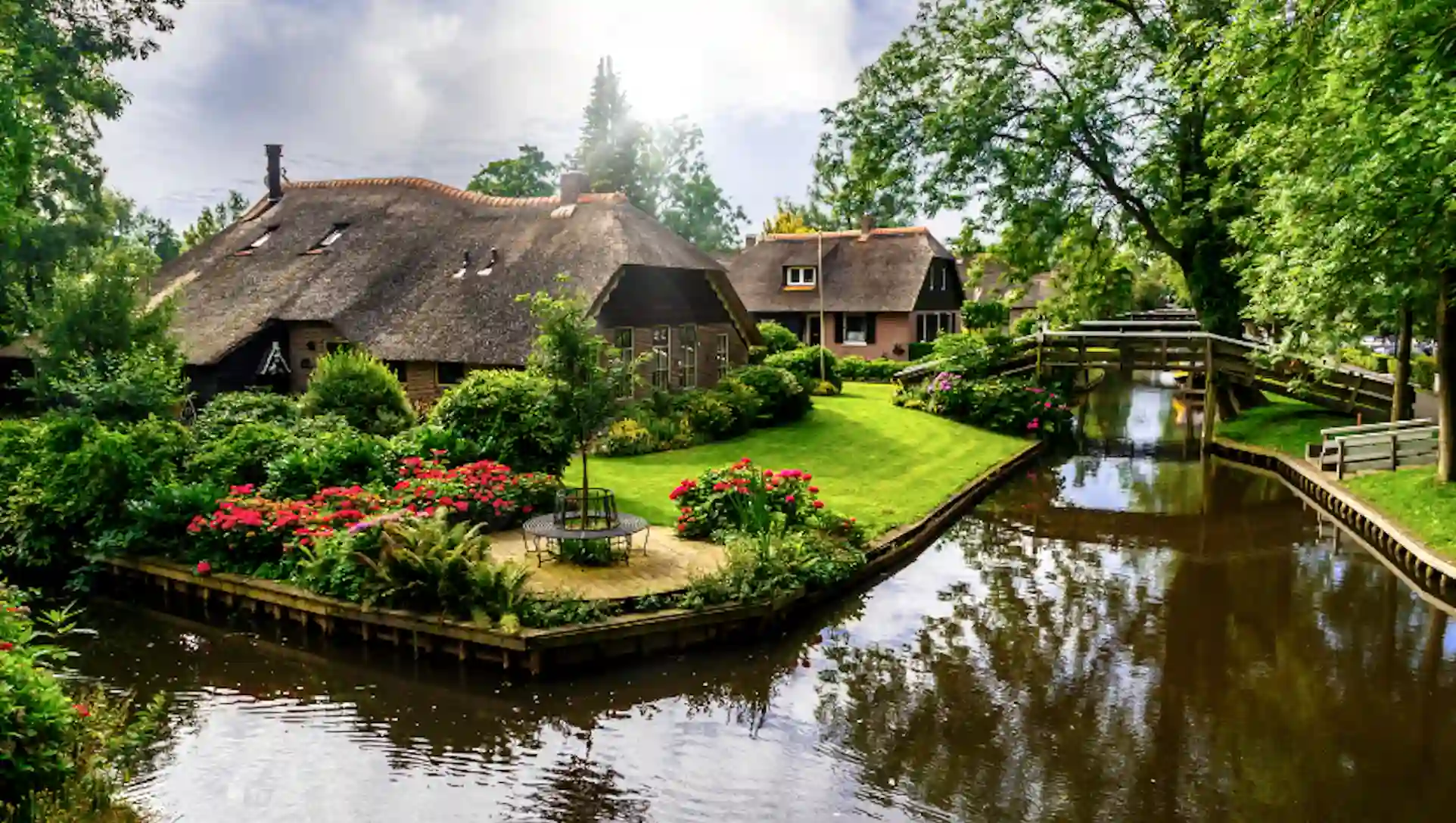
Giethoorn is an elongated village in the northern Netherlands known for its canals, thatched-roof houses and wooden bridges. While its historic canal district has no roads, only waterways, footpaths, and bridges, the wider village extends beyond that.
Visitors arriving by car should park in designated areas and continue on foot or explore the canals aboard traditional boats or electric "whisper boats".
Every year, more than 1.5 million visitors come to Giethoorn, and despite having more than 2,000 public and private parking spaces, finding a spot can still be difficult during busy periods.
Honorable mentions: Many major cities have pedestrian-only streets or neighborhoods. Barcelona has a small, car-free zone. Paris has some car-free streets.
Europe's Truly Car-Free Islands
On these European islands, car-free means no ordinary private cars for residents or tourists. Visitors arriving by car must leave their vehicles at the mainland departure point. If there is no ferry or bridge, there is no way to take a car.
Hydra, Greece
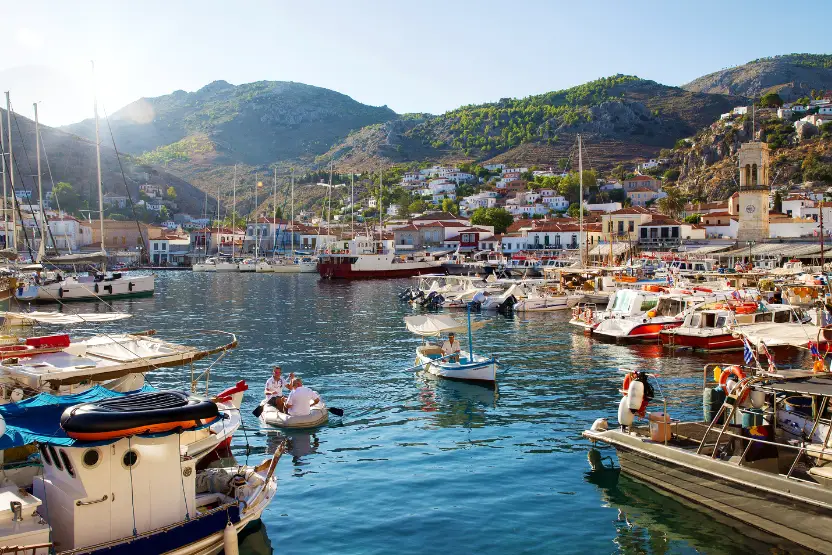
Hydra is a historic Saronic island with around 2,070 residents, where cars and motorcycles are prohibited across the island.
Regular passenger ferries and high-speed boats connect Hydra with Piraeus near Athens. Once there, walking is the main way to get around.
Tourists can also hire donkeys and mules to carry luggage or take water taxis to reach beaches and settlements along the coast.
Juist, Germany
Juist is a narrow North Sea island stretching around 10.5 miles, with roughly 1,200 permanent residents. Ferries depart for Juist from Norddeich-Mole on the German mainland.
The island's flat terrain makes cycling one of the easiest ways to get around, alongside walking, while horse-drawn carriages remain part of everyday transport.
Île-de-Bréhat, France
Île-de-Bréhat is a small Breton island with around 430 permanent residents, known for its rocky coastline, gardens, beaches and small harbors.
Visitors take a short passenger boat from Pointe de l'Arcouest in Ploubazlanec. Apart from tractors, a small tourist train and a few essential professional vehicles, motor traffic is absent.
Culatra, Portugal
Culatra is a sandy barrier island within Portugal's Ria Formosa Natural Park. It has 1,000 permanent residents spread across the communities of Culatra, Farol and Hângares.
There is no conventional road network or private car traffic. Visitors usually take a passenger ferry from Olhão. Once on the island, getting around means walking along sandy paths and wooden boardwalks.
Zlarin, Croatia
Zlarin lies just offshore from Šibenik and has around 300 permanent residents. The roughly three-square-mile island is known for its historic village, quiet beaches and centuries-old red coral tradition.
Cars are banned across the entire island, so residents use small electric golf carts, mopeds and bikes to get around the island. Visitors arriving by passenger boat or ferry from Šibenik can explore Zlarin just like its locals.
Styrsö, Sweden
Styrsö is one of the largest inhabited islands in Gothenburg's southern archipelago.
The island is car-free, although residents use cargo mopeds and small utility vehicles. Public-transport ferries connect Styrsö with Gothenburg, including services from Saltholmen.
A bridge also connects Styrsö with neighboring Donsö, allowing visitors to explore both islands without a car.
Tunø, Denmark
Tunø is a small Danish island in the Kattegat with just 75 permanent residents. Cars are not allowed on the island and never have been.
The ferry departs from Hou and reaches the island roughly in an hour.
Tunø is compact enough to explore entirely on foot or by bicycle, with an approximately five-mile walking trail looping around the island.
Sark, Channel Islands
Sark is a self-governing Channel Island with around 500 permanent residents, farms, hotels, restaurants and beaches. It is entirely car-free and has no paved roads.
Passenger ferries connect Sark with Guernsey and, seasonally, Jersey, but cars cannot be taken onto the island.
Visitors get around on foot, by bicycle or by horse-drawn carriage, while a tractor bus provides one unusual exception, carrying passengers between the harbor and the top of Harbour Hill.
Related posts
Upcoming travels ? Get Insured !
Find the right insurance for your trip by using our powerful comparison tool!
Emese Maczko - October 9, 2026
Emese Maczko - September 2, 2026