

Things to Do in Malta That Tell the Island's Story
Sarah Pardi - March 10, 2026
Home > Travel Guide > Travel Ideas & Inspiration > Things to Do in Malta That Tell the Island's Story
Share this post
It's still surprising to us today that so many travelers (particularly those from the US) haven't heard of Malta! It's one of the most incredible destinations in Europe, especially for anyone who likes the Mediterranean.
A little background on Malta for context
Malta is a small island country in the Mediterranean Sea, between Sicily (in Italy) and Tunisia (in Northern Africa). It's only 122 square miles and has fewer than 1 million residents.
One thing that makes Malta unique is that English is one of its official languages (second to Maltese, of course). For travelers from the US, UK, and other English-speaking countries, this is a huge perk.
This is because Malta was a British Territory until the 1960s, when it won its independence.
Today, Malta is a member of the European Union and the Schengen area (which means its entry requirements fall under the Schengen visa scheme, requiring things like travel insurance).
For Europeans, it is one of the most treasured holiday retreats.
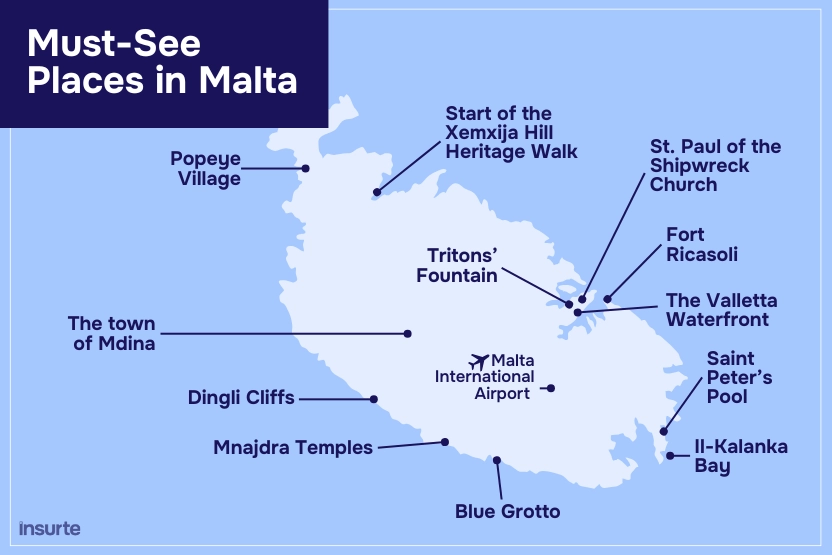
What Malta has to offer
The island itself has so many different things to do. This is due, in part, to just how long people have been living there. Historians and Anthropologists date its inhabitants back to 6500 bce (according to a source from the National Library of Medicine, funnily enough).
This makes it one of the world's oldest inhabited places. That fact alone is enough to make anyone want to travel there to see the goings-on.
Because it's an island country in the Mediterranean, a lot of the things to do in Malta revolve around beaches and the sea. It's particularly famous for its bays, cliffs, and caves, after all.
What makes Malta really special is that its attractions go beyond the seaboard.
Thousands of years of history also mean thousands of years of buildings, sacred sites, and artifacts. Thanks to that, Malta has ancient ruins (some of the oldest temples in the world), Greek ruins, Roman ruins, and tons of towers, fortresses, and cathedrals.
The combination of the two (water activities and history) means that no matter what kind of traveling you prefer to do, you can find a way to actually have a meaningful experience in Malta, instead of just scratching the touristic surface (though if that's your modus operandi, of course, you can do that too).
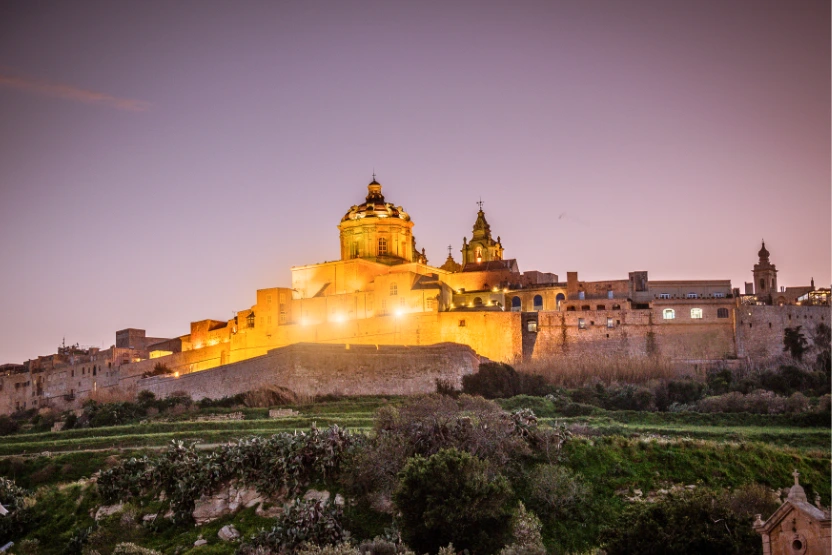
The town of Mdina, Malta
While it looks further on the map, looking at the distance between Mdina and Valletta (the capital) really gives you an idea of just how small Malta is.
Mdina is only 6 miles from Valletta, and it's worth every one.
What makes it particularly interesting for travelers is that it is an ancient and medieval walled city, with a lot of narrow, pedestrian-only streets.
It really is old. Mdina was discovered (from what we know) by the Phoenicians, then later the Romans. Before Valletta was founded (in the 1500s), it also served as the island's capital.
Heading to Malta?
Make sure you have the right travel insurance for the journey.
What is crazy is that Mdina has very few full-time residents (only a few hundred). Most of the people you will pass by are actually tourists, too.
Like Dubrovnik (Croatia's famous walled city), Mdina served as one of the sets for Game of Thrones.
Because it's a huge tourism driver, the streets get very crowded in the summertime. Also, tickets may be required to see many of the old attractions within the walls. Just a couple of things to keep in mind when you visit.
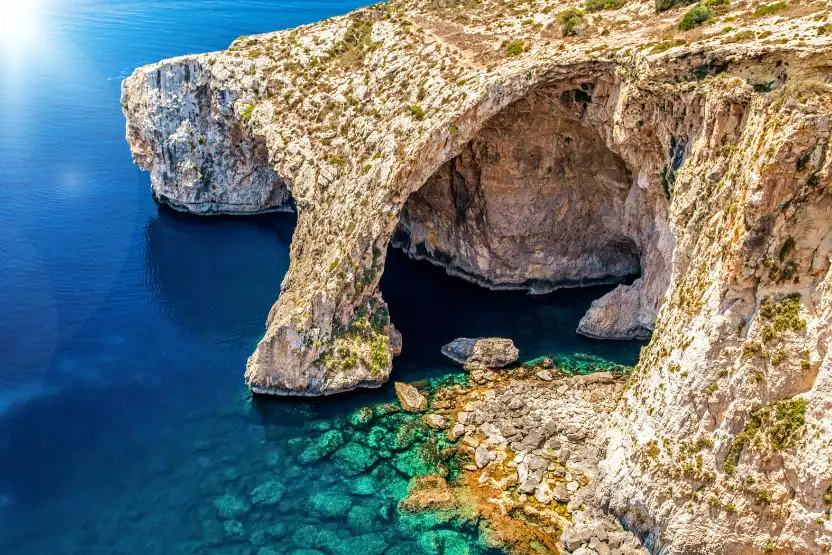
Malta's Blue Grotto
You've likely seen photos of Malta's Blue Grotto before, even if you wouldn't recognize it by name. This is one of the most photographed "scenic spots" in the world.
On the southwest coast of the main island, the Blue Grotto is 11 miles from Valletta. It's a cave/inlet formed by years and years of seawater hitting the limestone cliffs.
One of the reasons this grotto is so famous is that the water looks unnaturally blue, especially during morning sunlight. In fact, the water can even appear in other colors depending on the time of year and day... green, purple, you name it.
It does take a little bit of planning if you want to go into the grotto - while swimming is allowed in surrounding areas (still, keep an eye out for signs or any closures), it typically isn't allowed in the grotto itself.
There are so many boat tours that take visitors to the grotto that swimming inside becomes a hazard, so you probably wouldn't want to do it anyway, even if it were allowed.
If you want to visit it, you'll need to take a boat tour. Luckily, because they are so popular, boat tours are not all that expensive.
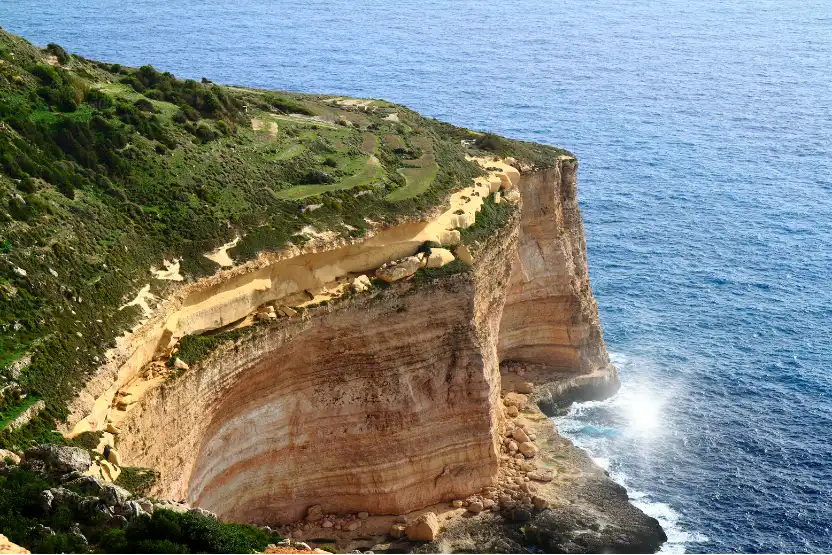
Dingli Cliffs
Just 10 miles west of Valletta, you'll find the Dingli Cliffs. It's hard to tell the scale from the photo alone, but these cliffs are 700-800ish feet high.
It's strange to compute, but these cliffs are actually the highest point in the entire country, even though they're right on the coastline.
The Dingli cliffs are free to visit, and from them you can see views of Filfla, which is a small uninhabited island. There's also a chapel on top of the cliffs that was built in the 1660s (it's called St. Mary Magdalene if you want to look it up).
If you decide to go to the Dingli Cliffs, keep in mind that, again, the cliffs are really high up and really steep, so be careful. Because of the terrain, those with mobility aids (such as wheelchairs) may only be able to reach certain areas around the cliffs.
It also can get very, very windy.
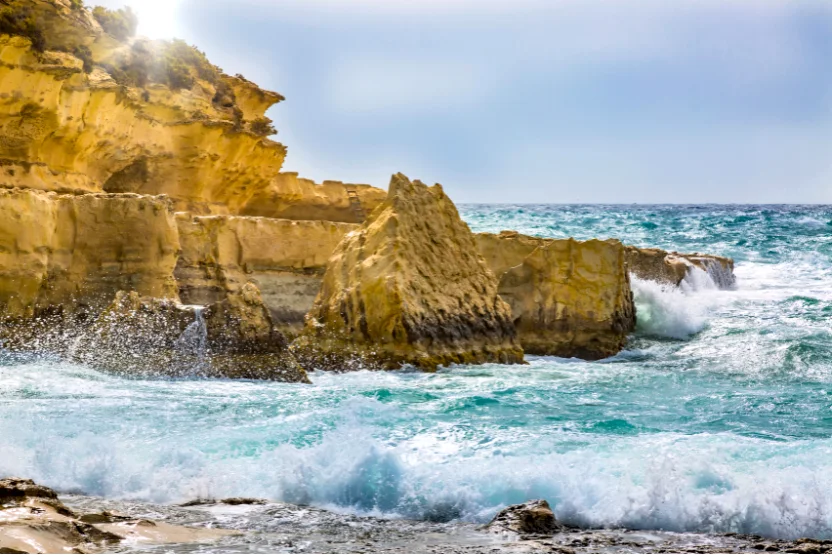
Il-Kalanka Bay
If you are keen on actually getting into the water and swimming, Il-Kalanka Bay is a less crowded area that has flatter rocks and sandy areas (as you look through the photos, you'll realize more and more that much of Malta's coastline is less sandy and more rocky).
While the picture shows a splashy tide, it's actually a really good area for swimming and snorkeling. The water is very clear, and tons of different saltwater fish end up coming into the bay.
The bay is free to visit, and there is some parking available, but not much. Also, the rocks can get very slippery, especially in the water, so be careful and watch your step.
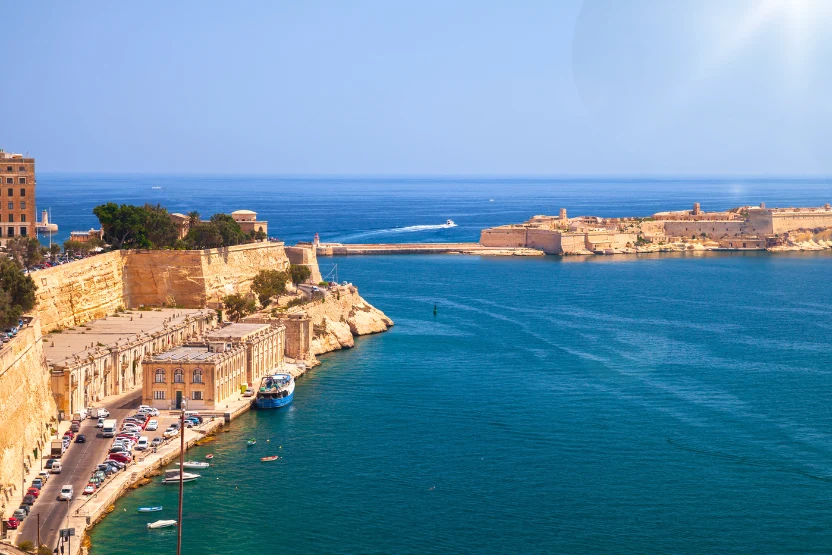
Fort Ricasoli
Fort Ricasoli is a 17th-century fort created entirely out of limestone (which is abundant on the island). It was built by the order of St. John to defend Valletta's main harbor. Today, it is still the largest fort in the entire country, though it's no longer in use.
Now, unfortunately, you cannot actually go to Fort Ricasoli. That said, it had to make the list because you can catch views of it from around Valletta, and it's worth making the effort to do so.
The fort was an active military defense area for hundreds of years, up until it was decommissioned in the 60s (around when Malta became its own country).
After that, it became one of the most famous filming locations for huge blockbuster movies (and series, too). Gladiator II, Troy, Assassin's Creed, Napoleon, and Game of Thrones all had scenes filmed there.
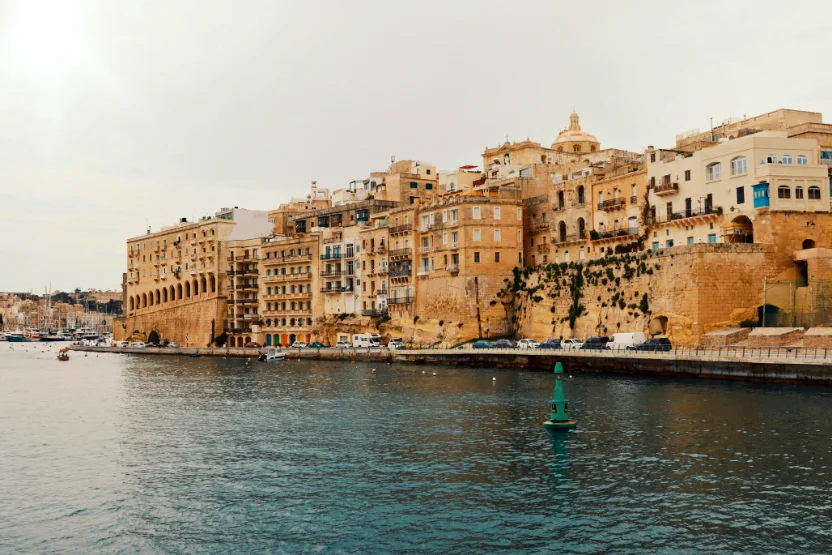
The Valletta Waterfront
Not one specific spot, but an area - everyone who visits Malta should try to make their way to Valletta's Waterfront.
Just outside of the Grand Harbour (what Fort Ricasoli sought to protect for so many centuries), this wharf is filled with restaurants, shops, and walking paths.
There are colorful building fronts, fountains, terraces, and sometimes live bands and street musicians performing.
The only thing to keep in mind is that Malta is a popular cruise destination. When cruise ships come in, this area gets very, very crowded.
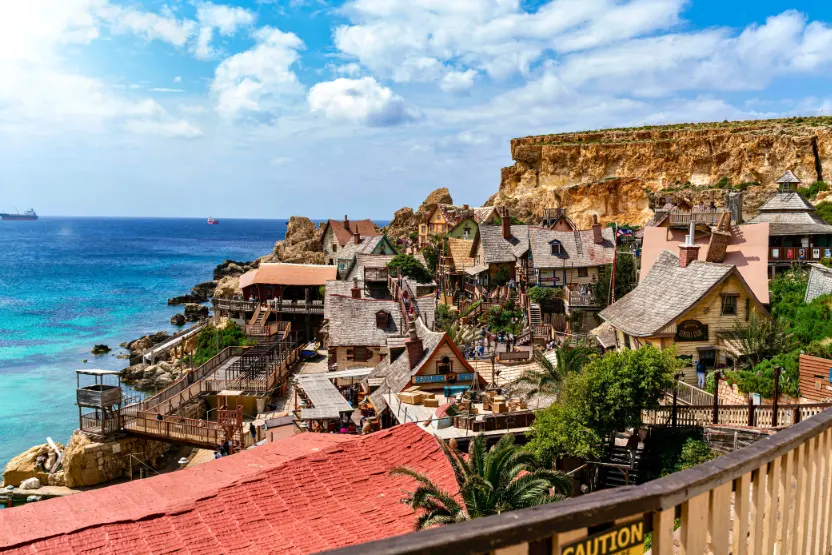
Popeye Village
Popeye Village may very well be the most unexpected attraction on this list. In 1979, the live-action Popeye movie (with Robin Williams) was filmed here. So, of course, a set was built.
After filming was complete, the set was turned into the Popeye Village Theme Park, and it still exists today.
While it's a big attraction for kids and families, it's kind of fun for everybody - especially anyone who is a fan of Popeye or Robin Williams (and who isn't?).
The theme park is very seasonal, changing its activities and decorations for the seasons. Halloween... Christmas... Popeye Village transforms.
The Village itself has old film music, costumed characters, shows, and boat rides. It's a bit touristy, but it's probably something you'll never get to experience again. (Exploring a 70's film set that graced the presence of Robin Williams on an island in the Mediterranean? Where do we sign?)
Tickets are required.
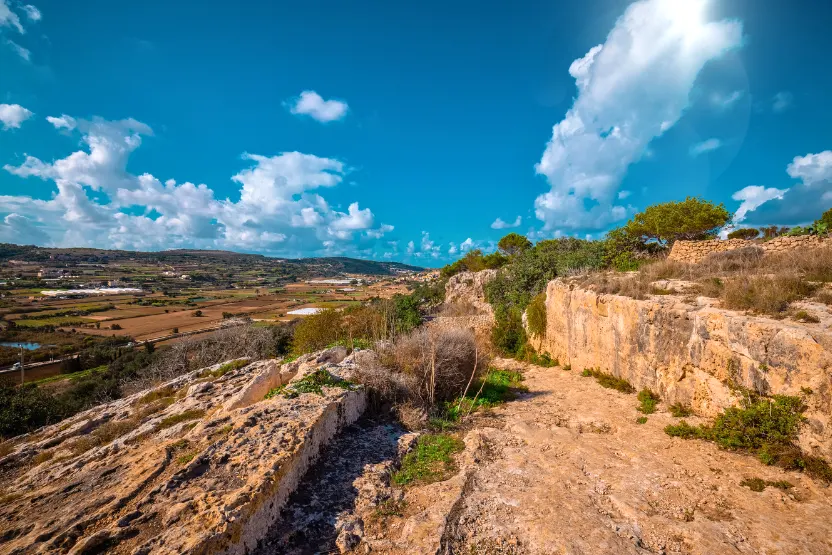
The Xemxija Hill Heritage walk
If you want to go on a hike, trail run, or walk, the most famous one in Malta is the Xemxija Hill Heritage Walk.
This is a free public trail that is actually an old Roman road with more than 20 archaeological sites and ruins spread throughout. If you walk the entire loop, you'll see Neolithic Temples, Roman baths, Punic tombs, ancient cave dwellings, a 1000-year old tree, and, somehow, even more than that.
All of that said, keep in mind that many of these are ruins, so they may not be overtly obvious as you pass by. If you go to the Tourist Center in Bugibba (the nearby town), they often have little booklets you can get to help you understand what you're looking at.
The trail starts in Xemxija Bay at the bend on Triq Raddat Ir-Roti (a public road).
According to Great Runs, the trail is an 11.5km (7.1 mile) loop with an elevation gain of 635 feet. Make sure you bring comfortable walking shoes, water, and sunscreen.
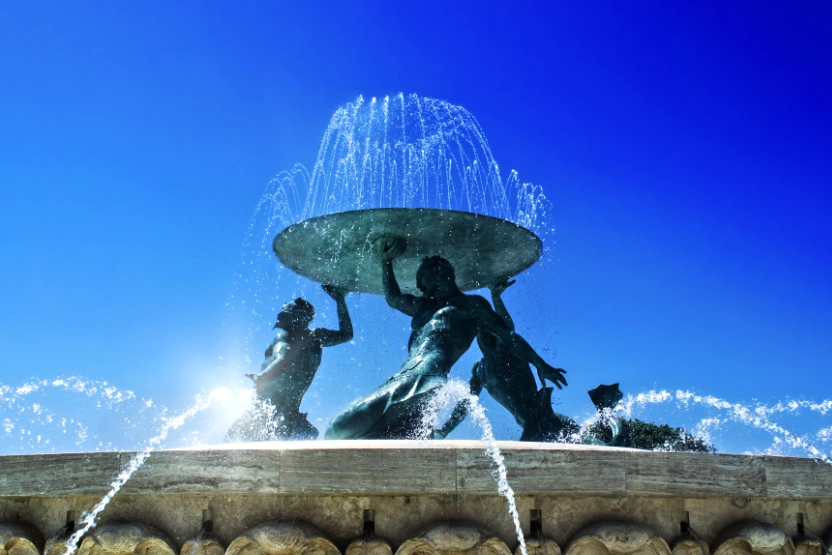
Tritons' Fountain in Valletta
Just outside of Valletta's main gate, you will find one of the most famous fountains in all of Malta: Tritons' Fountain.
While it isn't an ancient sculpture, it is a beloved one. Finished in 1959, the Triton characters are cast in Bronze. Today, it's seen as "the entrance to Valletta". At night? It lights up in different colors.
You'll probably see this fountain on souvenirs like postcards, magnets, and tote bags. It isn't a long stop, but it has become a kind of symbol of the country.
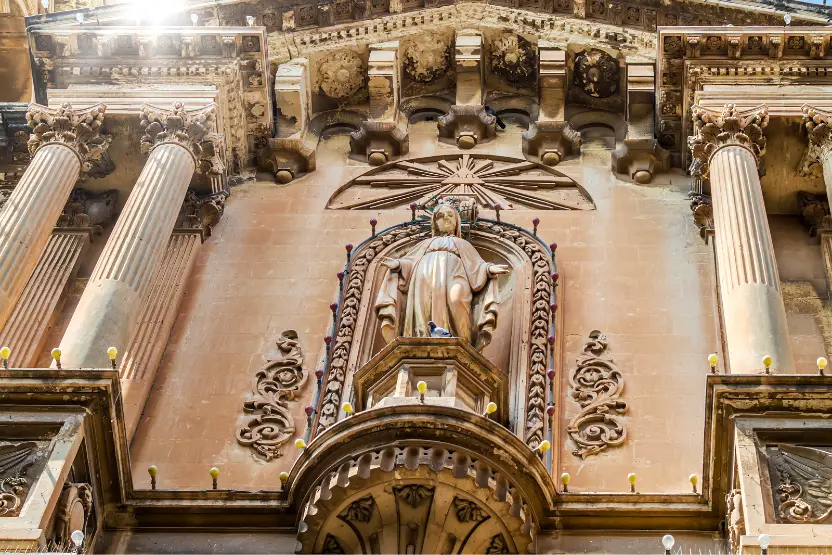
St. Paul of the Shipwreck Church
This is a 16th-century Roman Catholic church dedicated to St. Paul's Shipwreck, an important event in Christian history.
You'll find the church (which has an ornate outside and interior) in the middle of Valletta's historic city center. In fact, this church is one of the oldest in Malta, and was built in the first few decades of Valletta's existence (the 1500s).
All Catholic churches have relics, and St. Paul's relic is the right wristbone of Saint Paul, himself - its namesake.
One of the most interesting parts of the church isn't even the church itself (though that's arguable, of course). Inside, there is a wooden statue of St. Paul that was carved in 1659. Every year, on February 10th (which is the Feast of Saint Paul's Shipwreck), this statue is carried through the streets of Valletta in a celebratory procession.
The church is open to the public, but check hours ahead of time as there could be closures during certain hours or for specific events.
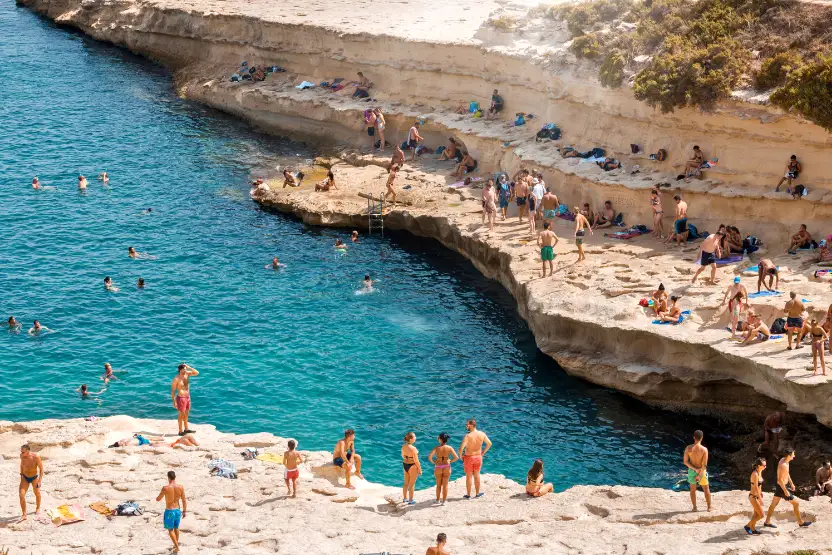
St. Peter's Pool
St. Peter's Pool is one of the most popular swimming spots in all of Malta, whether you're a tourist or a Maltese local.
Be forewarned that if you're looking for a sandy beach to put your towel on and catch some Zs, this probably isn't going to fit the bill.
St. Peter's Pool is a very rocky "beach" with ladders throughout to help visitors get in and out of the water.
Because of its location, the waters are clear and calm (especially at low tide), which makes it a great spot to swim and snorkel. It's actually not that far from Il-Kalanka Bay (earlier on the list).
St. Peter's Pool is a free, public "beach", but it can get a bit busy as it's a really popular place.
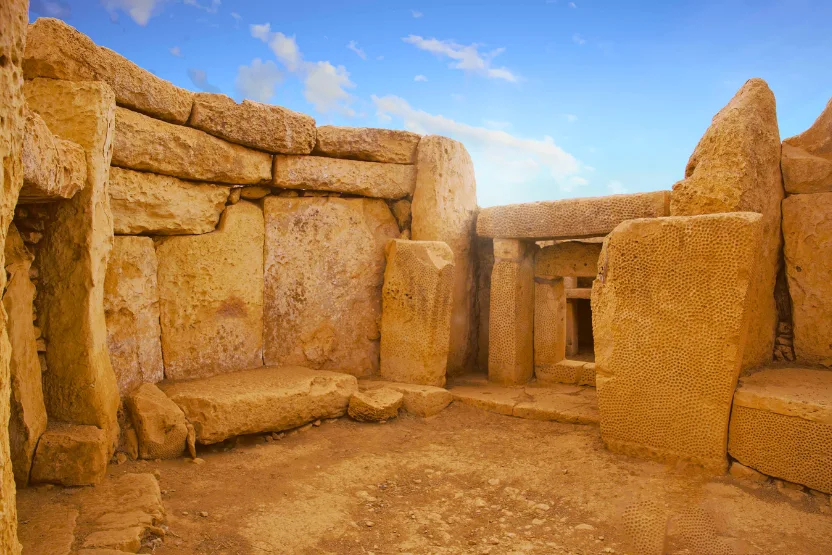
The Mnajdra Temples
This one's last on the list (for now), but it's one of the most exciting on the island (in our opinion).
The Mnajdra Temples are a UNESCO World Heritage Site, and they date back to 3200 - 3500 bce.
One of the oldest freestanding stone structures in the entire world (older than Stonehenge, for context), it's absolutely incredible that they still exist today.
They were discovered in the mid 1800s, and it took over 100 years to fully excavate them. Today, they're protected under a large canopy and can only be seen if you purchase a ticket.
The temples are aligned to the equinoxes and solstices (so, the changing of the seasons), and some of the stones are even said to have astrological significance.
On the Spring equinox and the Fall equinox, light pours through the main door, lighting up the major axis. On the solstices (in December and June), light illuminates the large stone structure on either side of the door. Mnajdra was built like this intentionally.
Historians don't know the exact purpose of these temples, but because of the artifacts and furniture found, it's possible that the temples were created for fertility or healing. Again, no one is 100% sure.
Tickets are required, and the Mnajdra Temples are located within the Mnajdra Archaeological Park on the southern part of the island. Not far from Blue Grotto, in fact.
Heading to Malta? These guides might help
Applying for a Schengen visa? Learn how in our Schengen visas for Malta guide.
If you're a US citizen planning a trip to Malta, make sure you know about ETIAS and whether or not you need to apply in our Malta ETIAS guide.
Relocating to Malta? Learn about Malta long stay visas.
Related posts


Upcoming travels ? Get Insured !
Find the right insurance for your trip by using our powerful comparison tool!