
Heading to Europe? What to Know About Bugs in 2026
Sarah Pardi - October 2, 2026
Home > Travel Guide > Travel Safety & Health > Heading to Europe? What to Know About Bugs in 2026
Share this post
Apart from entomologists and children, you might be hard-pressed to find someone looking forward to an encounter with bugs. Even so, no one wants to get bitten - especially by bugs that can carry and spread disease.
Different parts of the world are home to different species of bugs. While we are relatively used to the types we have at home, and typically understand what precautions to take, it can be tricky to know what to look out for when you're traveling.
Also, you have to consider your accommodations and activities too. Someone planning on hiking or biking might want to take different precautions than someone primarily interested in indoor activities.
Like all parts of the world, Europe has its own bugs and bites to watch out for.
Don't forget to take a look at the entry requirements for the countries you're going to, as well as secure your travel insurance ahead of time.
Avoiding bug bites in Europe
Europe is a large continent made up of many different countries with different geography, climates, and flora and fauna. Because of that, it's important to look for information specific to the country you're visiting, rather than Europe as a whole.
Still, throughout Europe, there are common risks when it comes to insects, just as there are throughout North America.
Make sure you wear the appropriate attire
Wearing long-sleeved shirts and pants can help protect you from bug bites, especially if you're going to be spending a lot of time outside.
Hats and long socks can also be a good idea.
If you're visiting in summer or during hotter weather, this can be a bit tricky as overheating can be a real issue. Nobody wants to be sweating profusely while trying to enjoy their vacation abroad.
The Canadian government recommends wearing light colored, loose clothing with tightly woven materials (such as polyester). They also suggest taping the cuffs of your pants and tucking them into your socks, then into closed-toed shoes to help prevent bugs from crawling inside.
Treat your clothing with permethrin
The Centers for Disease Control (CDC) recommends considering treating your clothing with permethrin. Permethrin is an insecticide commonly used to combat mosquitoes.
Use a quality bug repellent
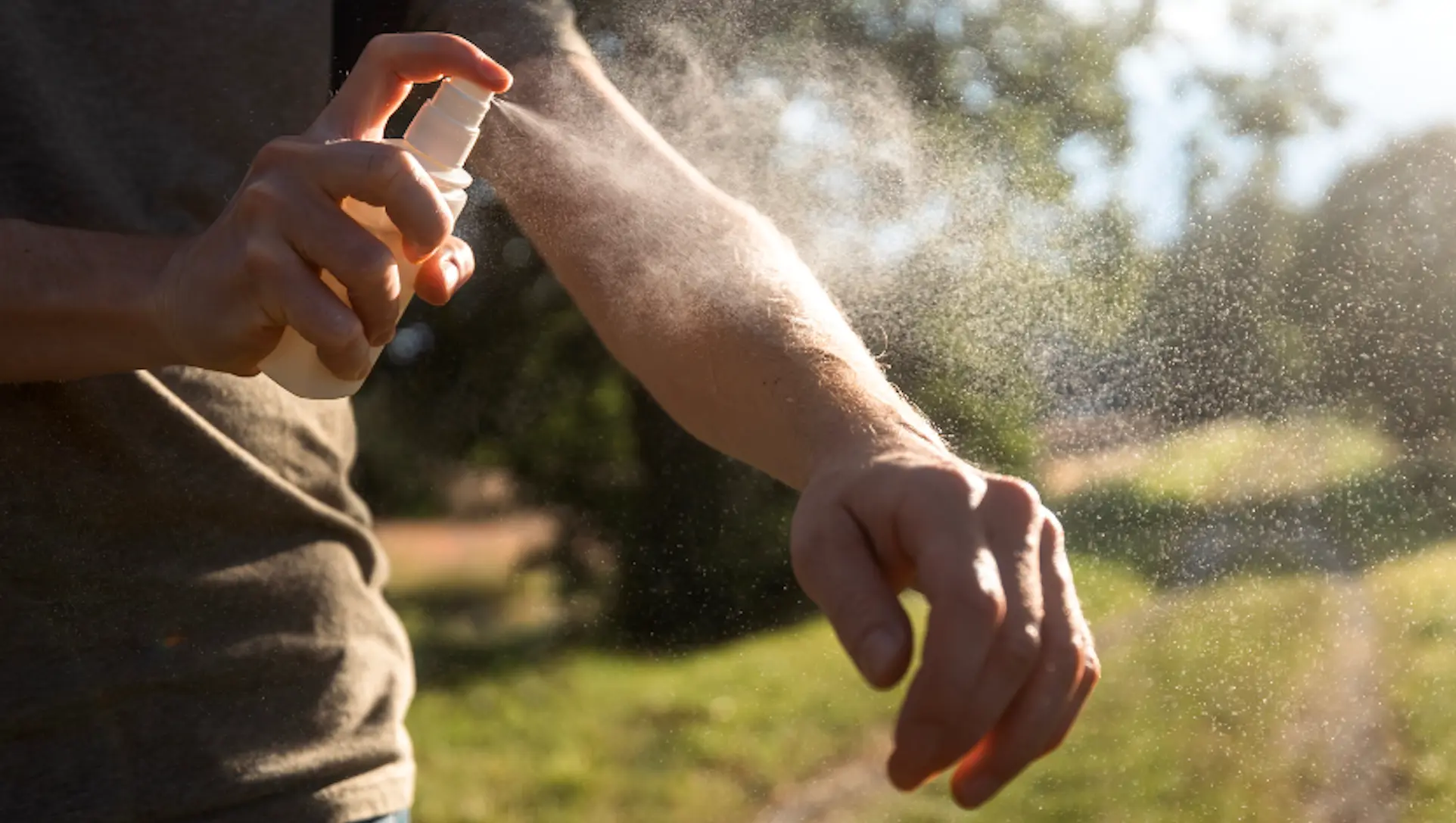
Bug repellents are another method of fighting against bug bites. The US government recommends travelers use a repellent that is at least 20% DEET. DEET is an effective insecticide that fights against mosquitoes and ticks.
Other kinds of repellents that the US government recommends are Picaridin, Oil of lemon eucalyptus, para-menthane-diol, 2-undecanone, and IR3535.
The more time you spend outside, especially in very natural areas like parks or preserves, the higher your risk of being bitten is, particularly when it comes to mosquitoes and ticks.
If you're planning to camp, hike, bike, or spend an ample amount of time outdoors, you'll want to weigh which precautions to take in order to avoid bug bites to the best of your ability - especially if you're in an area with disease-spreading insects or are doing activities that put you at a higher risk.
Remember, always use any insecticides, bug sprays, and repellents as directed - and make sure you read the directions before use.
The CDC also recommends preparing a Travel Kit before you go abroad.
Disease-carrying bugs in Europe
Europe does have a few disease-carrying bugs. Which diseases you need to watch out for depends on the specific country, and often the area or region within that country.
Regardless of which European country you're traveling to, you'll need to be aware of mosquitoes, ticks, and bed bugs. These three species can be found throughout the continent. While bed bugs are an incredible nuisance, they're not known to spread disease through their bites. Unfortunately, mosquitoes and ticks can, and sometimes do.
Mosquitoes
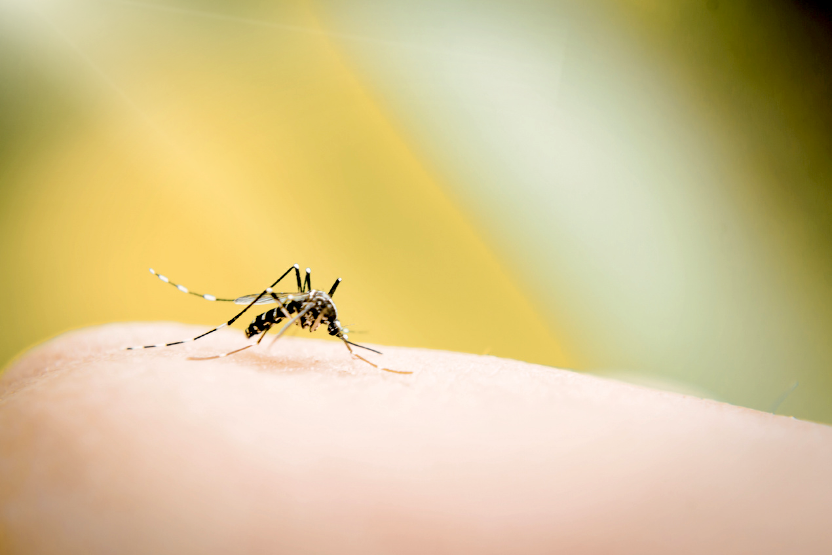
Unfortunately, mosquitoes can spread disease and illness, and they're found throughout Europe.
They are usually found outdoors, but also get into living quarters through open windows, doors, or by hitching a ride on a person coming in from outside.
The Zika virus has been found in mainland Europe, specifically regions of France, which is passed from human to human by mosquito. You can check current risks on the CDC's Zika Virus page through their interactive map.
Ticks
Found outside, typically in more natural areas with bushes and grass, ticks are known to carry several different diseases. Like mosquitoes, which diseases you need to watch out for depend on the country and region you're visiting.
Tick-borne encephalitis is endemic in Austria, Belgium, Liechtenstein, Lithuania, Slovenia, Sweden (around Stockholm, namely), and Switzerland.
It can also be found in specific regions of other countries, including Belgium, Croatia, Denmark, Finland, France, Germany, Hungary, Italy, Norway, Poland, and Slovakia. If you're going to be spending ample time outdoors, it may be worth talking to your doctor well before you travel to see if a vaccination might make sense for you.
In addition to tick-borne encephalitis, there are countries in Europe known to have Crimean-Congo Hemorrhagic Fever spreading ticks. Crimean-Congo Hemorrhagic Fever is a rare but serious virus.
European countries at risk for tick-borne Crimean-Congo Hemorrhagic Fever are Bulgaria, Croatia, Greece, and Slovenia.
Depending on your travel plans or activities, your doctor might recommend getting a vaccination before your trip.
Sand flies
Sand flies are very small, silent, and their bites typically aren't felt or noticed, which can make them tricky to spot. Unfortunately, infected female sand flies can spread a parasitic disease called Leishmania, where prevalent.
Leishmania-spreading sand flies usually live in warmer tropical or subtropical areas. They've been found in Bulgaria, Croatia, France, Greece, Italy, Malta, Portugal, Romania, Slovenia, and Spain.
Bed bugs
While not known to be disease-spreading, bed bugs, like lice or fleas, are highly contagious and highly annoying. A nuisance that can turn into an infestation - fast, they're something to be aware of and keep an eye out for.
Still, while their bites aren't known to be disease-spreading, they can be painful, itchy, and spur allergic reactions. That said, in some people, the bites aren't noticeable at all. Because they're active at night, it can be difficult to spot them, especially for people who aren't bite-reactive.
It's never a bad idea to check hotels, hostels, and other rental accommodations for bed bugs before opening your suitcase and flopping on the bed for a good, jet-lag-induced snooze.
Bed bugs like to hide in mattresses, particularly around the seams or in tags, in box springs, and bed frames (especially wooden ones). They also hang out in headboards and nightstands, in baseboards, under the floorboards, and in/around electrical sockets near the bed.
They're very small and flat, so they're able to squeeze into even the smallest cracks.
You can use a flashlight or even your phone light to check around the bed (usually within 8 feet) to see if there are any little bugs hiding in inconspicuous places.
Also, keep an eye out for molted shells, usually found in little groups or piles, as well as rusty-colored spots in the linens. Bed bug feces can look like small flecks of brown to black, usually in a "splatter-like" pattern. There may also be small blood spots or smears on bedding.
Because hotels change (or should change) their linens regularly, and especially between guests, make sure to check around the bed and not rely solely on spots found on bedding.
The biggest indicator of bed bugs is noticing bed bug bites, which are typically found where your skin is most exposed - the arms, neck, face, and torso (where your nightshirt meets your pants/shorts).
If concerned, you can always ask your accommodations if they've had any issues with bed bugs, or if they know of any outbreaks in your area or where you're going. Also, always read the reviews before you book a place to stay.
General tips and advice
You can always look to a government site or destination embassy site for official advice about traveling and bug bites. Still, there are recommendations that are generally considered across-the-board best practices.
- Consult with your doctor at least 6 weeks before you travel. You can talk to them about any precautions you should take, depending on your plans.
- Check your body for ticks after you've been outside, especially if you've been in a bushy or grassy area.
- Make sure the screens on your windows are intact. If you're staying in a place without bug screens, consider using a bug repellent, as directed, when relevant.
- Learn the symptoms and signs of bug-spread illnesses in your destination and seek medical attention if needed.
- Shower and change your clothing after doing extended outdoor activities.
- Always use all insect repellents as directed on the label.
FAQs
 Sources & references
- Internal Expertise & Review
- We're a travel insurance company with more than 15 years of experience. Our dedicated team of travel insurance experts and professionals is committed to producing and sharing high quality, accurate, and up-to-date information.
- Travel Advice (Insects and Bugs):
- Avoiding Bug Bites : The CDC's information on how to avoid bug bites.
- Mosquito Bite Advice : Advice on mosquito bites from the British Government.
- Insect Bite Prevention : Information from the Canadian Government on insect bite prevention.
- Info on Permethrin : Information on Permethrin, a common bug repellent.
- Illnesses and Diseases:
- About Leishmaniasis : Information on Leishmaniasis from the CDC.
- Crimean-Congo Hemorrhagic Fever : Details about tick-spread Crimean-Congo Hemorrhagic Fever from the CDC.
- Bugs and Insects:
- Common Insects : Information from the CDC on Mosquitoes, Ticks, and Other Arthropods
- Bed Bugs : Information on bed bugs from the CDC
- Written by:
- Sarah Pardi - Staff Travel Advisor
- Fact-check and reviewed by:
- Clément Goubon
- Last updated:
- October 2, 2026
Learn more about our editorial standards and review process in our Editorial Policy.
Related posts




Upcoming travels ? Get Insured !
Find the right insurance for your trip by using our powerful comparison tool!