

Amsterdam Tourist Tax: Official Rates, Calculations, Exemptions, and Policy Updates
Sarah Pardi - November 6, 2026
Home > Travel Guide > Travel Requirements, Policy & Authorization > Amsterdam Tourist Tax: Official Rates, Calculations, Exemptions, and Policy Updates
Share this post
| Update: Starting in 2027, Amsterdam’s overnight tourist tax will increase from 12.5% to 16% |
Amsterdam is one of the most popular destinations in Europe, with over 22 million visitors annually. With a population of less than one million, that’s a lot of international movement. Travelers have so many things to think about – travel insurance, whether or not they need a visa for the Netherlands, and what to do and where to stay on their trip; then there is looking at how much all of that will cost at the end of the day.
On "what to budget for", you don't usually see tourist taxes, but depending on where you're traveling to, the tax can really be something you need to factor in. Amsterdam is one of these places.
This tax applies to overnight stays for non-residents, which is a fancy way of saying travelers. How the tax is calculated, when it applies, and how it works with the value-added tax (VAT) are all things that are a good idea to be aware of before you arrive.
How much is Amsterdam’s tourist tax?
Different European countries have different tax models, so you can’t really copy and paste what you know about Greece’s tourist tax, for example, and apply it to the Netherlands. In Amsterdam, there is a different rate for overnight stays versus day-visitors (such as cruise-goers with a short stop in Amsterdam).
The overnight accommodation tax rate
The official Amsterdam tourist tax is 12.5% of the net accommodation price according to the most recent official regulations set by the City of Amsterdam.
This rate (12.5%) applies to several different types of short-stay accommodations and lodging, including:
- Hotels, hostels, and motels
- Vacation rentals and short-stay apartments (such as Airbnb or Vrbo)
- Bed & Breakfasts
- Etc.
The rate that you need to pay is calculated on the net room price and excludes any additional fees like cleaning charges or service charges. It also excludes the Netherlands’ Value-Added Tax (VAT).
The tax is charged by the overnight price, not per person.
September 23, 2026, the city of Amsterdam announced that the per-night rate will increase from 12.5% to 16% in 2027.
Amsterdam’s day visitor tax for cruisegoers
If you’re planning to visit Amsterdam via a cruise, but aren’t planning to spend the night, there is still a tax that applies to you. Instead of calculating the rate based on the price of a room (since a room isn’t really part of the equation), it is a flat rate of €15.00 per passenger, per 24-hour period. On January 1st, 2026, the rate went up by a euro, from €14.00 to €15.00.
How Amsterdam calculates it
Amsterdam's tourist tax is 12.5%. This means that when you book a hotel or other kind of accommodation, the rate is 12.5% of the nightly base rate.
Accommodations also have a 21% VAT (Value Added Tax), which is set by the Dutch Tax and Customs Administration. They're two separate taxes.
The 12.5% tourist tax excludes the VAT, which requires you to put on your more mathematical thinking hat for a moment.
Total Price = Net Price + (Net Price x 0.21) + (Net Price x 0.125)
This formula can be simplified down to:
Total Price = Net Price x 1.335
As an example, say you book a room in Amsterdam’s city center, and it’s €200.00 per night (base, net).
The Net Room Base is €200.
The National Value-Added Tax is 21% of the Net Room Base. €200 x 0.21 = €42.00
Separately, Amsterdam’s Tourist Tax is 12.5% of the Net Room Base. €200 x 0.125 = €25.00
Add all of the totals together: €200 + €42 + €25 = €267.00.
In this specific example, the taxes reflect more than 33% of the original base price of the room.
How to pay Amsterdam’s tourist tax
For overnight tourist taxes, your accommodation host or hotel is responsible for collecting the tourist tax from you. Then, they are required to pass it along to the Municipality of Amsterdam. You don't need to fill out any tax forms or go to a local tax office to pay it.
Online bookings
If you’re booking online, the tourist tax might be included as one of the line items you see on the final booking price breakdown, right before you check out. When it’s paid digitally, it’s up to the booking site to pass it on to the government. In this case, that’s all you have to do.
Hotel check-in/check-out
Some establishments might collect the tourist tax separately either during check-in or check-out. When you're paying, look at the price breakdown to see if it's included. If you don't see it, you might check with your hotel to see if it's paid on site. Either way, if you're required to pay it on site, they'll let you know.
Accepted forms of payment
How the tax needs paid depends on how you book your accommodations and what form of payment your provider accepts. Some properties may allow you to pay by card or by cash on site, and some may require that the tax be paid by cash on site too. Check with your accommodations to see what the preferred method is.
Day tourist taxes
Check with your cruise provider to see when and how the tax will be collected. There may be other taxes for other stopovers along your route.
Who is exempt from paying?
There are a few exemptions that legally exclude some types of travelers from being required to pay. The first are legal residents of Amsterdam. Anyone who legally resides in Amsterdam (and, thus, is registered in the Amsterdam Municipal Personal Records Database (called Basisregistratie Personen, or BRP for short)) does not have to pay it. If this applies to you, make sure you show proof of your address/residence if requested at check-in, or if you’re prompted to pay the tax.
There are some travelers who are exempt from paying, and that’s anyone staying with a friend or family member. Tourist taxes are charged when a room/accommodation is rented (and paid for). If you're staying with your friend, for example, you won't need to pay it.
Tax rates for other cities in the Netherlands
The 12.5% rate is for Amsterdam specifically, but if you’re heading to other cities or regions, it’s a good idea to know what they tax, if anything.
The rate is determined at a municipal level, not a national one, so different cities can have their own rates and their own structures too. The VAT is a national tax, so you'll see it no matter where you're traveling in the Netherlands.
Amsterdam has the highest tourist tax in the country, but that isn’t uncommon. Many capital cities or most-visited cities have higher rates than other places in the country.
| Municipality | Tourist Tax | How It's Taxed | What That Looks Like |
|---|---|---|---|
| Amsterdam | 12.5% | Of the net room rate, excluding service fees, VAT, etc. | €25.00 per night on a €200 room |
| Haarlem | €6.20 (€3.10 for children) | Flat rate. Per person, per night. Children 12 and younger are half rate (€3.10). Hostels are €4, campsites are €2.50. | €6.20 per night on a €200 room. Add an additional €6.20 per night, per extra person (or €3.10 for children 12 and under) |
| Zanstaad | €7.87 in city centers, €5.63 outside of city centers (€3.93/€2.81 for children) | Flat rate. Per person, per night. Children under 16 are half rate: €3.93 in city centers, €2.81 outside city centers. | €7.87 per night on a €200 room in a city center. Add an additional €7.87 per extra person, per night (or €3.93 for children under 16) |
| Haarlemmemeer | 6.92% | Of the net room rate, excluding VAT | €13.84 per night on a €200 room |
| Zandvoort | €3.30 | Per person, per night | €3.30 per night on a €200 room. Add an additional €3.30 per night per extra person |
| Amstelveen | €4.75 | Per person, per night. Campsites are €1.35. | €4.75 per night on a €200 room. Add an additional €4.75 per night per extra person. |
Amsterdam’s long-term tourism goals
Like all cities that have huge tourism industries and rely on them economically, Amsterdam has long-term plans to help manage its international traffic and grow tourist offerings sustainably. Many cities are facing over-tourism, which is a complicated topic in itself.
Amsterdam wants local businesses to focus on tourist activities and offerings that are fun but have a positive impact on Amsterdam residents (not just tourists). Their Visitor Economy Implementation Programme lists several goals that the city has to help combat over-tourism and any less positive effects that it can have on the local community. For example, some of Amsterdam’s focus is on reducing any less-positive effects of bachelor parties and pub crawls, as well as lowering the closing time for hospitality venues. They’re also looking to cut the number of river cruises in half. These are just a few of the things that the city is doing to help make Amsterdam more comfortable for the people who live there and all of the tourists that come to visit each and every year, whether you're spending Christmas in Amsterdam, or it's a stop during a multi-city summer trip.
Amsterdam’s entry and documentation requirements
Amsterdam is in the Netherlands, and the Netherlands is part of two zones: The European Union and the Schengen Area. Because of this, anyone who wants to go to the Netherlands has to make sure they meet the Schengen Area requirements.
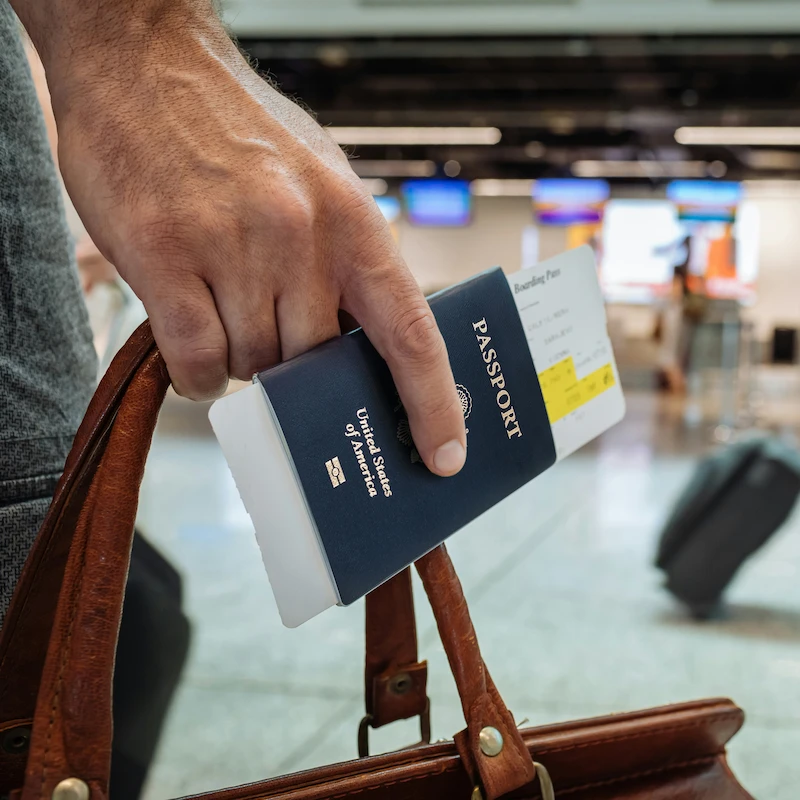
Amsterdam’s passport requirements
To visit the Netherlands, there are some requirements your passport needs to fulfill. These are the same requirements that the Schengen Area has as a whole, so they actually apply to all member countries (France, Italy, you name it).
Passport issue date
Your passport needs to have been issued within the past 10 years.
Remaining validity
Always check your passport's expiration date before you travel. You need to make sure that it will remain valid for at least 3 months after your trip. If you plan to travel to Amsterdam in June, but your passport expires in July, you may not be able to board your flight, or you might not be admitted at the border.
Blank pages remaining
Your passport must have at least two blank pages left. Keep in mind that with the launch of EES, passport stamps are no longer given in the Netherlands.
Amsterdam’s visa requirements
Some travelers need a visa in order to visit Amsterdam. You can learn more about whether or not this requirement applies to you in our Netherlands Schengen Visa Guide.
ETIAS for Amsterdam
| ETIAS is not currently in effect. This page will be updated when it is. |
If you're able to travel to the Netherlands without a visa, soon you'll need to apply for ETIAS. This new policy is going to apply to citizens of the US, UK, Australia, Canada, and dozens of other countries.
You can learn more about this requirement in our ETIAS for the Netherlands Guide.
Driving while in Amsterdam
If you are planning to rent a car and drive while in the Netherlands, you need to check to make sure that your license is recognized. Driver’s licenses issued by the US and UK allow you to drive while on your trip to Amsterdam, without requiring an International Driving Permit.
You might also be interested in...
The Van Gogh Museum: Know Before You Go
Can You Drink the Tap Water in Amsterdam?
What To Do If You Miss Your Connection
 Sources & references
- Internal Expertise & Review
- Our team of European Travel Advisors and Schengen visa insurance experts works together to create helpful, relevant guides for travelers heading to Amsterdam. Whether you need a Dutch visa, are looking to do a long stay in the Netherlands, want to visit Amsterdam's Christmas markets, or it's just your first time in the city, we're here to help you
- Amsterdam Tourism Statistics & Plans
- Tourism in Amsterdam : Recent information on tourism in Amsterdam from the University of Amsterdam
- Future of Tourism : Plans for the future of tourism, including links to the Visitor Economy Implementation Programme
- Amsterdam's Tourist Tax
- General Information : General information; daily rates and how they're charged
- 2024 Tax Regulations : The 2024 Tourist Tax Ordinance, outlining rates for 2026
- Amendment Outline : Outline of the 2024 amendment to change the tourist tax for 2026
- New Rate for 2027 : Press Release/Announcement for an increased rate to begin in 2027
- Tax Rates in Other Municipalities
- Tourist Tax, Haarlem : Regulation outlining Haarlem's tourist tax
- Tourist Tax, Zanstaad : Zanstaad's tourist tax regulation
- Tourist Tax, Haarlemmermeer : Legal text for Haarlemmemeer's tourist tax
- Tourist Tax, Zandvoort : Regulation detailing the tourist tax in Zandvoort
- Tourist Tax, Amstelveen : Amstelveen's legal regulation regarding its tourist tax
- Written by:
- Sarah Pardi - Staff Travel Advisor
- Fact-check and reviewed by:
- Clément Goubon
- Last updated:
- November 6, 2026
Learn more about our editorial standards and review process in our Editorial Policy.
Related posts



Upcoming travels ? Get Insured !
Find the right insurance for your trip by using our powerful comparison tool!
Sarah Pardi - October 28, 2026
Sarah Pardi - October 27, 2026