
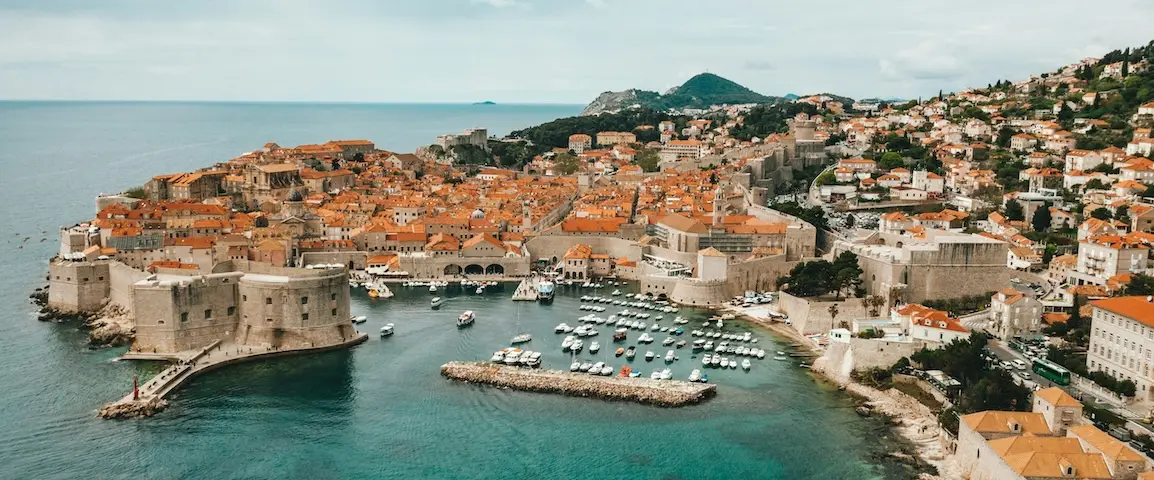
Croatia is an excellent choice for students looking for an academic experience overseas. There are several universities, colleges, and other academic programs.
In order to study abroad in Croatia, whether it's for the summer, a semester, or an entire year or more, there will be some things you need to know beforehand, as well as prepare.
Please note: This information is for US citizens looking to study abroad in Croatia. While much of this information will still be useful, processes and options may vary for nationals of other countries.
How to study abroad in Croatia
There are a few things that students are required to do before they enroll in a program and head overseas.
Finding the right program
First, it's important that you find a program that works for you. There are more details on this in the following section.
Meeting admission requirements
Once you have found a program you're interested, you need to check that you meet the admission requirements. Different programs, universities, and schools may have varying admission requirements.
For instance, some programs may have specific language or GPA requirements. Others may require prerequisites. Make sure you check the requirements first to save yourself time and hassle.
Meet Croatian visa/residency requirements
The same is true when it comes to entry requirements. Croatia's entry requirements (for US citizens) depend on a few things, like how long you plan to stay.
Typically, students with US nationality are required to apply for a biometric residence permit if they're going to be studying in Croatia for more than 90 days. If your program is less than 90 days, you may not need to apply. You can learn more here.
Apply for enrollment
Before you apply for residence in Croatia, you need to apply for admission to a Croatian educational program and receive your acceptance letter.
Apply for residence
Generally, students with US nationality apply for their Croatian residence once they've arrived in Croatia. Always check with your program officials and/or the embassy to verify that this is the case for your situation.
Again, if you're staying fewer than 90 days, you may not need to apply for residence.
------
While there are many details and requirements between each step, this is what the process generally looks like.

How to find a study abroad program in Croatia
There are a few ways that you can find a program in Croatia.
One of the most popular ways is through your current university, provided you are currently a student in another country.
Universities often have study abroad departments. These departments have longstanding relationships and networks with universities in other countries, which helps facilitate the entire process. If you're a current student, it's worth setting up an appointment with your school's study abroad department to see if they have any programs in Croatia for your field of study.
If this doesn't apply to you, there may be other options.
First, there are often organizations and private companies that specialize in exchange programs. The courses offered vary in length, field, who can apply, etc. They also typically require payment beyond tuition, housing, etc (like fees). If you decide to head abroad with an organization of private company, make sure you vet them thoroughly and read reviews and testimonials ahead of time.
Lastly, it can be possible to study in Croatia by finding a program yourself and applying independently. If you need transferable credits, be careful and pay attention to detail, as it may not always be possible.
Regardless of the route that works best for you, different programs will have different admission requirements. Make sure you understand the admission requirements and are qualified to apply.

Croatia study visa and residence permit requirements
US students who are NOT dual EU/EEA/Schengen country citizens AND who plan to stay in Croatia for more than 90 days will need to apply for Croatian residence.
This means that US citizens must apply for residency. The majority of students will apply for a "temporary stay" which lasts up to one academic year or one calendar year, depending.
Note that the process may vary depending on whether you're an undergraduate or graduate student.
Temporary stay qualifications
- Fill out application form 1a (it's in both Croatian and English).
- Provide a valid passport (the original copy, as well as a photocopy).
- Show proof that you can sustain yourself (financially) for the entire duration of your stay in Croatia.
- Show proof of valid health insurance that covers you in Croatia.
- Provide an official certificate that confirms you have no criminal convictions (to see more information about this bullet point, you will need to visit the Croatian Embassy's official website).
- Show proof of admission into a higher education institution in Croatia.
Keep in mind that there may be more/varying documents required during the process.
Additionally, you should always take actionable information, especially about visas and immigration, from official sources like embassies and trusted partners (like visa processors). They will always possess the most accurate and up-to-date information.

How to apply for Croatian temporary stay (students)
US citizens spending more than 90 days studying abroad in Croatia will need to go through the following steps in order to have the legal right to live and study in Croatia.
- Fill out the official application form for a temporary stay in Croatia.
- Collect all of the required documents (such as those listed above. Make sure to rely on the list found on the Croatian Embassy's official site).
- Once you have all of the documents and the form completed, you need to either:
- You must pay any and all applicable fees.
- Within 3 days of arriving in Croatia, you must register your address/residence with the police. In some cases, your dormitory/hostel might do it for you. In other cases, ask your landlord.
- You will also need to obtain an OIB (a personal identification number). This can be submitted to the Tax Administration online or at your local office (in Croatia). Educational institutions can submit on a student's behalf, so you can also check with them to see if this is an option for you. This number is required for your residence permit or if you wish to open a Croatian bank account.
Studying abroad in Croatia: FAQs
 Sources & references
- Internal Expertise & Review
- We've been committed to helping travelers journey abroad for more than 15 years. With a team of European insurance professionals and travel experts, we produce and share quality, relevant information for students that is up-to-date. We strive for accuracy, clarity, and transparency, and it is our mission to provide students with the information they need to make the most educated decisions.
- Croatian Entry Requirements for Students:
- Residence Permits for US Citizens : Information on study abroad requirements for students who are US citizens.
- How to Apply : Details on how US students can apply for residence to study abroad in Croatia
- Croatian Education System:
- Overview : An overview of the Croatian Education System from the US Government
- Written by:
- Sarah Pardi - Staff Travel Advisor
- Fact-check and reviewed by:
- Clément Goubon
- Last updated:
- April 8, 2026
Learn more about our editorial standards and review process in our Editorial Policy.